
Lazio's economy continues to grow, but 2025 remains uncertain due to geopolitical tensions
The service sector, especially tourism, showed positive growth, signs of recovery also from industry. Implementation of the NRP is lagging behind and household debt has remained stable. Employment increased, but consumption decreased.

5' min read
5' min read
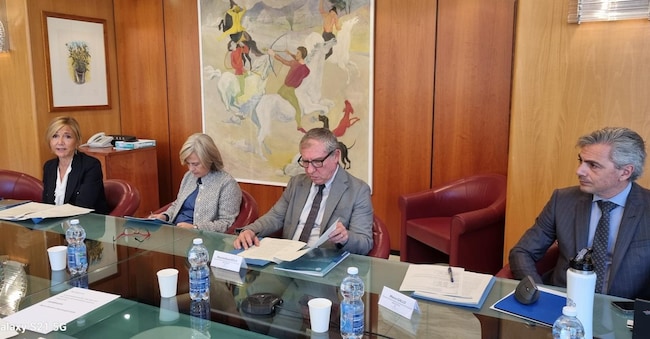
The growth of the Lazio economy continued in the summer months of this year, albeit at a still very moderate pace. The expectations formulated by operators for the last quarter of 2024 and the first quarter of 2025 appear cautious, with turnover expected to be substantially stable. Investments would return to growth in 2025, also due to the incentives of the Transition 5.0 plan. Future prospects are weighed down by fears of international geopolitical tensions and the associated fragmentation of global trade. This is what theBank of Italy forecasts in its economic update on Lazio's economy, presented yesterday in Rome by Antonella Magliocco, director of the Rome office, Marco Gallo, Head of the Analysis and Territorial Economic Research Division, and Massimiliano Bolis, deputy head of the same division.
Growth in line with Italy
Economic activity in Lazio grew moderately in the first half of 2024: according to the quarterly indicator of the regional economy (ITER), the increase was 0.4 per cent, in line with the Italian figure and lower than that for the first half of 2023. Activity levels in the region were affected by the weakness of consumption and private investment; in contrast, spending on public works increased and foreign demand returned to growth. This was revealed in the Bank of Italy's economic update on Lazio's economy.
Tourism on the rise
In the service sector, the regional picture was still positive, although slower than in 2023. Economic activity was more dynamic for the tourism-related sectors: in the first two quarters of 2024 visitor stays in the region grew by 4.8 per cent compared to the same period in 2023. The expenditure of foreign tourists in Lazio rose to approximately 4 billion euros, 17 per cent of the total foreign tourist expenditure in Italy. The greatest difficulties were recorded in the trade sector, particularly in non-food goods.
Construction trend
.In construction, the trend showed signs of weakening: the number of hours worked slowed down (1.4 per cent compared to 6.4 per cent in 2023) and the number of companies registered with the Building Funds decreased (-3.4 per cent). In the private sector, the reduction in demand related to the Superbonus weighed heavily. On the other hand, activity in public works showed a more favourable trend, benefiting from the significant increase in calls for tenders issued in 2023, the value of which (approximately EUR 15 billion) almost tripled compared to the previous year. The increase is largely attributable to interventions related to the PNRR and the Jubilee 2025.
Industry recovery
.In the first six months of the year, industry in Lazio is showing signs of recovery that are not yet visible in the country. In industry in the strictest sense, activity has shown signs of recovery: the opinions on the trend in turnover and quantities sold recorded by the Bank of Italy survey were positive. Exports increased by 6.7 per cent, driven by the pharmaceutical sector (24.1 per cent); on the other hand, the difficulties in the automotive sector worsened.


