The Portrait

Lea Pericoli: the Lady of Italian tennis between successes, elegance and a life of romance

The extraordinary life of the Italian tennis champion, among adventures, passions and boundless courage

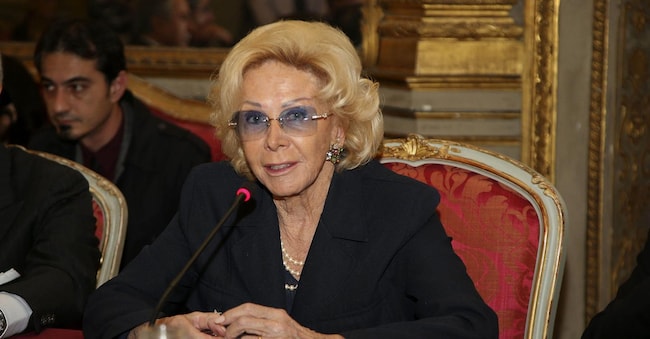
by Dario Ceccarelli

Nella foto Lea Pericoli
Italy Photo Press - World Copyright lea pericoli

8' min read

8' min read

The last time we met her, a few months ago at her beautiful home in Milan, which she alternated with her home in Monte Carlo, she was strangely in a hurry.

"My dear, no offence, I would spend hours talking about tennis, and especially about my Africa, my Ethiopia, where I lived as a child, but you have to understand: I really have to go now. To play golf, of course. I'm still good, and I like to keep fit. I don't like Pietrangeli, vain as he is, boasting that he's better. So, my friend, tell me what you want to know, so that we can conclude this interview. My life is already a novel anyway, there's no need to embroider on it....'.

Loading...

It has a certain effect, suddenly hearing on the news that Lea Pericoli, the Lady of Italian tennis, has died. She seemed immortal, impervious to life's blows, always elegant, always light-hearted, with that cheeky smile of someone who believes that everything works out in the end. On 22 March, she was 89 years old. But she remembered it as if it were an ordinary anniversary. As if she had just returned, after some challenge, from Wimbledon or Monte Carlo.

'Yes, of course, I didn't play tennis any more, but it doesn't matter. What do you want, after winning 27 Italian titles I was tired. I look at the others, these new guys, Sinner, Berrettini and all the others. How wonderful, how fresh. They are good, polite, disciplined, all perfect. We were different, less rich of course, but more cheerful. My favourite is still Roger Federer, good, elegant, unrepeatable'.

She liked to show the photos she kept in her living room. 'I tell the truth, after tennis and journalism, my great passion is photography. Look at these photos, this one is Prince Rainier, that one is Amedeo d'Aosta. Here is my father Filippo with the Negus. This instead is that actor from the Dallas series, J.R., I never remember his name... There is also Indro Montanelli. He is the one who, when I retired, made me write in the Giornale. But not only about tennis, also about fashion and customs. Every now and then Montanelli had dark moments. Then his secretary would suggest I take him out to lunch. You are the only one who distracts him, she would tell me. Then Indro also encouraged me to write books. You have things to tell, he insisted. You will see that they will follow you like they did when you played on the field in a lace skirt'.
One gets a little lost telling the story of Lea Pericoli, the tennis Divina whom everyone fell in love with and wanted to marry. It is true when he says that her life was a novel. That is not an exaggeration. A beautiful novel, one of those great frescoes of the 20th century where princes and sultans, actors and artists, spies and adventurers meet. Then there are famous male and female tennis players, but almost in the background, even if they are called Nicola Pietrangeli or Adriano Panatta, his sister Laura's young boyfriend. All around are Africa and Italy, Wimbledon and Monte Carlo, Rome and Forte dei Marmi.

"We were poor people, spinning and having a lot of fun. Between matches we would play poker to steal a few quid. Because I was pretty, I accepted the nicest invitations, taking everyone with me, even Pietrangeli and Panatta. Ethiopia was beautiful, but I loved Cairo'.

Some will think that Lea Pericoli has it easy. That it's easy to talk when you've lived your life travelling the world for tournaments, hanging out with beautiful people of more or less fame. This is not the case, even if she did her best to play it down. Even when, in March 1972, at the age of 37, she was struck down by cancer, Lea disconcerted everyone by turning that illness, usually hidden as something to be ashamed of, into a public fact, a challenge to be shared in the light of day.

"But I was not brave," he said frankly. 'I simply needed to talk about it with others. Are you pale? Of course I am pale, I have a tumour, how should I be?"

Umberto Veronesi, amazed by her strength, asked her if she wanted to be a testimonial for the fight against cancer. Lea immediately answered yes. "I didn't think twice, it seemed the least I could do..."

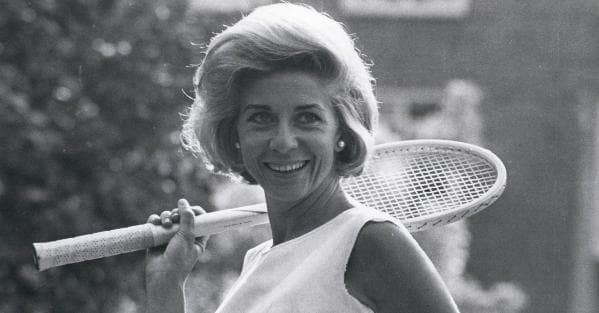
foto IPP/Keystone Pictures USA/ZUMAPRESS Londra 09-06-1964 tennis torneo di Wimbledon nella foto Lea Pericoli

The 1970s, half a century ago. By this time, Lea Pericoli was a famous woman, a champion who in tennis, but not only in tennis, had imposed a style, her own code of elegance. But to understand her better, we must go back to before the war, when Lea, at the age of two, with her mother Jole embarked on the Conte Rosso to join her father Filippo who had left to follow the Italian troops to Ethiopia. We are in 1937, in the period of colonialism, when fascism conquers 'its place in the sun'.

"My father was the first civilian to enter Adis Ababa. The Italians who came here needed dishes, furniture, furnishings. So he opened an import business that soon made us rich until, with the war and the fall of the Empire, the British took him prisoner. But Negus pardoned him because my father, at the time of General Graziani's massacres, had saved so many people'.

Dramatic events, however, did not darken her memory. "I was a carefree child, living with my brothers in a nice house with a beautiful garden where I practised tennis. I would spend hours and hours throwing a ball against the wall. My father gave me my first racket. I was already good at it. Sometimes I played with his friends. They used to tease me because if I lost, I would burst into tears and wouldn't finish anymore....'.

Tennis is already her safe-conduct. And when at the age of 12 she is sent to Nairobi, Kenya, to a boarding school of Irish nuns where they all speak English, what saves her are those very clay courts that she notices as soon as she arrives.

"The racket was my salvation. I didn't understand the language, I was far from my parents and I felt lost. But thanks to tennis I gained the respect of everyone by learning English as well, which was very useful to me afterwards'.

In life there is always a turning point. In Lea Pericoli's life it came in 1952 when she returned to Italy to Forte dei Marmi for the holidays. It was here that a tennis instructor, Paolo Bertolucci's father, noticed her and made her take part in the Focette tournament.

"I win, I play and I have fun. It all seems like a dream to me. And I also do stupid things. Like joining three different clubs. At 17 I didn't understand anything, I was saying yes to everyone. The federation summoned me and gave me an earful. I had even advertised a product. Amateurs were forbidden. They didn't punish me just out of pity, because I was just a foolish little girl...'.

By now, however, tennis is already his future. He obtains from his father, with much effort, permission to stay in Milan with his aunts. On the condition that he studies and doesn't misbehave. At 17, he immediately won the junior championships in Turin. 'Since then he has never lost,' he said with a hint of pride.

'He played by instinct, without ever going to the net too much, but with a determination and grit that I never had,' recalls Nicola Pietrangeli. "Then you could see her. She was beautiful, elegant, she made people look at her, in short...'.

In a rigid, macho world, this beautiful, uninhibited girl arouses admiration but also bewilderment. And Lea, almost as if to provoke him, does not hide, on the contrary.

'The first time I saw her at the 1956 Wimbledon tournament, I immediately fell in love with her,' wrote Gianni Clerici, a young journalist from Il Giorno.

"At Wimbledon the tennis players still wore long skirts almost to the knee. As Lea took to the court, there was a crowding similar to what I had seen for her peer Sofia Loren. Photographers elbowing each other, managers in embarrassed blazers: every time Lea hit her forehand, the skirt, already short to the thigh, twirled so that the Divina, as I had taken to calling her, showed the garment underneath, which, if it hadn't been so chic, could have been called a panty...'.

Admiration, certainly, but also much grumbling from the guardians of morality. Never before, they say, has a tennis player caused such a scandal! All the more so as she amusingly provokes them by wearing pink outfits, signed by the famous designer Ted Tinling, which divide the public even more.

"They called me the reckless girl, because I was the first tennis player to wear these lace and ostrich feather skirts. I did it as a quirk, to make my way in a very tough world, to enhance our femininity. Maybe I avoided wearing extravagant things at important meetings so as not to lend myself to criticism. But what was the harm? I was training, nobody was giving me anything.

Controversies that today make one smile, but in the 1950s make one bewildered. And above all they angered father Pericoli, who in Africa read in English newspapers the echo of these events that were unacceptable to him.

'Enough, you have to stop with this tennis! Don't embarrass us, become an adult, stand on your own...' she thunders at her daughter, who gives up competing for a year. But without lowering her head. 'Two strong characters,' says her sister Laura. "She's a troublemaker, he's used to being in charge, but in the end our father will give in...'.

' Lea recalled: 'Today they are all billionaires, they have the coach, the masseur, they don't have to think about anything. We were only paid for the hotel and breakfast. Even the clothing was paid for by me. My luck was that I always received incredible invitations from all over the world. I made a beautiful life, as a billionaire without being one. I always say that to Pietrangeli as well'.

"Nicola? Nicola was a great talent, with little willpower, though. Too bad because he would have been the best. Were we together? No, when it could have happened we were always 'busy'. So we became friends, consoling each other'.

Lea also wrote some amazing books. A diary from Africa, which had remained in her heart and which she returned to visit for many years. In This Magnificent Life she tells how positive our existence is, which slips away without realising it. And then a work about her sport, Once upon a time there was tennis, which is a hymn to life. And how playing it formed her character and gave her so many successes: Italian champion from 1958 to 1975, 264 appearances in the national team, three times in the round of 16 at Wimbledon, four at Roland Garros, three victories at Monte Carlo, to which five in doubles and four in mixed doubles should be added.

"Tennis taught me how to live, how to walk alone, especially how to lose. Because losing hurts. In life a defeat can be hidden. On the court no, it is impossible. Everyone sees you. Afterwards you have a rematch, but you have to know how to put yourself back in the game,' Lea liked to repeat.

Lately something had cracked. But she was still her, neat, elegant, with a thread of make-up. She was not melancholic, she knew no anger or regrets. "I have been so lucky because I have always loved life. I am left with golf, friends and above all beautiful memories. My only regret? That sooner or later someone will tell me, like at the merry-go-rounds, that my ride is over. I'm sure that wherever I go, they will give me another ride".

Copyright reserved ©
Loading...

Brand connect

Loading...

Newsletter

Notizie e approfondimenti sugli avvenimenti politici, economici e finanziari.

Iscriviti

Tutto mercato WEB