
Leadership: with AI, top managers are aiming for more autonomous teams
According to a Bip survey of 250 C-level executives, 99 per cent are working to create the conditions that enable their colleagues to make their own decisions. Iacovone: “The challenge is not simply to adopt artificial intelligence, but to translate it into tangible value.”

Key points
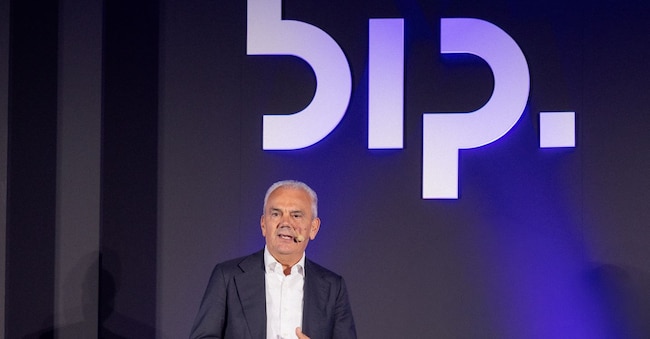
You can’t lead a team these days without going through a triathlon. However, you don’t necessarily have to be an athlete, because instead of swimming, cycling and running, the three disciplines to tackle are leadership, technology and knowledge. Donato Iacovone, the executive chairman of the consultancy firm Bip, attributes this largely to autonomy and tells us that ‘we need to create the conditions for people to be autonomous in their decision-making, even in the absence of senior management’.
Leadership today
In short, it is the complete opposite of command and control, which – given the new opportunities created by artificial intelligence – seems to be precisely the myth that top managers need to dispel: if anything, say 99 per cent of them, an effective leader is someone who creates the conditions for others to make the right decisions independently; they are no longer the person who wants to control every little detail and always keep an eye on their staff, as revealed by the survey ‘Leadership Today’, which was carried out by Bip through interviews with 250 C-suite executives and was presented at the InSummit in Venice, where the company brought together 350 business leaders, representatives of institutions and key players in the innovation ecosystem, to explore the major changes in society, identify the key drivers of innovation and outline new prospects for the future.
The context of uncertainty
“In a context where geopolitical uncertainty, demographic changes and technological developments are constantly reshaping the competitive landscape, the challenge for businesses and those responsible for leading them is not simply to adopt artificial intelligence, but to translate it into tangible value,” explains Iacovone. And this requires leadership capable of “making timely and informed decisions, harnessing the organisation’s knowledge and rethinking processes and skills,” continues Iacovone. Technology, on its own, does not drive transformation: it is the integration of leadership, knowledge and technology that enables businesses to tackle complexity, innovate and create value over time.”
The evolution of models
For Iacovone, the times we are living in call for a change that ‘goes beyond the mere willingness to delegate: in a context of structural uncertainty, the ability to distribute responsibilities, recognise weak signals and correct the course in a timely manner becomes essential. Adaptive leadership is not limited to a decision taken at the top, but is measured by the entire organisation’s ability to put it into daily practice’. Whilst old models appear increasingly inadequate, 69 per cent of managers still believe it is important for leaders to have a complete overview of information, not least to understand any errors. Certainly, information overload, according to 41 per cent, is the greatest obstacle to carrying out one’s work with peace of mind. At the same time, 81 per cent believe that the leadership profile that worked twenty years ago may now be a risk factor. In day-to-day practice, 66 per cent of managers say they are able to maintain a good level of team engagement and cohesion and to make decisions quickly.
Corporate culture
The evolution of leadership models is not helped by a corporate culture that remains widespread and control-oriented (according to 49 per cent of respondents), followed by structures that hinder flexibility and speed of decision-making (according to 41 per cent) and the difficulty of aligning the middle management levels of the organisation (according to 37 per cent). Conversely, what makes the difference are autonomy and decision-making responsibility (45 per cent), the ability to revise decisions as things progress (42 per cent) and a culture that tolerates controlled failure as a tool for rapid learning (40 per cent).

