
Construction, energy and digital platforms: the leaders of the decade
Renewable energy sources have created opportunities not only for electricity producers, but also for those who build and maintain power stations

Ten years of change in markets, technologies and consumer behaviour. From building renovations to digital platforms, right through to the energy transition: the ‘Growth Leaders of the Decade’ ranking, compiled by Il Sole 24 Ore in collaboration with Statista, illustrates through one hundred companies how the Italian economy has changed between 2015 and 2025. Traditional sectors coexist with new markets. Construction and engineering, bolstered in part by building incentives, lead the way with 17 companies. These are followed by industrial manufacturing (14) and energy and public services (11); the digital sector, e-commerce and household support services are also growing. Geographically, Veneto is the region best represented in the ranking, with 15 companies, followed by Lombardy with 14, whilst Emilia-Romagna and Sicily each have ten. However, it is within the energy sector that one of the most interesting developments is emerging: renewables have created opportunities not only for electricity producers, but also for those who build and maintain plants, develop storage systems and construct infrastructure to distribute it. A value chain linking energy and manufacturing.
The Evolution of Alba
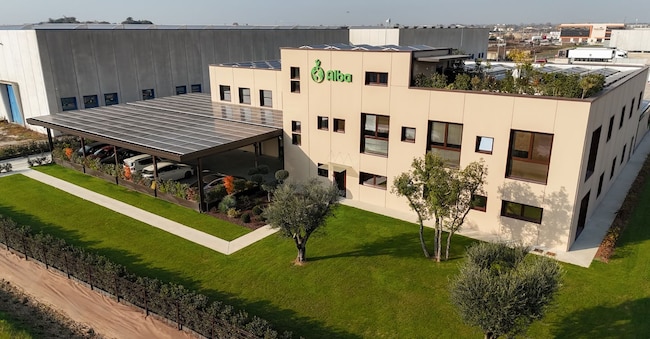
Take Alba, for example – ranked ninth – a Padua-based company that builds photovoltaic systems for firms specialising in design and coordination, handling structures, panels and electrical connections. Over ten years, its turnover has risen from around 290,000 to 21.2 million euros. “The photovoltaic market has helped us; it would be wrong to deny that. But it has grown for everyone,” observes CEO Giuliano Bratko. Alba has relied on in-house teams and its own resources: it manages over 25 construction sites involving more than 35 operators, and by 2025 it had completed over 200 installations, totalling more than 160 megawatts. In total, it has installed over 700 megawatts. “At the start, we were almost exclusively involved in installation. Today, an increasingly important part of our work is optimising the performance of existing plants through revamping, repowering and maintenance,” explains Bratko. These are interventions that enable components to be replaced and existing plants to be upgraded, thereby improving their output. The company also develops machinery for cleaning solar panels and aims to generate energy itself, with 100 megawatts of its own plants by 2035.
Westrafo’s choices
The growth of renewables is also having an impact on the manufacturing sector. Westrafo – a Vicenza-based transformer manufacturer, ranked seventh – saw its turnover rise from 1.4 to 109.7 million. “The real turning point came between 2019 and 2022, when we decided not to position ourselves simply as a manufacturer of electrical machinery but as a partner capable of offering high value-added solutions,” explains CEO Alberto Cracco. Today, the company develops bespoke transformers for renewable energy, energy storage and data centres. A factory in Ohio has been added to its production facilities in Europe and Ghana. “Manufacturing directly in key markets allows us to reduce delivery times, overcome logistical barriers and guarantee customers prompt and expert technical support,” explains Cracco. Research and design continue to be coordinated from Italia.
The key role of storage
Storage also plays a key role in the supply chain, as it stores electricity generated from renewable sources so that it is available when needed. This is the market for Weco, ranked second, a Florence-based company specialising in batteries, inverters and energy management, which saw its turnover rise from around 178,000 to 37.7 million. At the top of the rankings is Tresun, founded in the Catania area and active in the construction and maintenance of large-scale photovoltaic plants, which has seen its turnover rise from around 100,000 to 21.7 million euros over ten years. This growth, the company explains, was made possible by investing in technical expertise and the coordination of personnel, materials and projects.
From the construction and maintenance of power stations to energy storage and transformers, the energy sector thus demonstrates that sustainable growth requires not only expanding markets, but also investment, specialisation and industrial expertise.

