The guide

Lean recruitment, how to improve and speed up personnel selection

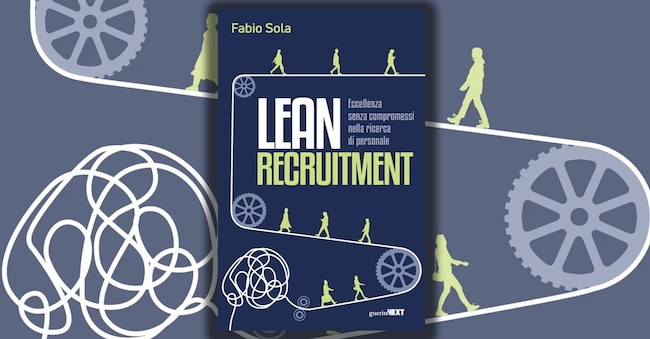
'Lean Recruitment' is also an essay by Fabio Sola, the first Italian publication dedicated to lean thinking applied to recruitment

5' min read

5' min read

Creating better organisations by putting people at the centre: how many times have we read and heard this assumption in recent years? The answer is obvious, or almost obvious. So many, perhaps even too many. But what if this goal was pursued (and possibly achieved) by valuing people both in their role as candidates (for the job) and in their role as recruiters (of the talent to be brought into the organisation)? This is precisely what lean recruitment is all about, striving for absolute excellence in a short timeframe and to the maximum satisfaction of all involved.

"Lean Recruitment" is also an essay by Fabio Sola, director of the Praxi global network as well as lecturer at the Master in Human Resources Development at the University of Pisa. The text (written for Guerini Next Editore) claims the title of the first Italian publication dedicated to lean thinking applied to personnel recruitment and is proposed to those working in the field as an extremely practical manual for tackling all the stages of the selection process in detail, delving into the spectrum of skills required (today and in the future) by the recruiter's role and the evolution of the methodologies that form the basis for adopting the lean model.

Loading...

The interest in this topic, and above all the recognised importance of lean recruitment, should certainly not be taken for granted. "Until a few years ago," Sola explained to Sole24ore.com, "it was considered an ancillary and ancillary process, whereas today it has a different, and decidedly more strategic, centrality. Before, it was the human resources specialists who asked the experts and consultants questions, today it is the CEOs and managers. The scenario has changed, also in relation to the general lack of personnel and the consequent greater importance of the talent acquisition process'. The difficulty of finding qualified figures, in short, fuels the need to find them, and so the possibility of optimising this process becomes an imperative to pursue.

Better selection, better business

.

Companies, as the author writes, are excellent when they have the right people (managers in the lead) in the right place, and when they know how to ground the value of these people's skills and motivations in order to literally transform the way activities are carried out and business goals are pursued. The fact that a recruitment process can help to create better organisations, Sola goes on to observe, is confirmed by experience in the field (and the book does not lack references to concrete examples) and responds to absolutely logical principles. Whether this change of approach can take place in a more capillary manner for internal functions, and therefore for those who are in charge of recruiting new profiles within the same organisation, or for external partners in this process, especially when the involvement of external recruitment companies concerns the search for top positions (CEOs and C-levels), matters relatively little.

The impact of the lean model in the recruitment process can be decisive for improving operations in the short and long term and is also reflected in the concept of distributed HR management. Human resources management extended to multiple roles of responsibility within the organisation is a principle that is part of the dictates of lead recruitment, increasing its importance and reflecting more proactively the analysis of competences to be found because they are missing.

"Personnel selection," Sola added, "is a historically crafted and tailor-made process, highly dependent on the quality of individual skills, and different from case to case. The lean recruitment makes sure that everyone works in a consistent manner with respect to an established methodology, enhancing the quality of the individual. The focus is therefore on process and lean thinking is the tool to generate value for the benefit of the recruiter'. The adoption of the lean principles, as stated in the book's introduction, allows one to exceed the expectations not only of the client (internal or external) but also of the candidate. If punctual communications, reasonably rich feedback, and 'feeling heard' are factors that improve the 'candidate experience', leveraging a better (selection) process allows for the induction of people who are more focused on strategies and who will have a more satisfying career and will in turn enhance their employees.

How to maximise selection efficiency

.

Where, in concrete terms, does one intervene to maximise selection efficiency? According to the author, there are no doubts: the moment of greatest risk of waste is the management of candidate reporting. The time factor, in other words, affects two directions, the hours spent on interviews and the 'lead time' of the entire recruitment process, which ends with the response to the candidate. Waiting time is the waste to be eliminated, and lean recruitment responds to the need to bring the most suitable people into the organisation to pursue its objectives with 'correct' timing and costs, exploiting the company's historical memory (data) to increase the level of awareness within the decision-making process and to increase the value brought by recruiters with respect to their level of experience, precisely because the robustness of the process allows them to use their talent to find innovative and more functional solutions.

And what role can artificial intelligence play in this context? "To find qualified profiles," Sola emphasises, "we need creative recruitment, which can make use of the good part of AI to automate some repetitive and low-value processes, starting with reporting. It can be a tool that adds value to lean recruitment when the screening activity is on a very large candidate base, but we need to pay close attention to the ethical, diversity and inclusion issues that are affected by the use of algorithms'. Eliminating waste in the selection process is the focal point of the lean model and means, in essence, eliminating activities with little added value: if a recruiter takes more time to talk to candidates and listen to their needs, generating empathy and grasping the specificities of the individual candidate, the quality of the selection is more likely to increase.

All companies, theoretically, are in a position to make the advantages of the agile model their own, but to implement lean thinking you necessarily need a dedicated internal team working for continuous improvement. "Lean recruitment," Sola concludes, "will be most effective where there is imprinting from the top and where there is application of lean principles at the factory level or in other company functions. To date, as you can imagine, not many Italian companies have embraced this model, but there is probably more awareness of the fact that recruitment is not a war to find a candidate, but a value game with the ultimate goal of putting the right person in the right place.

Copyright reserved ©
Loading...

Brand connect

Loading...

Newsletter

Notizie e approfondimenti sugli avvenimenti politici, economici e finanziari.

Iscriviti