
Leapmotor: the new 5.0 platform transforms the interior space
It will arrive next year and radically transform the interior space. A new battery is also on the way, which will make traditional lead-acid batteries a thing of the past.
by Simonluca Pini
 Aggiungi Il Sole 24 Ore
ai preferiti su Google
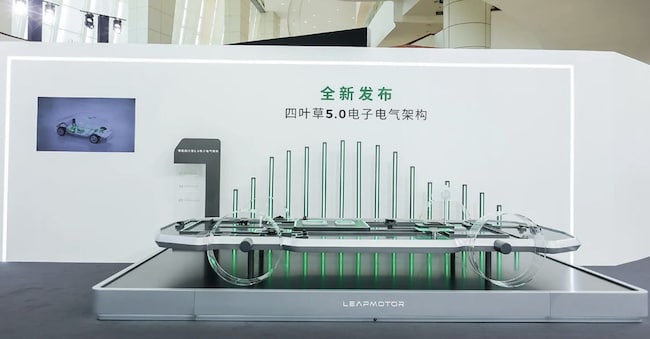
Leapmotor is raising expectations for its upcoming 2027 models by announcing a platform capable of providing more interior space than ever before seen in its range. Dubbed ‘Leap 5.0 New Mobile Space’, the platform was unveiled at the Leapmotor Tech Day 2026, held at the company’s battery plant in Hu Zhou, Hangzhou. According to the Chinese manufacturer, it represents a radical change in vehicle architecture.
Leap 5.0 New Mobile Space Platform
Compared with previous architectures produced by Leapmotor, a Chinese company in which Stellantis holds a stake of around 20 per cent, the Leap 5.0 New Mobile Space platform ensures 100 per cent space utilisation and features a centrally integrated control system. The integration of an all-in-one air conditioning unit and a rear-mounted powertrain – two technologies that were previously separate – increases the longitudinal space in the passenger compartment by 19 per cent, reduces the number of components by 18 per cent and cuts the amount of pipework required by 30 per cent. The new vertical arrangement of the shock absorbers, combined with an aluminium strut tower, is more compact, reduces the space taken up in the passenger compartment and increases lateral legroom for front passengers by 37.5 per cent.One of the most significant innovations is the combination of a new, higher roof and a completely flat, lowered floor, made possible by the new skateboard platform design. This solution increases headroom by 63.7 per cent, whilst creating an open, loft-style cabin that allows passengers to stand upright. This is obviously a welcome feature when stationary, but it also paves the way for a wide range of applications, including in the fields of commercial vehicles and campervans.
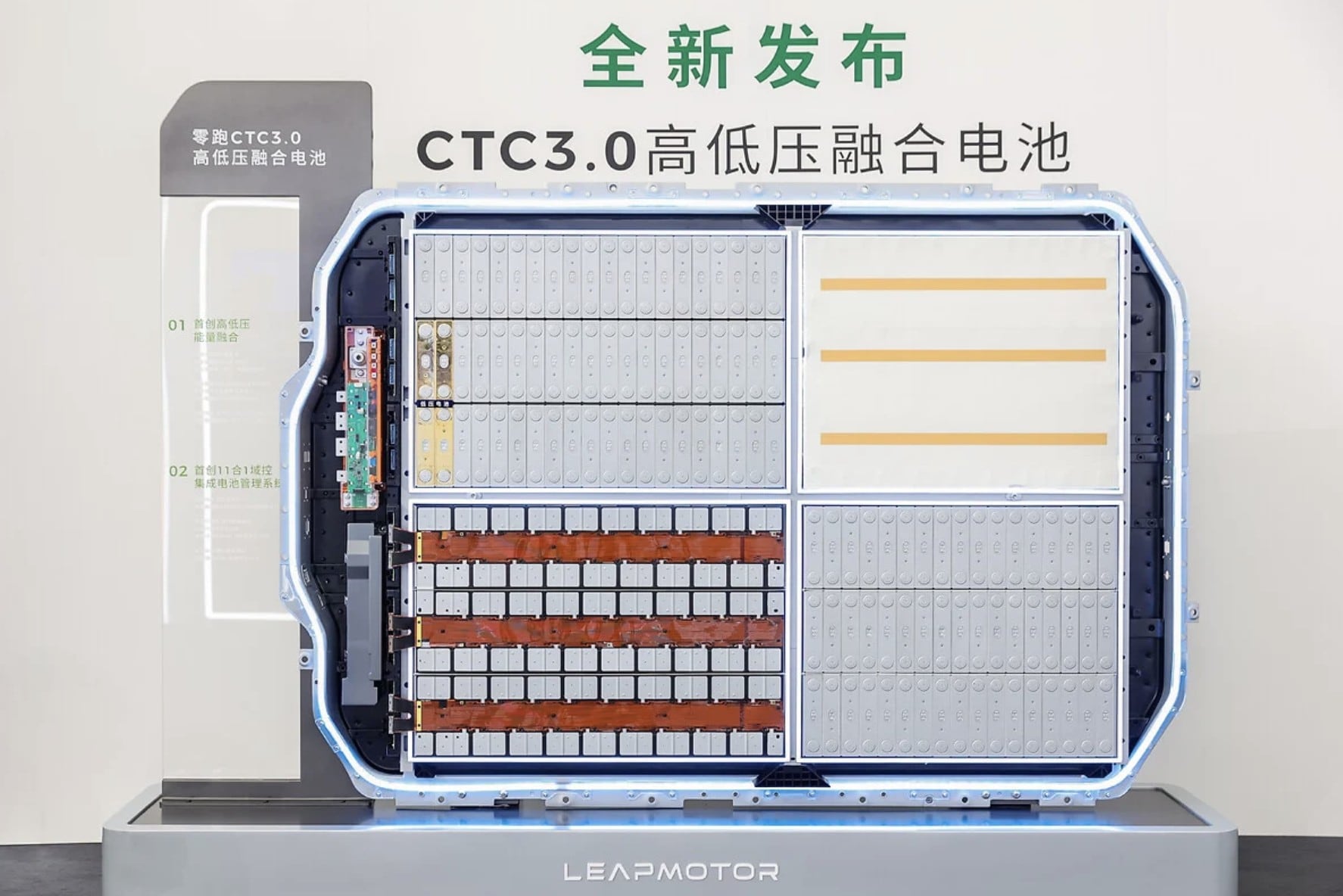
Leapmotor Cell-to-Chassis 3.0 High-Low Fusion battery
The second innovation comes in the form of the Cell-to-Chassis 3.0 High-Low Fusion battery, which represents the latest generation of batteries without a separate pack or power supply, developed by Leapmotor. The system is now also capable of managing low-voltage functions, eliminating the need for a traditional 12-volt battery. CTC 3.0 technology eliminates the need for separate battery modules by integrating them directly into the chassis. The high- and low-voltage batteries use the same cells and modules, sharing thermal management and power distribution. This results in a complete redesign of the vehicle’s power supply system. Traditionally, 12-volt batteries have formed the basis of a vehicle’s electrical system, powering functions such as the starter motor, windscreen wipers, lights, infotainment screens, safety systems and even airbags. When this technology is integrated into the new generation of Leapmotor vehicles, they will become the first road vehicles in over 70 years not to use a 12-volt auxiliary lead-acid battery. The large-scale adoption of this technology could eliminate tens of millions of lead-acid batteries each year, significantly reducing the pollution associated with the disposal of spent batteries. Furthermore, the system requires no maintenance throughout its entire life cycle.

