
Crisis in Lebanon, Italy under pressure: 'Respect the UN resolution'. Here is what it provides for
The resolution had redefined Unifil's tasks and provided for the construction of a security strip south of the Litani river, in which the mission, together with the Lebanese army, would exercise a 'buffer' action to prevent the resumption of hostilities. Crosetto: "In recent years this has not been the case".

4' min read
Key points
4' min read
The tension in the Middle East continues to rise. The clash between Israel and the Lebanese Hezbollah, allied with Iran and Hamas, after the dramatic missile attack on the Golan Heights against the Druze-Israeli town of Majdal Shams risks degenerating into yet another theatre of war. Israel attacked Beirut, in retaliation to the killing of 12 children and teenagers.
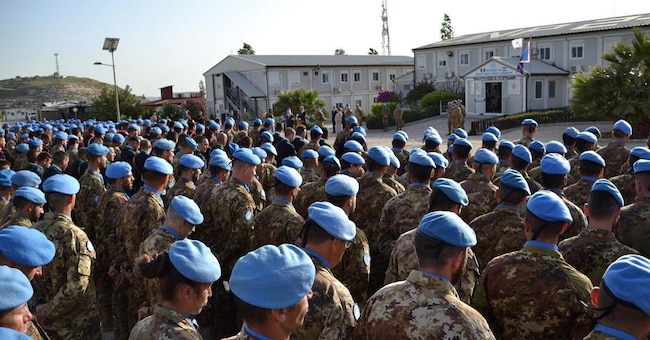
In this context, the Italian government does not hide its concern for the 1,200 Italian soldiers deployed in Lebanon. "There are concerns about an evolution of the conflict also in the north," confided Defence Minister Guido Crosetto, interviewed by Tg1, "even though we have had guarantees from both sides that the Unifil contingents should not be touched but, as we know, there are unpredictable things and we have to foresee these things too.
In general, Crosetto expressed "deep concern" for the security of the national contingent participating in the Unifil mission to guard the 120 km of the Blue Line, the 'buffer' line between Lebanon and Israel. The Defence chief called on the UN to change the rules of engagement and redefine the strategy of the mission, highlighting one element: "The entire international community must apply Security Council Resolution 1701," he said. "It is the only way to prevent a devastating war in Lebanon as well. The resolution envisages a strip between the Blue Line and the Litani River, without weapons other than those of Unifil and the Lebanese Armed Forces. This has not been the case in recent years. Now we can no longer pretend nothing has happened'. On the same line as Crosetto, the Minister of Foreign Affairs Antonio Tajani. "Compliance with UN Resolution 1701 is crucial," he recalled.
What does UN Resolution 1701 provide for
?In short, for Italy, if not everything, a lot revolves around Resolution 1701. It was unanimously approved on 11 August 2006 by the United Nations Security Council after the previous month, following a Hezbollah missile offensive on Israeli territory and the killing of some Israeli soldiers and the capture of others, a new phase of the conflict had opened, which lasted 34 days, during which Israel launched an offensive in Lebanese territory and imposed an air-sea blockade on the country, while Hezbollah responded with intense guerrilla activity and the launching of rockets that also reached cities considered safe such as Nazareth, Haifa and Tiberias. The Lebanese military forces, on that occasion, did not intervene in the conflict.
The 2006 resolution called for a complete cessation of hostilities (both Hezbollah's attacks and Israel's military operations) and reinforced the Unifil contingent (from 2,000 to 13,000) by entrusting it with a 'buffer' action in south Lebanon, to be carried out jointly with Lebanese forces, to prevent the resumption of hostilities.


