Crime

Leccese (ANCI): ‘Regions without adequate resources – the State must step in’

Interview with the Mayor of Bari, Vito Leccese, ANCI’s representative for security and local policing

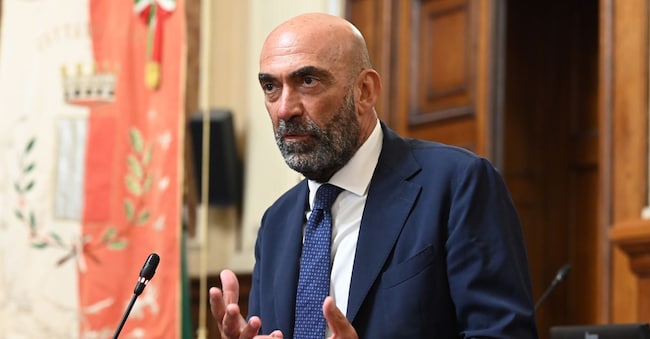
Vito  Leccese  Imagoeconomica

6' min read

Translated by AI
Versione italiana

6' min read

Translated by AI
Versione italiana

‘Large urban centres are, by their very nature, magnets for people and economic activity. Criminal activity tends to concentrate precisely in those areas where there is the greatest concentration of wealth and where opportunities for profit abound.” This is how Vito Leccese, Mayor of Bari and ANCI delegate for urban security and local policing, commented on the 2026 Crime Index.

How can we ensure greater safety for the public?

Loading...

All too often, we tend to forget that the maintenance of public order and safety is the exclusive responsibility of the State, whilst the burden – at least as far as the public is concerned – ends up falling entirely on the shoulders of mayors. The increase in tourist numbers and in the number of people visiting our cities every day presents an extraordinary economic opportunity, but it can fuel both the legal and the illegal economies.

Do mayors need ‘special’ measures and resources to ensure public order?

Before anything else, mayors must be guaranteed the ability to carry out their day-to-day duties, with adequate means and resources. For months we have been highlighting that Italia is short of around 12,000 local police officers and that those currently on duty do not have the tools and safeguards commensurate with the increasingly wide-ranging responsibilities and duties they are called upon to perform. In many cases, there is not even adequate facilities for the temporary detention of those stopped, who are often released within a few hours. We are facing a systemic problem, which directly calls into question the State’s responsibilities.

What are your demands of the Government?

First and foremost, we have called for the staffing shortfall in local police forces to be addressed. But we are also calling for a permanent increase in the Urban Security Fund, which has remained at 25 million euros and is set to rise by a mere 32 million euros for 2026 alone. According to our estimates, the Urban Security Fund would need to be doubled, and an extraordinary plan put in place with at least 400 million to be allocated on a permanent basis – not as a one-off payment for recruitment. These are resources that mayors would invest in prevention, which requires structural investment in social policies, education, inclusion and support for the most vulnerable sections of the population. We cannot expect to tackle such complex issues by relying solely on repressive measures.

Which phenomena do you have in mind in particular?

I am thinking, for example, of the issue of immigration. On the one hand, mayors are asked to manage the consequences of migration on their local areas; on the other, resources allocated to secondary reception – precisely the support that should facilitate pathways to social inclusion – are being cut. At present, social integration policies are completely lacking. This is a clear contradiction, because weakening the tools for integration risks fuelling new situations of marginalisation and hardship. And we know full well that social inclusion is also one of the most important tools for building safer cities and more cohesive communities.

Over the past year, reports of thefts and robberies have fallen, but the figures for street crime remain well above pre-Covid levels (up 14 per cent and 4.8 per cent respectively on 2019): how has crime changed at an urban level, and why is it so difficult to reduce these types of ‘violence’ on the streets?

Loading...

I believe the answer lies, first and foremost, in the origins and management of these phenomena. We must ask ourselves why certain forms of street crime continue to be so widespread and, in some cases, increasingly violent. The answer, in my view, lies in the failure to take responsibility for these individuals, with the consequence being a relapse into wrongdoing. Many offences are committed by individuals who habitually use low-cost drugs or by small-time drug dealers recruited as foot soldiers by criminal organisations. We are often talking about people who habitually go in and out of prison, live on the margins of society and who themselves easily become victims of more structured criminal organisations. Unless we tackle the root causes of these dynamics – through prevention, combating addiction and addressing marginalisation – we will continue to deal with the consequences without managing to stem a phenomenon that risks taking on increasingly worrying proportions. We must take action within prisons through a major effort to reduce reoffending.

Vandalism and assaults have reached their highest level in the last eight years. What measures could the local council take to help reduce these incidents? Increased police presence, better lighting, regeneration of public spaces, more social services...

The funds from the National Recovery and Resilience Plan (PNRR) are enabling us to regenerate numerous areas of our towns and cities, with particularly significant projects in the major urban centres. Restoring quality to public spaces, improving lighting, and revitalising derelict sites to make them accessible to the public once again certainly represents an important contribution to urban safety. But this alone is not enough. We are seeing a rise in crimes against children and those committed by children – the worst possible warning sign for a mayor. The physical regeneration of these areas must necessarily be accompanied by social regeneration. A broader approach is needed, one capable of involving associations, schools, families and all the organisations operating on the ground on a daily basis. The problem, however, always comes back to the same point: without adequate resources, local authorities cannot manage this on their own.

What could additional resources be used for?

Just recently, the president of ANCI and mayor of Naples, Gaetano Manfredi, drew attention to four urgent issues that directly affect local authorities: the reception of unaccompanied foreign minors, educational support for pupils with disabilities, energy costs and the strengthening of local police forces. To tackle these issues, he has asked the Government to allocate one billion euros in the forthcoming Budget Bill. These are practical issues that affect local authorities’ ability to guarantee services, rights and safety. There needs to be a collective realisation on the part of all institutions, first and foremost the Government. Emergencies are not resolved by shifting responsibility onto those who administer local areas, but by putting them in a position to take action.

What is ANCI’s first request to the Government regarding security?

All the ones you mentioned, because they are different aspects of a single problem. The draft bill to reform the local police system could have represented an important opportunity to rectify many of the shortcomings of the current system, finally providing officers with the tools, safeguards and powers appropriate to the duties they carry out on a daily basis. Instead, despite years of discussion, we continue to face delays and resistance. At times, one even begins to wonder whether there is a reluctance to fully recognise the role that the local police already play in the safety of our towns and cities, almost as if there were a fear of granting them a status and influence comparable to that of other police forces. No one is calling for the creation of a new state police force, but we cannot continue to entrust officers with ever-greater responsibilities without guaranteeing them adequate tools and safeguards.

Much like what happened with the security decrees, we have witnessed a great deal of fuss about nothing. Beyond the proclamations and declarations of victory, the progress made has been truly modest compared to the real needs of local communities. There continues to be a preference for a heavy-handed approach to tackling the issue of security, consisting of announcements and harsher penalties, as if flexing one’s muscles were enough to solve problems that are deeply rooted in society. But security cannot be guaranteed through repression alone: we need prevention, investment, staff and a daily commitment to monitoring and looking after local communities.

Meanwhile, the national debate on security seems to have focused more on the construction of detention centres on the other side of the Adriatic than on the day-to-day needs of our towns and cities. But the question we should be asking ourselves is very simple: has all this really improved public safety? I believe the answer is plain for all to see.

Copyright reserved ©
Loading...

Brand connect

Loading...

Newsletter

Notizie e approfondimenti sugli avvenimenti politici, economici e finanziari.

Iscriviti