
Legambiente: 77 cigarette butts per 100 metres collected on beaches
Issuing the warning is the Beach Litter survey released ahead of National Sea Day

Key points
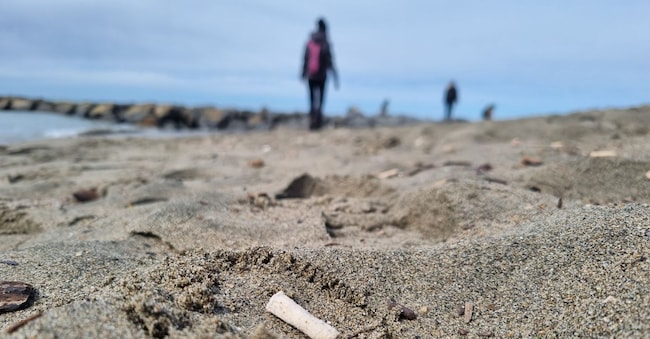
Over 50,000 cigarette butts collected in 653 transects, with an average of 77 'butts' for every 100 linear metres of beach. But their discovery in the sand still ranks second among the most frequently found materials at the lidos. Plastic wins, taking first place with 61,785 fragments found.
These are the figures released by the Beach Litter survey by Legambiente published in anticipation of National Sea Day - celebrated on 11 April each year - and the historic 'Clean Beaches and Seabeds 2026' mobilisation, scheduled for 10-12 April.
Sanctions do not seem to be a threat to smokers, but more and more municipalities are adhering to anti-smoking ordinances. The greatest risk concerns biodiversity: endangered species include the loggerhead turtle Caretta caretta and the kentish plover.
Sos cigarette butts
Cigarette butts are a cause for alarm on Italian beaches, as emerged in the latest Legambiente monitoring that encompasses 12 years of work, from 2014 to 2026. There are 50,053 "butts" identified, which make up 87% of the 57,099 "smoking waste" such as lighters, cigarette packets or tobacco boxes. Despite the fact that in Italia, the Collegato Ambientale to the 2014 Stability Law provides for fines ranging from EUR 30 to EUR 300, the risk of penalties does not stop smokers.
A problem that does not only affect Italian coasts, but also those in Europe and the rest of the world. According to the Digital Report of the European Environment Agency's Marine LitterWatch study - published on 17 March 2026 and collecting 11 years of data - cigarette butts are the most abundant litter in the Baltic Sea, accounting for 11.6% of all litter. Next comes the Black Sea, while in second place are the beaches of the north-east Atlantic Ocean.

