
Legambiente: Italy chases emergencies instead of preventing them
The association denounces the failure to implement the National Climate Change Adaptation Plan. President Ciafani: 'Silence on how to tackle the climate crisis'

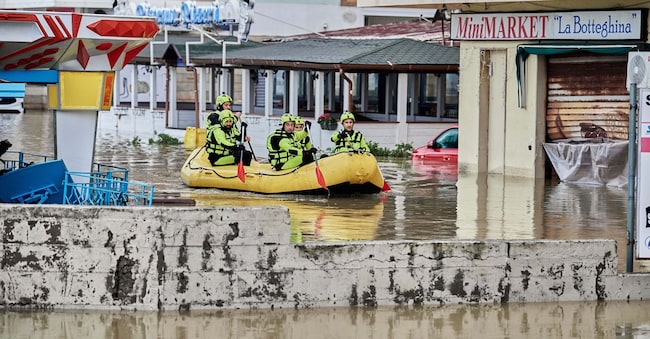
While the damage from the latest wave of bad weather, which hit Sicily, Calabria and Sardinia in particular, is still being counted, Legambiente is once again denouncing the deadlock in the National Climate Change Adaptation Plan (PNACC). According to the association, Italy continues to intervene only after emergencies, without a prevention strategy. "Once again the country runs after emergencies instead of preventing them," says president Stefano Ciafani in a statement. Meanwhile, today the government is preparing to declare a state of emergency for the territories affected by the cyclone Harry.
A plan approved but never financed
The PNACC, which has been awaited for three years, has remained on paper because the resources needed to implement it have never been allocated. Legambiente points out that even in the latest budget law, there is no reference to the programme. Hence the request for immediate action: start implementing the PNACC, approve the law against soil consumption - which has been at a standstill in Parliament since 2012 - and put in place territorial measures such as the restoration of water courses that have been tombed and the increase in soil permeability with sustainable drainage systems. To finance these measures, the association proposes reallocating funds currently earmarked for the Strait Bridge.
Extreme weather events on the rise
The numbers quoted by Legambiente come from the City Climate Observatory: in 2025, 376 extreme weather events were recorded in Italy, an increase of 5.9% compared to 2024. The worst affected regions are Lombardy (50 events) and Sicily (45). A picture that, the association warns, is destined to get worse. A study by the University of Mannheim estimates that economic damage from heat waves, droughts and floods could rise from 11.9 billion in 2025 to 34.2 billion in 2029.
Hydrogeological disaster: high expenditure, weak results
With regard to the prevention of instability, Legambiente presents a reworking of Rendis-Ispra data: from 1999 to 2024 20.5 billion euros were spent on 25,903 interventions. However, only 35.7% of the works have been completed (9,247 interventions, for about 5.6 billion). Despite the investments, hydrogeological risk has increased and now involves 94% of Italian municipalities, compared to 88% in 2015 and 91% in 2018.
What is still missing
Also weighing heavily, according to Legambiente, is the incomplete institutional set-up. What is still missing is the Permanent Forum for information, training, and decision-making support for citizens and stakeholders, a consultative body called upon to flank the National Observatory for Adaptation to Climate Change, which was set up only recently and almost two years late. Without these instruments, the association warns, consultation remains weak and prevention continues to give way to emergency.

