Green Schooner

Legambiente: the mouth of the Musone, Aci Trezza and Lake Sabaudia are the most polluted waters in Italia

Of the 391 samples taken by Legambiente volunteers from marine and lake waters across 19 regions, as many as 34 per cent were found to exceed the legal limits for pollution – that is, more than one in three samples

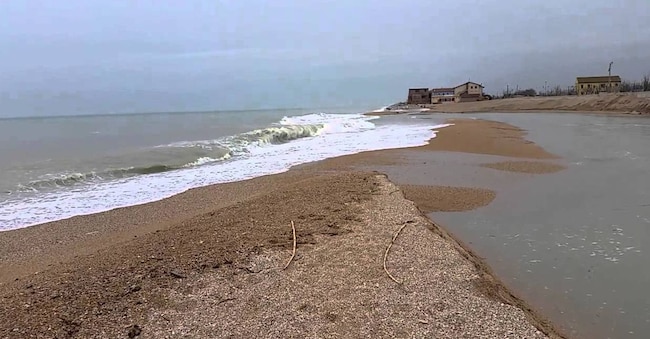
Foce del fiume Musone

8' min read

Translated by AI
Versione italiana

8' min read

Translated by AI
Versione italiana

In Italia, once again this summer of 2026, the sea and lakes are under increasing strain and becoming increasingly vulnerable. This is confirmed by the final report from ‘Goletta Verde’ and ‘Goletta dei Laghi 2026’, Legambiente’s two summer campaigns which monitor the sea and lakes every year. Of the 391 samples taken by Legambiente volunteers from marine and lake waters across 19 regions, as many as 34 per cent were found to exceed the legal limits for pollution – that is, more than one in three samples. Unfortunately, this overall figure is in line with last year’s and shows no sign of improvement. The trend is also negative for lakes, where the 34% recorded in 2026 is the worst figure in the last seven years (from 2020 to 2026). The main factors affecting the health of the sea and lake basins are, first and foremost, inadequate wastewater treatment – a widespread problem in the country which, according to MASE data obtained by Legambiente via a freedom of information request in July 2026, still involves – 514 urban agglomerations, corresponding to over 14 million population equivalents, which discharge waste in a non-compliant manner; and the climate crisis, which is causing the Mediterranean to become increasingly warmer whilst the lakes are drying up.

The data

The detailed data from the two Golette 2026 surveys speak for themselves: once again this year, the mouths of rivers, canals and streams flowing into the sea or lakes have been identified as critical points: of the 188 river mouths sampled, more than half – 54 per cent – were found to be polluted or heavily polluted. Among the chronic and ‘shameful’ sites are the mouth of the Musone, on the Adriatic coast of the Marche region, which has been found to be heavily polluted for the last six years, with the sole exception of 2024; and that of Aci Trezza, in Sicily in the province of Catania, which has exceeded the limits since 2020. Among the lakes, a banner reading ‘What a Shame’ was displayed at Lake Sabaudia, in the province of Latina, where all three samples taken were found to be ‘heavily polluted’. Even in areas far from river mouths or discharge points, water quality is far from ideal: 15 per cent of samples taken directly from the sea or from lakes were found to exceed legal limits, with 5 per cent classified as polluted and 10 per cent as heavily polluted. Another cause for concern is the absence of information signs at river mouths: at 70 per cent of the river mouths monitored during the Goletta Verde campaign alone, no signs prohibiting bathing were found.

Loading...

Climate crisis and waste

Alongside the issue of pollution and inadequate wastewater treatment is that of the climate crisis, which, on the one hand, is accelerating the tropicalisation of the Mediterranean, the arrival of alien species and coastal erosion, whilst, on the other hand, is causing lakes to dry up. According to data from Legambiente, over the last six years, from 2020 to 2025, the average surface temperature of the Mediterranean Sea between May and September each year has never fallen below 24°C. Inland, however, among the lakes suffering most from prolonged drought and high temperatures, are Lake Iseo – which lost more than 79 per cent of its water volume in just 42 days, from 12 June to 24 July – and Lakes Maggiore and Como, which lost 76 per cent. Another serious threat is the dumping of waste at sea, a scourge that spares not even the seabed. For example, in Polignano a Mare at the end of July, Goletta Verde, together with local divers and as part of its long-running ‘Puliamo il Mondo’ campaign, recovered around 30 abandoned tyres from the sandy seabed.

Wastewater treatment, PNACC and offshore wind power

The state of our seas and lakes serves as a litmus test for Italia’s major unresolved issues, such as inadequate wastewater treatment – a problem we have been highlighting for 40 years now through the Goletta Verde and for over 20 years through the Goletta dei Laghi. The picture painted by the Golette’s findings confirms, in short, the urgent need to tackle the root causes, starting with inadequate wastewater treatment and making up for Italia’s delays. Legambiente points out that four infringement proceedings are currently pending against the Italian Peninsula for failure to comply with the European Urban Waste Water Directive (91/271): to date, the first two have cost over 200 million euros. Furthermore, under the new Waste Water Directive (2024/3019), the country’s treatment plants will have to adapt to the new requirements, at an estimated cost of between 645 million and 1.5 billion euros for the larger plants alone.

Wastewater treatment plants

This is why Legambiente believes it is urgent to improve the efficiency of urban wastewater treatment plants by allocating more resources, to work on the collection of untreated effluent, and to combat illegal discharges into surface waters. These are proposals that the environmental organisation is reiterating today, alongside a national plan for wastewater treatment, calling also for a review of the Bathing Water Framework Directive with a focus on monitoring points, as well as a strengthening of information and awareness-raising campaigns. It should not be forgotten that tackling the climate crisis also involves the sea and lakes through further mitigation and adaptation measures, starting precisely with the allocation of the financial resources needed to implement the National Climate Change Plan (PNACC), the development of a National Plan for the specific adaptation of coastal areas to the climate crisis, and the creation of new marine and terrestrial protected areas.

Offshore wind power

With regard to the energy potential of the sea and the future of offshore wind power, Legambiente is today issuing a warning to the Government. The way forward lies with renewables, not fossil fuels; Italia must step up its efforts on offshore wind power and abandon senseless projects such as fossil gas extraction at Lake Bomba (CH), in Abruzzo – an issue also highlighted by the Goletta dei Laghi 2026 flash mob during its stop in Abruzzo. To accelerate offshore wind power, tender procedures must allocate adequate quotas for both floating and fixed offshore wind farms; auctions must be adapted to technological developments to ensure not only the construction of offshore wind farms but also the emergence of associated supply chains. Furthermore, it is essential to introduce zonal pricing to reduce electricity costs in regions with a higher concentration of renewable energy plants.

Fines

“Italia,” comments Stefano Ciafani, national president of Legambiente, – continues to pay tens of millions of euros in fines to the EU every six months for failing to comply with the European directive on wastewater treatment in municipalities with a population equivalent of 14 million, using public funds that could be put to better use in building new sewerage and treatment systems. This is unacceptable, given that Italy’s first law on wastewater treatment, the so-called ‘Merli’ law, is celebrating its 50th anniversary this year. It is time to launch a national plan to make all Italian rivers suitable for swimming, just as the Seine in Paris has become following the investments in wastewater treatment made for the 2024 Olympics, and to approve the Presidential Decree on the reuse of treated wastewater in agriculture to tackle the serious problem of drought, exacerbated by the accelerating climate crisis.”

The data from the Golette survey and the proposals were presented today in Rome during a press conference moderated by Francesca Cugnata, Legambiente’s campaign coordinator, and attended by Stefano Ciafani, Legambiente’s national president, Andrea Minutolo, Legambiente’s scientific director, Katiuscia Eroe, Legambiente’s Head of Energy; Simone Togni, President of ANEV; Riccardo Piunti, President of CONOU; Tommaso Campanile, President of CONOE; and Andrea Porchera, Head of Institutional Relations and Communications at Renexia. During the morning, an update was provided on the progress of the two campaigns, starting with the 40th anniversary of Goletta Verde, with main partners ANEV, CONOU, Novamont (Versalis – ENI), Renexia, before moving on to Goletta dei Laghi, now in its 21st edition, with main partners CONOU and Novamont (Versalis – ENI).

Offshore wind power figures

According to data collected by Legambiente, of the 104 projects surveyed along Italia’s coastline – with a total capacity of over 77 GW and more than 5,300 turbines planned – only one has been completed and is operational. We are talking about the offshore wind farm, Beleolico in Taranto, Puglia, with a capacity of around 30 MW. Of the other projects, few have received a positive environmental assessment, whilst the majority are still on hold or undergoing assessment. The vast majority of proposals are concentrated in the southern seas and around the islands: Puglia, Sicily and Sardinia alone account for 86 projects, with a total capacity of over 66 GW. In most cases, these are floating installations – a technology particularly suited to the deep seabeds of the Mediterranean and strategic for accelerating renewable energy production – but the gap between potential and reality remains enormous.

40 years of Goletta Verde and sightings in 2026

To celebrate its 40th anniversary, Goletta Verde took to the seas this summer with two of its historic vessels: the Goletta Verde – the Catholica, in collaboration with the Goletta L.a.b Foundation, which sailed from 15 June to 6 July from Grado (GO) to Brindisi, in Puglia; and the Oloferne, which then continued its voyage along the Tyrrhenian Sea, sailing up the coast to Liguria – the very place from which Goletta Verde set sail for the first time 40 years ago, in the summer of 1986. During the Apulian leg of the voyage, in Brindisi, the two vessels met to celebrate the Goletta Verde’s 40th anniversary together, displaying the banner ‘Swimming against the tide for forty years’ and, amongst the environmental victories achieved, they recalled the demolition of the eyesore at Punta Perotti, which took place 20 years ago on the Bari seafront. Finally, this summer whilst at sea, the Legambiente vessel spotted several dolphins, a loggerhead turtle (Caretta caretta) and, whilst sailing towards Liguria, in the heart of the Cetacean Sanctuary, it encountered a group of seven sperm whales that approached the Goletta Verde, even surfacing to welcome the Legambiente crew.

Loading...

Marine Data Focus

Out of 263 samples taken along the more than 7,500 km of natural coastline – 53 per cent of which were taken at sea and 47 per cent at critical points such as river mouths and canals – 66 per cent were found to be within legal limits, whilst 34 per cent were found to be above the limits, with 25 per cent heavily polluted and 9 per cent polluted. In practice, this equates to one point exceeding the limits for every 84 km of coastline. The most serious problems persist at river mouths; of the 123 river mouths analysed, 54 per cent of the monitored points were found to be polluted or heavily polluted. Similar issues were also found, to a lesser extent, in the seawater samples. Of the 140 points monitored at sea, 16 per cent were found to exceed legal limits.

Lake Data Focus

44 lakes were sampled across 11 regions. Of the 128 sampling points, 34 per cent were found to exceed legal limits, with 21 per cent classified as heavily polluted and 13 per cent as polluted. This is the worst figure since 2020, during which time the percentage of sampling points exceeding the limits was below 30% on only two occasions (28% in 2020 and 23% in 2023). In addition to the microbiological analyses, chemical and physical analyses were also carried out on 11 lakes during the 2026 Goletta dei Laghi (Lake Serraia, Lake Levico and Lake Caldonazzo in Trentino-Alto Adige; the Mucille lakes in Friuli-Venezia Giulia; and Lakes Arvo, Cecita, Ampollino, Ariamacina and Passante in Calabria). For the Mucille lakes, notable anomalies were found regarding hydrocarbons (C>12) and heavy metals (nickel, cadmium, antimony and mercury). In the lakes of Serraia and Caldonazzo, in Trentino, only total phosphorus requires attention. Although the values remain within the limits set by national regulations on the ecological status of lakes, slight deviations from background levels were found in some samples (for Lake Serraia), whilst Lake Caldonazzo was found to be in a ‘less than optimal’ state of water quality.

Copyright reserved ©
Loading...

Brand connect

Loading...

Newsletter

Notizie e approfondimenti sugli avvenimenti politici, economici e finanziari.

Iscriviti