
Lempertz, the strength of specialisation in the global auction market
Between conservative estimates, public auctions and a focus on new collectors, the German house led by Isabel Apiarius-Hanstein consolidates an alternative model to the big international groups

Key points
In recent years, the international auction market has seen an increasing polarisation. On the one hand, groups such as Sotheby's and Christie's have expanded their reach far beyond art sales, developing activities in the luxury, watch, jewellery and experience sectors for an international clientele. On the other hand, operators such as the auction house Lempertz continued to invest in areas historically linked to the culture of European collecting, consolidating areas such as Old Masters, photography, decorative arts and German modern art. These two models reflect different geographies and dynamics. The big Anglo-Saxon houses are increasingly oriented towards a global market dominated by multi-million dollar works, large collections and new wealth centres in Asia and the Persian Gulf. Lempertz, on the other hand, continues to address mainly a medium-high bracket of European collectors, relying on specialised expertise, long-term relationships with collectors and institutions and in-depth knowledge of individual market segments. This approach is complemented by a policy of generally prudent estimates, values calibrated to real market conditions and a strong focus on the historical-artistic quality of the works, with less dependence on the record results that characterise the top end of the international market.
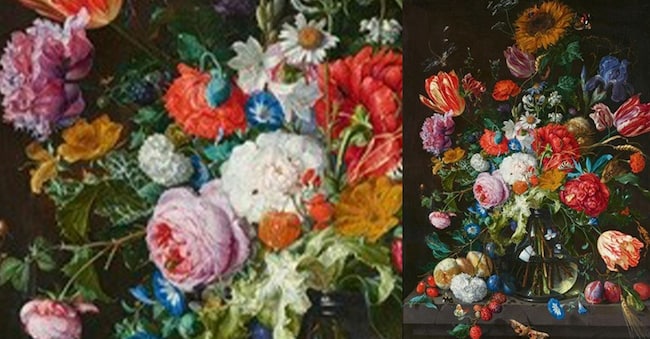
It is precisely within this vision that the new generation of the Hanstein family fits in. At the helm of the company today is Isabel Apiarius-Hanstein (born 1988), managing director of the house, who joins her father Henrik Hanstein, a central figure in the auction house's recent history. In 2025, Lempertz recorded a turnover of €46.4 million with record results, led by rediscovered Old Masters masterpieces and important private collections. Among the year's top lots was a still life by Jan Davidsz. de Heem, 'Still Life with Flowers and Fruits on a Stone Ledge' which fetched €3.16m (estimates between €1m and €1.5m). Lempertz's performance in these early months of 2026 confirmed a basically solid market, driven by a focus on museum masterpieces and historical private collections, despite geopolitical uncertainties.
Specialisation, prudence and new collectors
While the market in recent years has been characterised by the growing popularity of financial instruments such as guarantees and the expansion of private sale, Lempertz continues to adopt a more selective approach. Isabel Apiarius-Hanstein explains that the house does not consider guarantees a central element of its business strategy. "Every negotiation is different," she notes, emphasising that the auction house prefers to evaluate case by case rather than systematically resort to a tool increasingly used by large international players to secure the most important works. On theprivate sale front, Lempertz also maintains a relatively traditional position. Although it operates in the reserved negotiations sector, the auction house continues to consider public auction as its main field of action, confirming the centrality of the competitive and transparent mechanism that has historically characterised its business model.
The challenges, however, vary considerably from department to department. In the Old Masters segment, the main difficulty is to find museum-quality works that can still reach the market, whereas in modern and contemporary art the problem is, above all, the intense competition between operators and the increasing importance of negotiation with collectors and sellers. Added to these market dynamics is an issue that Apiarius-Hanstein considers to be fundamental: the training of a new generation of collectors. "We have to teach young people that art does not have to be expensive to be meaningful," he says. A reflection that refers to an idea of collecting that is less speculative and more linked to the cultural experience of the work. The same caution emerges in the definition of estimates. "If in the two-year period 2021-2022, during a phase of strong market expansion, it was possible to adopt more aggressive valuations, today the economic and geopolitical context induces a more cautious attitude and we prefer to be conservative," explains Apiarius-Hanstein, acknowledging how international uncertainty has made it more complex to predict collectors' behaviour and sales trends.
Next Appointments: Modern, Contemporary and Margulies Collection
On 5 and 6 June Lempertz returns to Cologne with auctions devoted to modern and contemporary art and photography, the latter enriched by a selection from the Margulies Collection belonging to the American collector Martin Z. Margulies. One of the auction's highlights is a vintage print by Irving Penn depicting a father kneeling beside his son, seated on a swivel stool and staring stoically at the viewer (lot 581, €15,000/20,000). The photograph was taken in 1948, when Penn, at the end of a fashion shoot for 'Vogue' in Peru, visited the ancient Inca capital, Cuzco, in the Andean highlands, where - fascinated by the visual presence of the indigenous population - he spontaneously rented the studio of a local photographer for three days and took portraits of the locals in exchange for a fee. As they proudly presented themselves in their colourful and, at times, humble folkloric garb, Penn gave these people the same artistic attention he usually reserved for his famous glamour portraits of beautiful and powerful people. Some of these masterful photographs were published in 'Vogue' in 1949. The Cuzco series marks the beginning of Penn's ethnographic interest as a photographer. Another top lot in the Margulies Collection is the monumental 56-part photographic work ("The Island Series") by Ólafur Eliasson (estimate €30,000 - €40,000). Among the top lots in the auction of modern and contemporary art was 'Bust of a Woman (Bust L.)' (1910) by Wilhelm Lehmbruck, a rare marble sculpture estimated at €500,000 - €700,000, considered to be one of the artist's last works still in private hands. The Worcester Museum of Art in the United States entrusted Lempertz with four works byKarl Hofer, Bernard Buffett, Maurice Utrillo and Pierre-Auguste Renoir. In his portrait of a child, 'Coco mangeant sa soupe' (1905), Renoir depicts the tender gaze of a father towards his youngest son; the estimated price is between €500 and 600,000. The proceeds of these works from the museum's collection will go towards a planned acquisition.

