Products

Lenovo at CES 2026: PC becomes an intelligent machine, Qira is born

At this year's Tech World at Ces in Las Vegas, Lenovo presents Qira, the personal AI that lives between devices, the goal is one: to bring artificial intelligence embedded in the machine

by Luca Tremolada

7' min read

Translated by AI
Versione italiana

7' min read

Translated by AI
Versione italiana

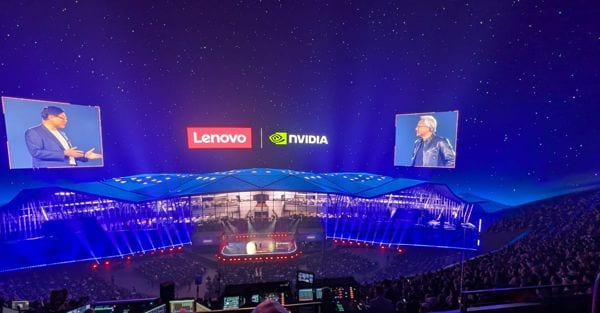
The PC is not dead. It has only set out to study artificial intelligence. At this year's Tech World hosted at CES 2026 in Las Vegas, Lenovo brings to the stage an endless array of new computers - business and consumer - all with the same obsession: to make AI invisible, yet concrete. In this case, context matters because the multinational's managers have chosen as their stage Sphere, a giant sphere 112 metres high, 157 metres wide and costing $2.3 billion. Not an arena. A habitable computer.

Lenovo played it big. On stage at the Sphere were Jensen Huang (Nvidia), Lisa Su (Amd), Lip-Bu Tan (Intel) and Cristiano Amon (Qualcom), among others, practically the US-made semiconductor industry. Yuanqing Yang, president and CEO of Lenovo, wanted to kick off with Jenseng Huang at his side to present Ai Cloud Gigafactory, a new gigawatt-scale artificial intelligence factory programme that expands the collobaration between the two Big Techs. The goal is to bring next-generation artificial intelligence workloads and applications online faster to cloud providers.
Loading...

"In the age of artificial intelligence, value is no longer measured only by computing power, but also by the speed with which it produces results," said Yuanqing Yang, President and CEO of Lenovo . "Together, Lenovo and NVIDIA are pushing the boundaries of artificial intelligence-based factories to the gigawatt level, simplifying the deployment of cloud-scale infrastructures that enable artificial intelligence to move into production faster, with greater efficiency and predictability."

The second announcement is what they call a super agent capable of bringing personal artificial intelligence into the hardware in order to leverage Lenovo's ecosystem of products by augmenting the context and orchestrating the LLMs of the players in the field. It is the beginning of the Ai-on-device era that the multinational company intends to focus on in a big way.
"At CES," explained Luca Rossi President of Intelligent Devices Group, Lenovo, "personal AI comes to life across our entire portfolio, from revolutionary concepts to new smartphones to gaming, consumer and enterprise devices. By democratising AI and enabling a single AI super agent to operate seamlessly across many devices - from AI laptops to AI smartphones to agent-native wearables - we are realising the Smarter AI for All vision and transforming personal AI into a powerful differentiator in the real world". The trduction is artificial intelligence embedded in hardware, private and personal. Lenovo and Motorola have called it Qira, 'a new era of personal AI: designed around users, based on trust and shaped by their control'.
What is Qira?

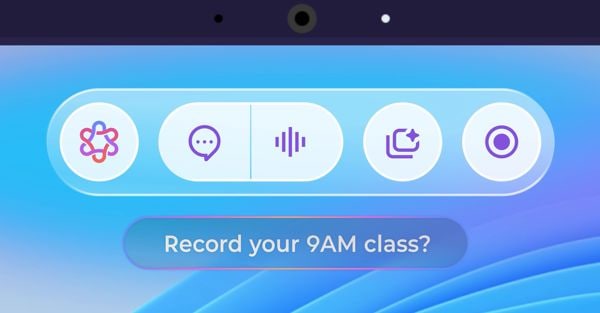
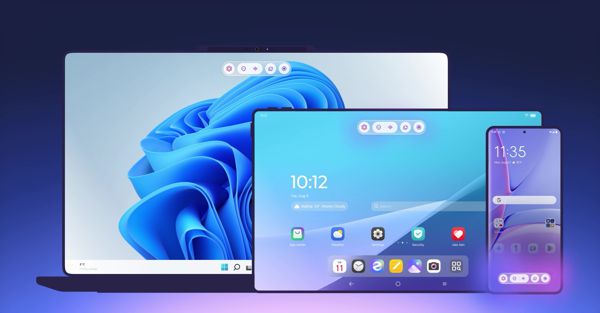
The real bet is Qira, it is the most ambitious piece of the Lenovo puzzle and also the riskiest.It is not a voice assistant. It is not a chatbot. Qira is an ambient, system-integrated AI. It lives between Lenovo and Motorola PCs, tablets and smartphones. It does not open. It does not launch. It promises to be present and integrated. The promise is strong: total continuity. You change devices, you change context, but AI remembers what you were doing. It updates you if you are absent. It suggests your next step. It writes with you, summarises for you, listens for you. Lenovo talks about three pillars: presence, perception, action.

In practice: Qira understands context, interprets intentions, acts autonomously. All with a hybrid architecture, where much of the processing remains on the device. Privacy-first, they say. Lenovo Qira is designed with privacy by design. Its hybrid AI architecture prioritises on-device processing to keep personal data local, while secure cloud services extend functionality with robust guarantees and user control. Every aspect of the Lenovo Qira experience is designed to be safe, ethical and responsible.

The rollout starts in 2026. Gradual. Prudent. Because the challenge here is not technical, but cultural. Convincing users to trust an ever-present AI is much harder than launching a new laptop.Qira is Lenovo's bet on AI as an invisible infrastructure. If it works, it changes the way devices are used. If it fails, it remains a fascinating idea.

What does it promise to do?

Lenovo Qira was born from a simple idea: the user is one, the devices are many. PC, smartphone, tablet, smartwatch. Screens change, heads don't change. AI, on the other hand, usually starts all over again each time. Qira tries to break this pattern.

It is not a chatbot to be opened when needed. It is an intelligence embedded in the operating system, always present but never intrusive. It's there, like electricity: you don't see it, but if it's missing, you realise immediately. You can call it with your voice, with a button, with a gesture. Or ignore it. The difference is that it knows when to intervene and when to remain silent, adapting to the habits of those who use Lenovo and Motorola devices.

The real ambition, however, is to make her do things. Qira doesn't just suggest: it acts. It can carry out a task using local AI, even without a connection, coordinating different apps and devices. The user stops being the project manager of every micro-step. He says what he wants to achieve, not how to do it. It is the transition from the assistant who responds to the agent who works.

To do this, Qira needs memory. Not a generic memory, but one built over time, made up of documents, user-chosen interactions, context. All openly based on consent and privacy, at least in its intentions. This 'cross-device' perception allows it to understand where you are, what you are doing, what you do next. It does not guess the future, but it recognises patterns. And it is often more than enough.Lenovo Qira was born from a simple, almost banal idea, but one that no one has really solved so far: the user is one, the devices are many. PCs, smartphones, tablets, smartwatches. Screens change, heads don't change. AI, on the other hand, usually starts all over again each time. Qira tries to break this pattern.

It is not a chatbot to be opened when needed. It is an intelligence embedded in the operating system, always present but never intrusive. It's there, like electricity: you don't see it, but if it's missing, you realise immediately. You can call it with your voice, with a button, with a gesture. Or ignore it. The difference is that it knows when to intervene and when to remain silent, adapting to the habits of those who use Lenovo and Motorola devices.

The real ambition, however, is to make her do things. Qira doesn't just suggest: it acts. It can carry out a task using local AI, even without a connection, coordinating different apps and devices. The user stops being the project manager of every micro-step. He says what he wants to achieve, not how to do it. It is the transition from the assistant who responds to the agent who works.

To do this, Qira needs memory. Not a generic memory, but one built over time, made up of documents, user-chosen interactions, context. All avowedly based on consent and privacy, at least in its intentions. This 'cross-device' perception allows it to understand where you are, what you are doing, what you do next. It does not guess the future, but it recognises patterns. And that is often more than enough.

This is where concrete experiences come from. If you walk away, Qira gets you back on track when you return. If you're writing, it goes straight into the paper and helps you turn jumbled ideas into readable text, without forcing you to switch apps or stare at a blank page. If you're in a meeting, it listens, transcribes, translates and summarises, so your memory doesn't hang on the goodwill of the note-taker. If you're working on a shared screen or with the camera active, it understands what you're showing and what you're saying, making interaction with AI seamless and natural.

At times that require more concentration, Lenovo has also thought of dedicated spaces, such as Creator Zone, where AI helps create and edit visual content by reducing digital noise. Fewer notifications, fewer distractions, more creative control. A rarity, in the world of AI that talks all the time.

The new products.

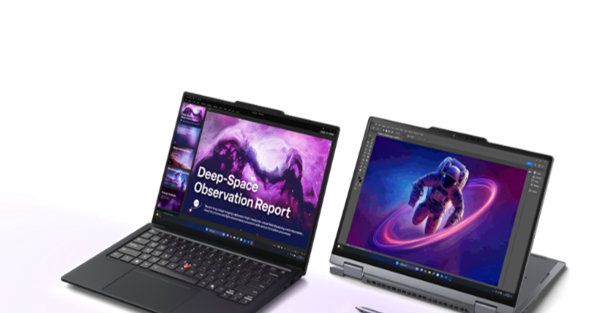
In the business world, the new ThinkPad X1 Aura Edition and ThinkPad X9 15p stand out. Inside is Intel Core Ultra silicon with dedicated NPUs. Outside, modular and repairable design. Lenovo talks about +20% thermal dissipation and simplified maintenance. Translation: more power, less downtime.

ThinkPad X1 Carbon Gen 14 and ThinkPad X1 2-in-1 Gen 11 Aura Editions

Prices? X1 Carbon from €1,779, X9 15p from €1,889. Premium PCs, but designed to last.

ThinkCentre X AIO Aura Edition

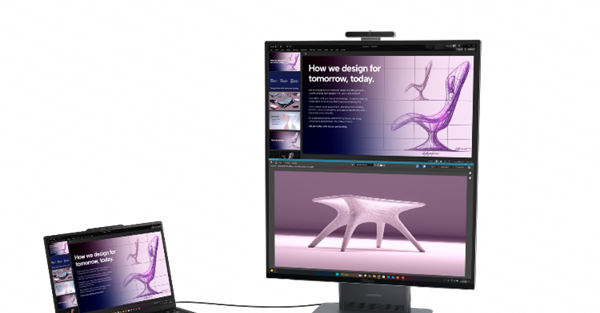
On the desktop comes the ThinkCentre X: desktops that run AI models with up to 70 billion parameters locally. The ThinkCentre X AIO Aura Edition Copilot+ PC¹⁶ features a 27.6-inch QHD display with a 16:18 ratio, offering a unique, almost square viewing area that is ideal for creators, programmers and data professionals who benefit from the ability to view two A4 pages or full data sets in a convenient portrait format. With Lenovo Share Zone, the AIO becomes both computer and monitor at the same time, dividing the screen into two sections to show content from the AIO on one side and content from a connected external device on the other.AI doesn't always fly in the cloud. Sometimes it stays under the desk.

ThinkPad X9 15p Aura Edition

On the consumer front, the Yoga ecosystem becomes a creative laboratory. The Yoga Pro 9i Aura Edition features Nvidia RTX 50 GPUs and a 3.2K Tandem OLED display. It is a laptop that winks at creators and videomakers. The message is clear: AI is not just for writing emails, but for producing content.

Lenovo calls this Smarter AI for All. More than a slogan, an industrial strategy. $69 billion in global sales help support it. There is also an industrial read. Lenovo is the world's leading PC manufacturer. Thin margins. Huge volumes. AI becomes the way to differentiate without chasing price alone.

In a saturated market, Lenovo chooses the path of AI normalisation. Less hype, more integration.

If he can make artificial intelligence perceived as something natural - and not as yet another feature to be learned - then he will have won the hardest game.

Copyright reserved ©
  • Luca Tremolada

    Luca TremoladaGiornalista

    Luogo: Milano via Monte Rosa 91

    Lingue parlate: Inglese, Francese

    Argomenti: Tecnologia, scienza, finanza, startup, dati

    Premi: Premio Gabriele Lanfredini sull’informazione; Premio giornalistico State Street, categoria "Innovation"; DStars 2019, categoria journalism

Loading...

Brand connect

Loading...

Newsletter

Notizie e approfondimenti sugli avvenimenti politici, economici e finanziari.

Iscriviti