In dance steps with Léo Walk, between breakdance and chanson française
Choreographer, stylist, much loved by the fashion world, the artist who, from the banlieu where he was born, has reached the most important theatres in Europe. And he is constantly on the move.
by Louis Wise
6' min read
6' min read
Léo Walk was not always Léo Walk. He was once a teenager named Léo Handtschoewercker and lived in the banlieue of Champigny-sur-Marne, Paris. "That period was really hard," says the dancer and choreographer, now 29. "One day I realised and decided that I would have to build my own path, and that I would have to follow it with determination." Handtschoewercker had already been dancing breakdance since the age of eight. He was part of the generation that welcomed the big hip hop boom in France in the 2000s, and it was from here that he started, choosing to pursue this discipline under a new stage name, Léo Walk.
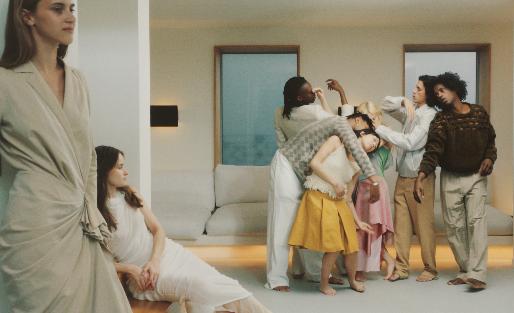
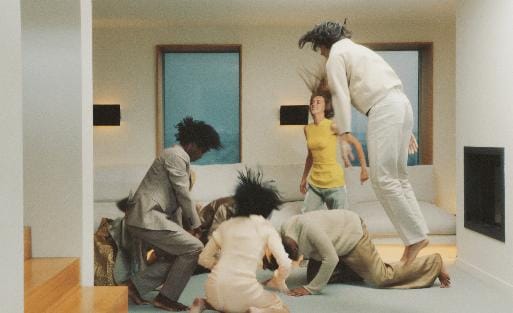
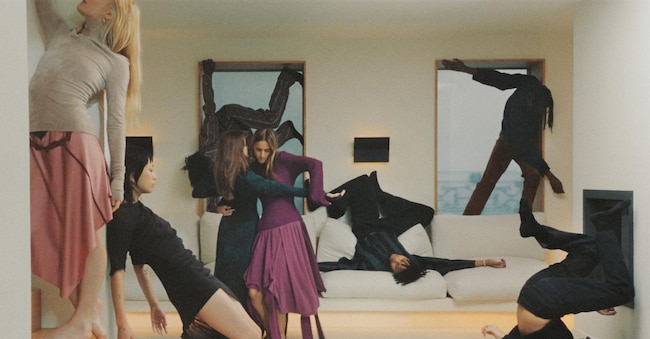
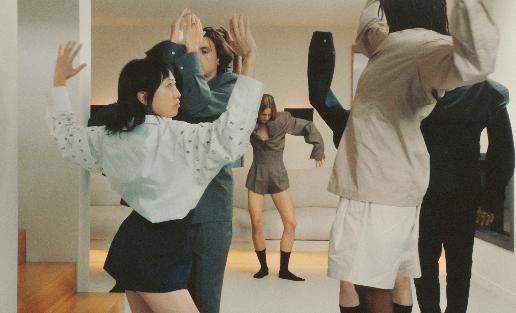
"I decided to go on, to fight, to change to improve my situation," he explains in the upstairs room of a Parisian villa where he and his company, La Marche Bleue, have just finished a photo shoot for Htsi. For hours they twirled about, but often simply enjoyed themselves, under his gentle but firm direction. "Walk, walk, at first it was like a mantra. But now it is also a kind of warning: when people call me, they say 'Léo Walk', so I am condemned to always be on the move, to keep walking,' he says, smiling.
Today, many years after his beginnings, Walk - as he is now known to everyone - has toured with singers such as Christine and the Queens and Angèle, staged shows for Jacquemus and agnès b., and starred in an advertising campaign for Louis Vuitton. He has toured all over France with his dance company, La Marche Bleue, has his own clothing line, Walk in Paris, and has even founded a genre, 'Walkance', which combines his unique style of breakdancing, contemporary dance and what he calls artist's touches. You can watch it on YouTube: in one piece, Island, he sings accompanied by a funeral lament by Argentinian singer Mercedes Sosa, alternating between moments when he falls and gets up from the ground, in a sort of continuous bounce. In another, Parce Que, he moves delicately to the song by Serge Gainsbourg. This mix of modern movements and old-school chanson is his main strength, something he stumbled upon as a child while dancing to his father's records, and which he has treasured.
"Kids who breakdance often draw energy from la haine, which literally means 'hatred', but in a broader sense indicates anger, ferment. I felt a certain haine in the chanson française, and I really had something to say about it,' he explains. But that spring had also become a balm. 'I felt bad in the ghetto, everyone had to fight, deal, but at the same time I didn't feel comfortable among the bourgeoisie either. So I started dancing to unite the two opposites'.
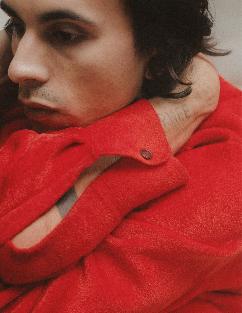
Walk has a discreet, but confident, focused personality with great self-control. Lying face up on the bed, as if on a psychologist's couch, he suddenly gets up and starts wandering around the room as if evoking glimpses of his past. With his handsome and intriguing appearance (his father is Flemish with Asian origins, his mother Portuguese), illuminated by his tattoos, he could be the perfect testimonial of modern multiculturalism. Yet, his work is not overtly politicised. His latest choreography, Maison d'en face, is sensual, set inside a house in which the dancers move away from each other and then always return close, in contact. "I needed some warmth," Walk says of his creation. "With all that's going on in the world, I don't want to get into politics. Everyone is reposting everything on social media, I still can't quite process what's going on, I'm affected by it, but I admit I can't process it."