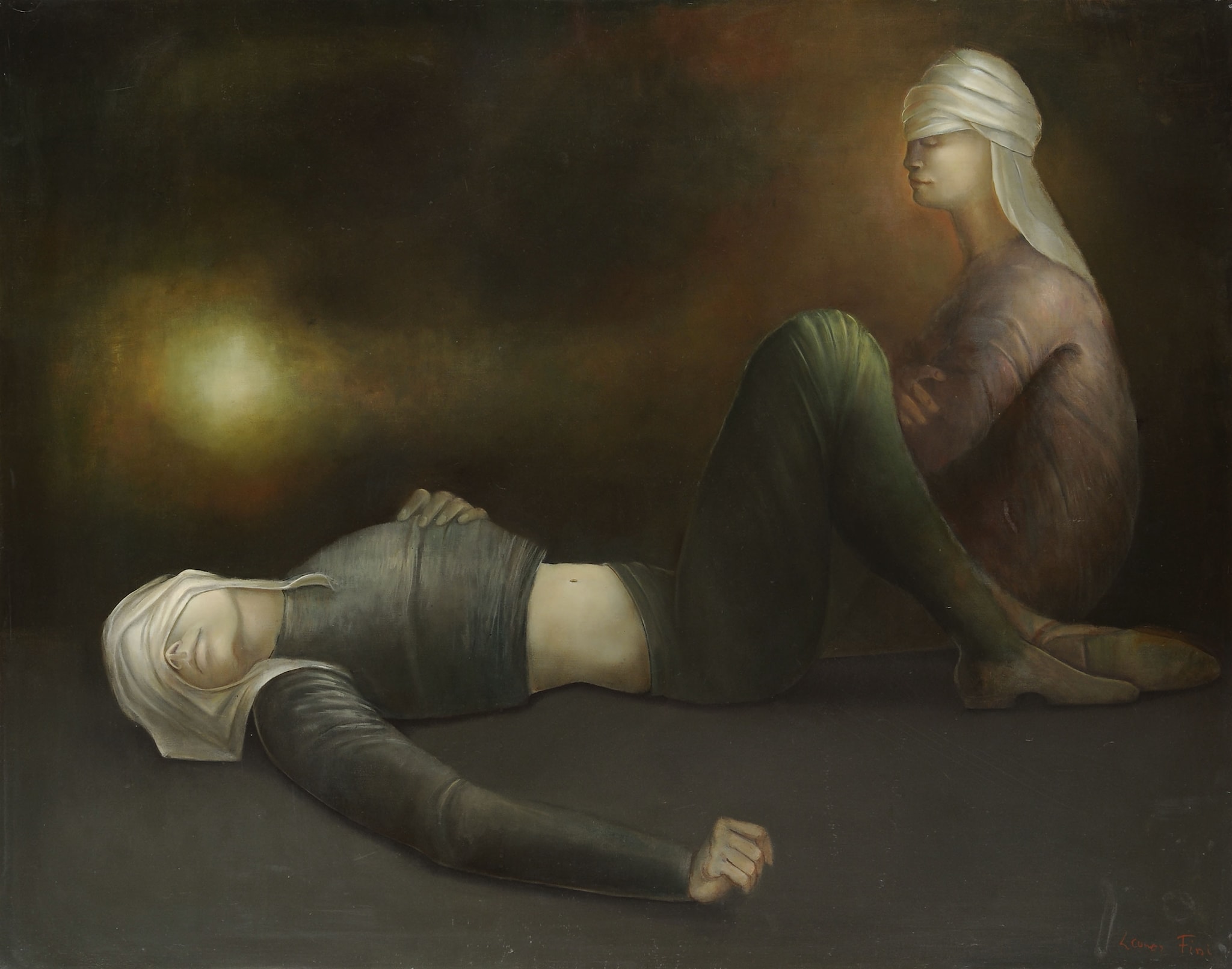
Leonor Fini, farewell to the house among the rooftops of Paris
We wondered why the flat where he lived could not be turned into a home/museum, but no one gave us an answer

5' min read
5' min read
In Paris, between the first and second arrondissements, very close to the Place des Victoires, the Gallerie Vivienne and the Bourse de Commerce - as well as not far from the Palais Royal and the Louvre - there is a small, rather anonymous, but in its own way authentic street. Rue de la Vrillière is like this and suddenly appears between glass blocks and clothes shops. We arrive at number 8 where a marble plaque informs us that the Italian-Argentinian artist Leonor Fini painted and lived there from 1960 to 1996, practically a year after moving to the French capital for good until her death on 18 January 1996, in that very house.
We manage to enter it two days before its definitive closure, at the moment when Milan dedicates the exhibition at Palazzo Reale - I am Leonor Fini - to the visionary and rebellious universe of the Italian-Argentinian artist (born in Trieste in 1907).
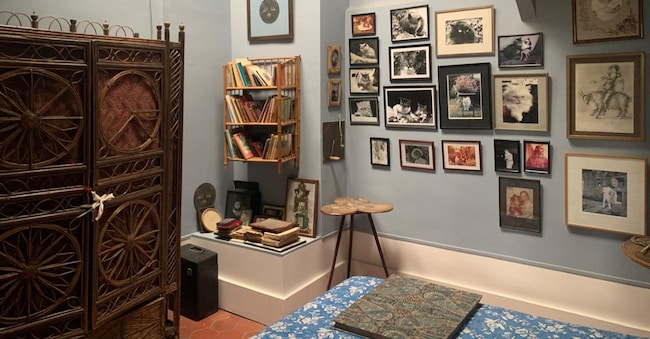
We asked why that flat could not have been turned into a house/museum, but no one gave us an answer. 'Probably, it is better to remember it as alive and full of energy as when she lived there,' Arlette Souhami, gallery owner and close friend of Fini's in the last years of her intense and never trivial life, promptly answers us. We climb with her up the long spiral staircase (there is no lift) that takes us to the top floor, in front of a small white door that opens onto a kitchen full of pots, plates, glasses, cups, paintings and sculptures - especially of cats, "her love and obsession", the art dealer points out - and, again, coloured containers, some of her works and other paintings. Another staircase takes us to the first floor among bookshelves, bedrooms and a terrace - certainly not common here in Paris, especially in this area - protected by a net to keep pigeons and other unwanted guests out. Room after room, we arrive in the large central hall that was then his studio with more canvases and paintings, finished or left half-finished, black and white or colour photographs well kept in collections or left on large tables together with drawings, other photos and colours. There are hundreds we see in a drawer 'deliberately left open and always ready for use', among tempera, pastels, pencils and waxes. 'We used to see each other two or three times a week,' Souhami continues, 'but every day he would phone me at seven o'clock in the morning, the first of the many phone calls he made. I would always come here after four o'clock, because she was resting first, and I would sit in this comfortable wicker chair as I am doing now. At first I would watch her and remain deliberately silent, listening to her talk, just as I did the first time I met her in the 1980s. Little by little I started talking more and more and became her greatest confidante. She had a difficult character and when she got angry the fights were violent, but her outbursts were short-lived.
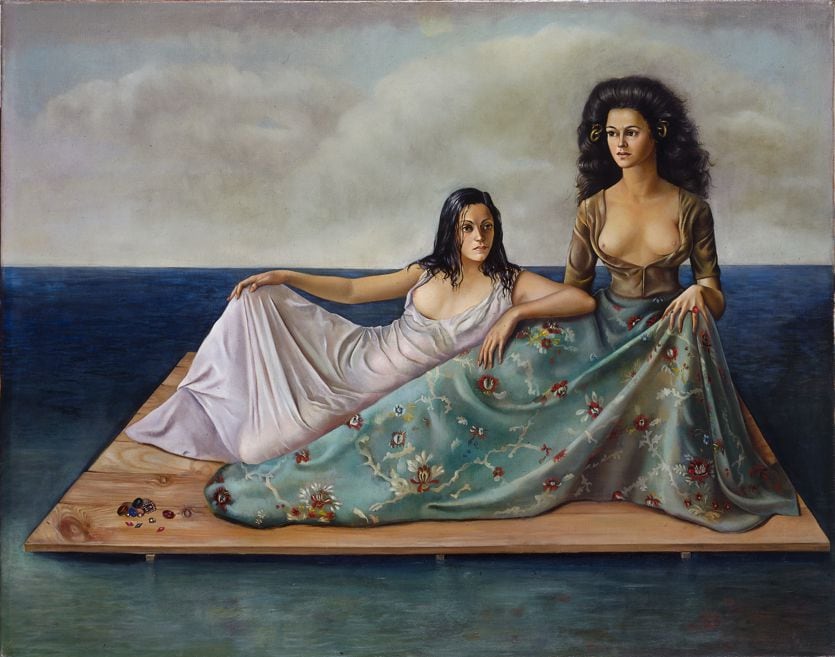
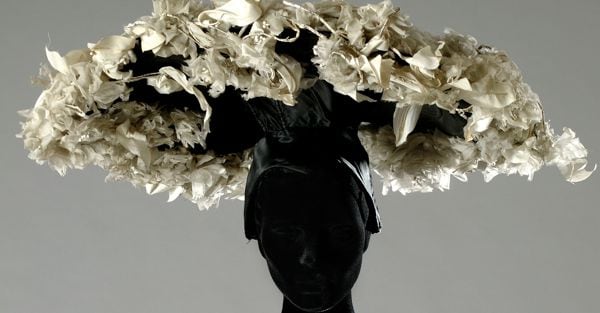
As she speaks to us, she picks up a book by the writer and playwright André Pieyre de Mandiargues, a great friend of Fini's, and opens it at a point where he calls her 'gattora' - getting the vowel of that term wrong in Italian - reminding her that those fits of rage were not good for her health. "Theatricality," we read, "let's leave it to other stages. That Leonor Fini was theatrical is what she herself declared: 'I have always loved and lived my theatre,' she said. "Dressing up and masquerading is an act of creativity. When she was not painting or travelling, she loved to do it all the time, organising and participating in masquerade balls that became the perfect places where she could manifest her exuberant personality through her passion for the disguises she created. Souhami gives us proof of this by showing us some of the many photos in that room, taken in Paris, New York, in Arachon, near Bordeaux - at the home of his friend André and Federico Veneziani where he met, among many others, Salvador Dali and his then partner Gala. Our eyes are lost among so many beauties, especially admiring the photos taken during the time spent at the Franciscan monastery in Nonza, in northern Corsica - the summer house surrounded by nature without electricity and plumbing - and those taken in the village of Saint Dyé sur Loire where his spring house was and where his grave stands today, next to that of his beloved Kot and Leo, Konstantin Jelénsky and Stanislao Lepri. With the two of them she shared her Parisian home, putting into practice that idea of community that she was passionate about from a very young age. At some point, the artist Richard Overstreet also arrived, the one who has continued to inhabit that flat to this day, always surrounded by a few cats.
In her personal bedroom, they are everywhere, from cushions to picture frames, from books in different languages (many in Italian) to fans, the protagonists of her mysterious and enigmatic universe populated by dreamlike and fantastic figures such as the sphinx, a perfect combination of mystery, ambiguity and power, which she reinterprets as a hybrid on the border between human and animal, an ambiguous and subversive identity representing the border between the conscious and the unconscious.