
Lgbtq+ rights under attack
Globally, 64 countries make homosexuality illegal and seven have the death penalty, according to Ilga data

3' min read
3' min read
Next 17 July in the United States, the service dedicated to young people in the LGBT+ community within the initiatives of the National Suicide Prevention Lifeline, known as the 988 Suicide & Crisis Lifeline, will close. This was announced in June, Pride month, by the Substance Abuse and Mental Health Services Administration, the federal mental health and substance abuse agency. This was a new move by the Trump administration, which had clarified its policy with one of the first executive orders signed by the new president, recognising only two genders: man and woman. As a consequence, in February the USA had also left the group of UN countries that support LGBT+ rights.
This was just one of the latest global political decisions to affect the rainbow community over the past year in countries where historically the rights of LGBT+ people were respected. The map drawn every year by Ilga, the International Lesbian, Gay, Bisexual, Transgender and Intersex Association, shows a worsening situation compared to the previous year: the number of UN states where being gay is a crime has risen to 64 from 60. In seven of these there is a death penalty for consensual same-sex sexual acts. In addition, in at least 61 states there are laws, rules and regulations that restrict freedom of expression related to sexual and gender diversity issues and in as many there are legal obstacles to freedom of association when registering and running organisations that openly support the rights of LGBT+ people.
In 2024, measures against homosexuality were tightened, for example in Mali, where the new penal code punishes consensual acts between adults of the same sex; in Burkina Faso, where an amendment to the 'family code' made homosexuality illegal; in Uganda, where a new law provides for imprisonment for those who identify as gay.
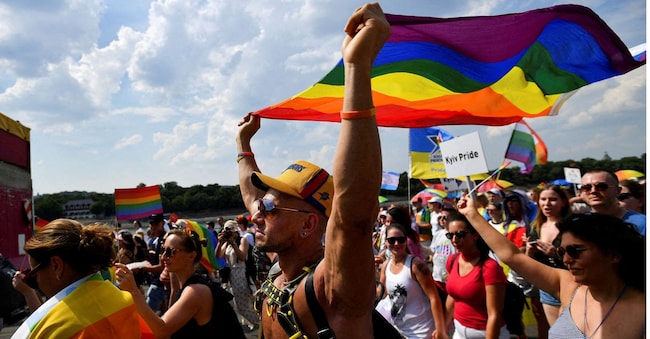
In Europe there are great contradictions. From situations of almost total equality, as in the Netherlands or Malta, we move on to countries in which a continuous and constant reduction of the rights of the LGBT+ community is attempted, as is the case in Hungary where, after the 2021 law banning the dissemination of information and publications on homosexuality or gender reassignment in schools, a law banning pride was passed in the spring. Against this latest initiative of the government led by Viktor Orbán, twenty European Union countries moved to sign a declaration proposed by the Netherlands in which they strongly condemned the Budapest government's democratic regression towards the LGBT+ community. The document lacked the signature of Bulgaria, Croatia, Romania, Slovakia, Poland and Italy.
But as much as Budapest is a special observer, it is Romania that occupies the worst position in the ranking compiled by Ilga Europe, the organisation that compiles the map. Just above it is Poland, which, however, has seen a slight improvement in the situation thanks to the elimination of the last 'Lgbt ideology free' zones that, just six years ago, had led to discriminatory policies in many municipalities.

