Ligier JS50: the electric version of the premium microcar is here
The range is being expanded to include a ‘plug-in’ version that promises a range of 164 km.

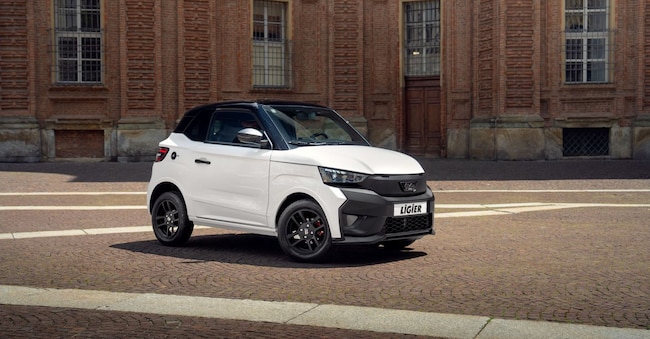
A viable alternative to scooters, much appreciated by more anxious parents, are microcars – that is, light quadricycles that can be driven from the age of 14 onwards. Ligier, a French brand that those of a certain age will remember as one of the manufacturers that competed in the Formula 1 championship between the late 1970s and the late 1990s, plays a leading role in this market. The new model joining the French microcar range is the JS50, which, following its debut with a diesel engine, is now available with an 11 kWh LFP (lithium-iron-phosphate) battery, effectively setting the benchmark for other manufacturers, who typically offer batteries ranging from 5 to 7.5 kWh.
The battery, manufactured by a Dutch company, has been tested for use in the most extreme conditions: for example, it can withstand temperatures as low as -20°C, thanks to an integrated heating system. This battery enables the Ligier JS50 to offer a range (on paper) of up to 164 km in the WMTC cycle. This range is achieved primarily by activating ‘Eco’ mode, which has been implemented to maximise energy recovery during braking. It should be noted that, due to a maximum charging power of 2 kW, it takes around 6 hours to fully charge the battery.

Having more power isn’t just about clocking up the kilometres: the real convenience lies in being able to use features such as air conditioning and power steering without seeing the range drop on the display. This engine is available both for the L6 version (similar to mopeds), with a top speed ‘capped’ at 45 km/h, and for the L7e variant, which can be ridden from the age of 16 and is capable of reaching 75 km/h.
Top-of-the-range chassis and safety
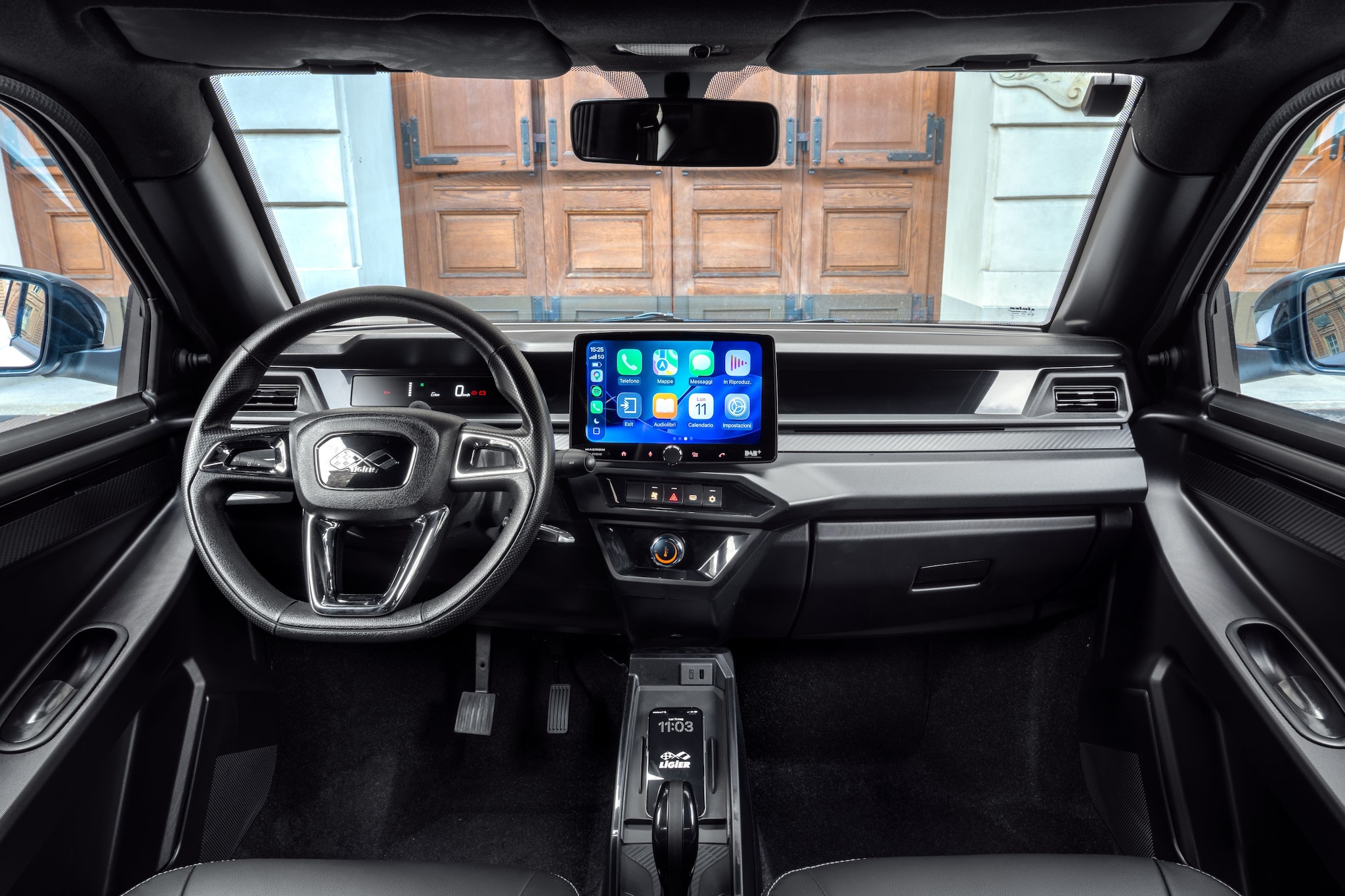
As Ligier explains – a brand positioned in the premium segment – the interior follows this philosophy, offering a level of specification reminiscent of classic cars. The dashboard features carbon-look detailing and houses a 10-inch touchscreen tablet in the centre, complete with wireless integration for Apple CarPlay and Android Auto. The audio system is by Pioneer and features up to six speakers. A nice touch, in addition to the air conditioning mentioned earlier, is the reversing camera, which displays the images on the screen.
The microcar is built on a high-strength aluminium monocoque chassis. This structure is designed to be extremely lightweight, yet at the same time robust and safe. As for the suspension, the front features a genuine MacPherson strut setup, whilst the rear has independent suspension with separate hydraulic systems. No expense has been spared when it comes to safety either. Fitting four disc brakes to a vehicle of this size is a rarity. Its ‘city-friendly’ nature is emphasised by an extremely tight turning circle of just 4.5 metres, ideal for manoeuvring easily through traffic; even turning round in the narrowest of alleys or squeezing into a tight parking space becomes a breeze.