
Linardos (RLC Global Forum): 'Retail and brands united to overcome the crisis. The Gulf? It will recover'
On 3 and 4 June in Milan the RLC Fashion Summit, the second one organised in the city in less than a year: 'It is the place that best represents the two souls of fashion, creativity and business'

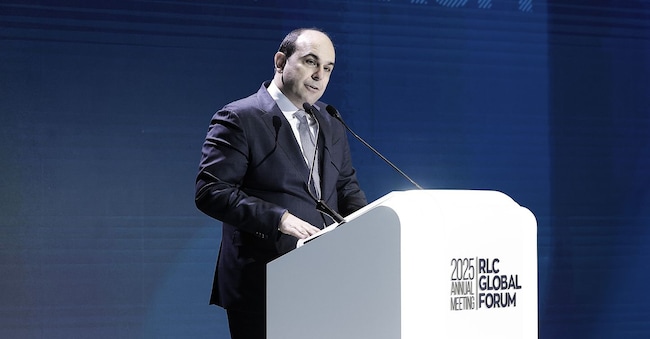
2026 was supposed to be the year of recovery for a luxury market that, from 2024 onwards, experienced critical moments. International events, however, have once again shuffled the cards, forcing companies - some of which are engaged in efficiency-boosting processes to return to growth - to review certain strategies. In this context, the conversation between companies and retailers, which have similarly come to terms with the need for evolution and have not always succeeded, is always open - and, indeed, it is stronger - in the search for new solutions, as Panos Linardos, president of RLC Global Forum, a platform that brings together leaders, innovators and institutional decision-makers and that for the second time in less than a year has chosen Milan for a comparison between international players: on 3 and 4 June, in fact, the Rlc Fashion Summit will bring together brand managers (from Prada to Golden Goose, via Kiton and Cucinelli) and retailers (Selfridges, LuxExperience and Saks among others).
President Linardos, the fashion and luxury industry has initiated a number of changes in response to the crisis. What are the most necessary and what is retail focusing on?
The industry is moving away from the model that focused on growth at any cost, expansion at any condition. Brands are trying to return to efficiency and reduce complexity, while putting the consumer and values at the centre, which, in the eyes of the buyer, have regained great importance. And this is the real challenge because consumers have become more informed and therefore more selective, and also by virtue of this less loyal if they do not find themselves in the values of brands. Retail has a key role to play in this context: consumers demand that these values be extended beyond the product to the experience, to services. It has to be said that consumer confidence around the world is on the upswing but this is happening unevenly geographically and, in general, there is a lot of caution. For this reason, it is crucial for brands and retailers to restart from values.
The international situation is challenging markets, such as the Emirates, which had experienced positive moments in the post-Covid era. What do you expect?
What is happening on a geopolitical level (instability in the Iranian and Gulf area, ed.) is having a negative impact on some markets of great importance for the fashion and luxury sector, such as the Emirates, Saudi Arabia and Qatar. There have been immediate consequences on tourist flows, for example, but we believe that despite this the Gulf will play an increasingly strategic role in the global luxury market in the future. Not only because, in the past, even in the face of major emergencies such as the pandemic, it has shown greater resilience than other locations, but also because in countries such as Saudi Arabia a long-term plan has been designed and put in place to acquire a significant role in the sector.

