The proposal

Leo XIV, US Congress considers law to 'protect' him from the IRS

A bill introduced in the House aims to safeguard the citizenship and tax exemption of the first US-born pontiff. A political response to an unprecedented dilemma: what happens when an American citizen becomes head of a foreign state with absolute powers?
by Angelica Migliorisi

3' min read

3' min read

The United States Congress is preparing to legislate not on religion, but on a single religious person: the incumbent pope. On 17 July, Republican Congressman Jeff Hurd (Colorado) introduced the "Holy Sovereignty Protection Act" (H.R. 4501), a bill that aims to safeguard US citizenship and grant full tax exemption to any American called upon to lead the Catholic Church.

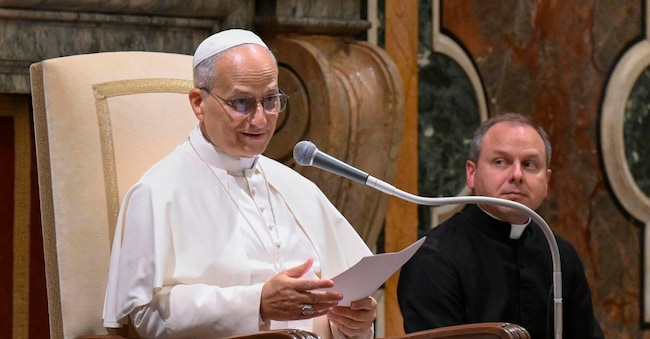
The proposal comes less than three months after the election of Leo XIV, the first US-born pontiff, formerly Cardinal Robert Prevost, originally from Chicago. His dual citizenship - American and Peruvian - and his new role as head of a foreign state have been the subject of discussion both inside the Vatican halls and on Capitol Hill.

Loading...

"This legislation recognises the extraordinary nature of the papacy - a role at the intersection of faith, leadership and global responsibility," Hurd said. "Those who answer the call to serve more than a billion Catholics should not be forced to choose between their vocation and American citizenship".

Taxing the Pope? The knot with the Irs

The heart of the problem lies in the extraterritorial tax regime of the United States. Under current law, every US citizen is obliged to declare his or her income to the US tax authorities, regardless of where he or she resides or where the funds come from. Theoretically, even a pontiff would be subject to annual reporting requirements, reporting of foreign bank accounts and - if deemed to be an income earner - payment of taxes.

According to some analysts, such as Paul Hunker, an immigration lawyer interviewed by Catholic News Agency, the pope could formally be one of the citizens required to file an income tax return, unless he explicitly renounces it or a legislative exemption is passed.

The papal office also manages significant funds - from charitable donations to St Peter's Obolus - which, although not 'personal', are formally the responsibility of the pontiff. And here the second front opens up.

Vatican concerns

.

According to reports on the Catholic news site The Pillar, some officials of the Vatican Secretariat of State have expressed fears that the Internal Revenue Service (Irs) - the US federal tax agency - might exercise even formal control over these funds. Also according to The Pillar, the idea that Pope Leo might renounce his American citizenship to avoid legal ambiguities would also have been considered, entirely hypothetically.

These assessments have never been officially made public or confirmed by the Vatican, but they testify to the unprecedented scale of the situation: for the first time, spiritual and fiscal sovereignty could be on a collision course.

According to the Catholic News Agency, an international Catholic news agency, ambiguity over the 'papal salary' also contributes to uncertainty. The predecessors of Leo XIV formally renounced the modest remuneration provided for the pontiff. Yet, in the absence of clarity on assets, expenses and discretionary funds, the Irs could theoretically consider part of these flows as taxable income.

The critical point: citizenship

.

There is another possible scenario that Bill H.R. 4501 seeks to prevent: the automatic revocation of US citizenship by becoming the head of a foreign state. In fact, under current law, this scenario requires the citizen to act voluntarily with the specific intent to renounce citizenship. An element that, so far, does not exist in the case of Leo XIV.

However, as Paul Hunker also explained, 'the position of head of a foreign state may trigger a State Department review', especially if there are diplomatic or jurisdictional complications.

Civil responsibilities and immunities

Some observers also raise a theoretical but not entirely peregrine hypothesis: If an American pope were to be sued in a civil case in the United States - for example, for responsibilities related to past Church scandals - could his citizenship circumvent the protection of sovereign immunity? .

Until now, the Holy See has enjoyed broad protection in American courts as a recognised sovereign entity. But in US law there are 'long-arm' laws that allow American citizens resident abroad to be sued in some states.

No court has ever dealt with the case of a US citizen-pope. And no expert really thinks it likely that an American court could sue the pontiff as 'Robert Prevost' without triggering a diplomatic earthquake. However, precisely to prevent any possible grey area, the bill seeks - albeit indirectly - to strengthen the protective framework around the papal figure.

The normative text has not yet been published in full and it is not clear whether it will be able to overcome the resistance - even within Congress - of those who fear that this law is a favour tailor-made for one man. And if no clear regulatory solution is found, Pope Leo XIV may have the unprecedented burden of explaining to the Irs how he spends God's funds.

Copyright reserved ©

Brand connect

Loading...

Newsletter

Notizie e approfondimenti sugli avvenimenti politici, economici e finanziari.

Iscriviti