
Who was Lionel Jospin, the former French premier who died at 88
A central figure in the French Socialist Party, he was Prime Minister between 1997 and 2002 during his cohabitation with Jacques Chirac
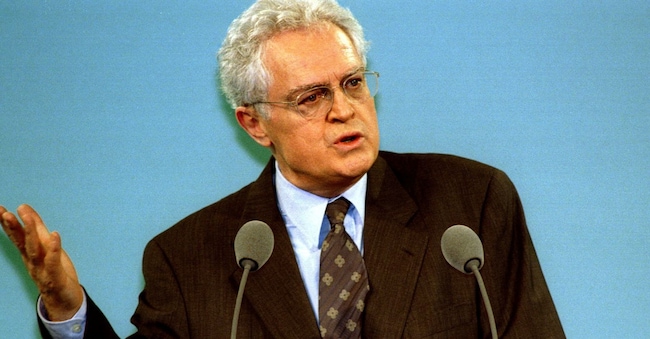
On 16 July 1997 Lionel Jospin sits at the table of the Council of Ministers at the Elysée Palace, in front of the President of the Republic Jacques Chirac. It has not yet been a month since his arrival in Matignon, but it is enough for him to fix a point: political legitimacy stems from the parliamentary vote and it is up to the government to guide the country's action. Jospin died on 22 March at the age of 88, after months marked by health problems, about which he had spoken last January, reporting 'major' surgery without further details. The news was announced by his family.
That point set in 1997 would mark his entire life: Jospin would always remain there, within the institutions, without theatrics. Even when power would become more complex. He governs a France grappling with entry into the euro, which imposes stringent constraints on public accounts, companies reorganise in an economy increasingly open to global competition, relocations begin to affect industrial work, unemployment remains high and the pressure on welfare increases. The left - his left - has to measure itself against all this, and so he sets another point:"Yes to market economy, no to market society".
The government he leads stems from an alliance that holds together almost all the families of the left, socialists, communists, greens, radicals, the so-called 'gauche plurielle'. A majority exists, but it has to be built every time. Jospin works on the texts, pays attention to detail, checks all the steps. Journalists of the time speak of intense meetings, of little room left for improvisation.
It is on labour that the government really reveals itself, when it introduces the reduction of working hours to 35 hours. Objective, to affect unemployment. The measure runs through the entire legislature and divides the country. Then come theemplois-jeunes - contracts financed by the state to get young people into work, especially in public and social services - access to healthcare is expanded, new protection instruments are provided. And, in the meantime, some large public enterprises are opened up to the market, others privatised.
The Michelin case, which in 1999 announced thousands of redundancies despite growing profits, upset that balance. The decision triggered controversy because it made it clear that even healthy companies were willing to cut jobs in order to compete, undermining the role of the state in protecting them. Jospin, on that occasion, states that the state cannot do everything ("L'État ne peut pas tout"). Words that mark a distance with a part of his base.


