
Opera: Bologna steps up its fundraising efforts, with private donors stepping in to support the Comunale
Around 2.7 million raised in 2026 for routine activities and major construction projects

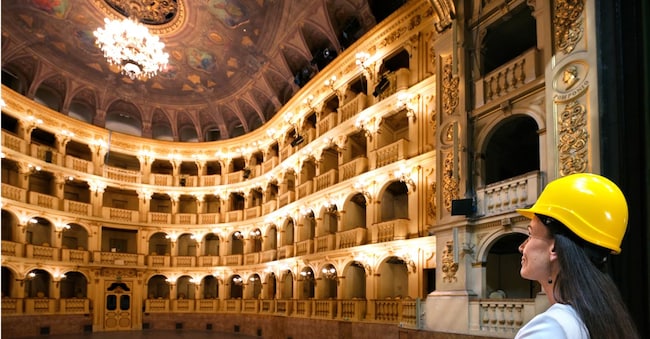
Renovation work is currently underway at Bologna’s opera house, the Comunale, which, from 14 February, will bring its its artistic activities ‘home’ from 14 February, following four seasons of performances at other venues across the city, whilst its historic home was (and remains) undergoing major renovation work funded by the City Council using its own, regional, national and European funds, totalling around 20 million euros. The new opera season (nine productions, seven of which will be staged in the restored Sala Bibiena) will therefore get under way on 2 March, in a theatre that is new not only in terms of its structure, but also in its programme and organisation.
The new Municipal Theatre
In fact, the projects currently underway are not merely physical ones, but also involve vision and content, explains Superintendent Elisabetta Riva, who, since taking up her post in mid-2025, has brought a strongly managerial and entrepreneurial approach to the running of the opera foundation. ‘My aim, over the five years of my term of office, is to increase the foundation’s sources of income by opening up more to supporters and private sponsors, without compromising our identity as a cultural and artistic institution, whilst embracing new experiments and activities that will also enable us to make our theatre more accessible and more international, increasing our audience of young people and visitors from abroad,” explains Riva.
Balanced budget
It has set to work, together with the governing board, to achieve this. The 2025 financial statements closed with a production value of 26.4 million euros (+5.5 per cent compared with 2024) and a profit of 1.18 million, a significant improvement on the previous year’s deficit of 1.6 million, restoring the foundation to financial equilibrium. Audience numbers also rose during 2026, increasing by 6.7 per cent in the first six months compared with the same period in 2025, with a particularly encouraging figure for under-18s, whose numbers almost doubled (+99 per cent).
Above all, however, the new management has significantly stepped up fundraising efforts. “When I arrived, contributions from private individuals – including donations and sponsorship – totalled around 2.3 million. This year, we’ve already reached around 2.7 million thanks to the new projects we’ve launched,” explains the superintendent.
Three fundraising projects
Two projects are linked to the theatre’s renovation works (‘Cantiere Itaca’) and therefore have a deadline: the first concerns the refurbishment of the offices and catering area and is funded by Alfasigma, a long-standing supporter of the Comunale, with a grant of 1 million. The second (also amounting to around one million euros) involves the refurbishment of the auditorium, the boxes, the vaulted ceiling and the portico, and involves six patrons: Pelliconi, Alfasigma, Banca di Bologna, Reekep, IMA and Stefano Golinelli.

