After Intel and MP Materials

Lithium Americas Doubles in Value on the Stock Exchange: US Government Aims for a Share?

The company is Canadian, but in the US it is developing a huge lithium deposit in a joint venture with General Motors. Now the Trump administration has called into question a government loan and is demanding a quid pro quo

by Sissi Bellomo

3' min read

3' min read

Rare earths, semiconductors and now lithium. After the entry into the capital of MP Materials and of Intel, which took place between July and August, the Trump administration has reportedly set its sights on Lithium Americas, in which it could take over a stake of up to 10%.

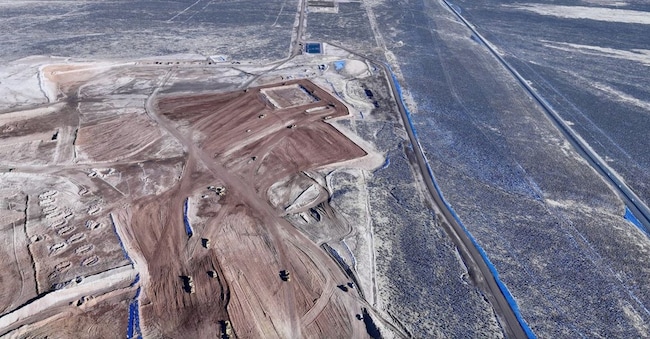
The company is Canadian, but in the United States it is engaged in a joint venture with General Motors in the development of Thacker Pass, a huge mining deposit in the Nevada desert that from start-up - planned for 2028 - promises to multiply by eight the 'made in the USA' production of lithium carbonate, which is used in batteries, reducing one of the many dependencies on China.

Loading...

Although surpassed by Australia and Chile in lithium mining, the People's Republic controls 75 per cent of global refining capacity.

The possible purchase of a stake in Lithium Americas - a move in line with the new state capitalism pursued by the White House - is at the moment only an indiscretion, first picked up by the Reuters news agency. But the market immediately gave credence to the hypothesis, to the point that in the space of a few hours Lithium Americas almost doubled its capitalisation, gaining about 90% on the Stock Exchange both in Toronto and in New York, where the stock reached $5.80: a price that would assign a value of 130 million to 10% of the company.

Other stocks in the sector also got into the swing of things on Wednesday 24, starting with Albemarle - so far the only lithium producer in the US - which rose more than 4% on Wall Street.

If the rumours about the sale of a stake to the US government remain as such, Lithium Americas itself in reaction to the wave of stock market buying has however released a note to confirm that there are indeed ongoing negotiations at the Department of Energy, also involving partner GM, regarding Thacker Pass and in particular the $2.3 billion public loan to finance its development, which the Doe had granted in 2024, before Donald Trump's presidential victory.

The discussions, Lithium Americas points out, also concern 'additional requests from the Doe for potential additional conditions' relating to the disbursement of the loan.

The statement is sparse and short on details, as are the comments Reuters gathered from the White House: "Trump supports this project," said one official, adding, however, that the president "wants it to be successful and also wants it to be fair to taxpayers, free money does not exist."

A few words, which nevertheless seem to support the hypothesis that a move similar to those already made with Intel and before that with MP Materials, in which not only did the Pentagon become the first shareholder, but also guaranteed a minimum purchase price for the future production of rare-earth oxides and magnets, is under consideration.

For Thacker Pass lithium, the orientation seems to be to shift the burden onto General Motors. From the mosaic of indiscretions - also gathered by other media, including Bloomberg - it emerges that the US government, in the context of the loan negotiations, is also putting pressure on GM to renounce all or part of its share in Thacker Pass or to undertake to absorb the entire production of the first phase of the project: as much as 40,000 tonnes of lithium carbonate per year when fully operational, enough for the batteries of about 800,000 electric cars.

The carmaker had entered into a partnership with Lithium Americas last year, taking over 38% of Thacker Pass for USD 625 million and reserving the right (but not the obligation) for 20 years to buy all the production of the first phase and part of that of the second phase.

The US government - which had authorised the Thacker Pass project during Trump's first term - is now reportedly worried about not getting the loan back (granted by the Biden administration instead) because the price of lithium, also due to Chinese overproduction, is too low.

Without public funds - and in the absence of additional private financiers, which may be difficult to find - the mine and refinery development work in Nevada would have to be halted.

The loan, a GM spokesman confirmed, is 'a necessary part of the financing to commercialise this important asset'. The carmaker 'has confidence in the project, which meets the US administration's goals, and has already committed nearly $1 billion to its development, including a $200 million letter of credit'.

Copyright reserved ©
Loading...

Brand connect

Loading...

Newsletter

Notizie e approfondimenti sugli avvenimenti politici, economici e finanziari.

Iscriviti