Hybrid warfare

Lithuania extends border closure with Belarus, EU: no more attacks or we will react

Lukashenko responded to the border closure in a scornful tone: 'It's a crazy scam, the balloon scam is an absurd excuse even for a small country like Lithuania'

by Antonio Talia

3' min read

Translated by AI
Versione italiana

3' min read

Translated by AI
Versione italiana

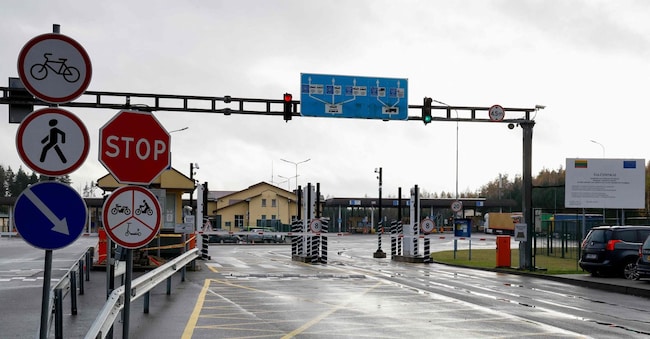
Lithuania closes the last two border crossings with Belarus at least until 30 November after a temporary closure decided in recent days. The government in Vilnius announced the measure this morning in response to recent violations of its airspace, attributed to the regime of Alexander Lukashenko.

Last weekend alone, traffic at Vilnius and Kaunas - the two main Lithuanian airports - was disrupted three times, causing the cancellation or diversion of 112 flights and difficulties for more than 16,000 passengers: the blockades were caused by dozens of balloons, devices habitually used by Belarusian cigarette smugglers who - as we reported in the second instalment of our special report - have turned into a tool for continuous disruption.

Loading...

'The balloons are a form of hybrid attack,' said Lithuanian Prime Minister Inga Ruginiené on Monday, 'and we will start shooting them down'.

Lukashenko responded to the border closure in a scornful tone: 'It's a crazy scam, the balloon scam is an absurd excuse even for a small country like Lithuania'. Lukashenko then accused Vilnius - which since 2020 has been home to leading opponents of the regime such as Svetlana Tsikhanouskaya - of launching a hybrid war against Belarus 'to hinder Chinese exports' to the West.

From Brussels, however, comes the EU's reaction: "These balloons are not mere smuggling tools, but occur in the context of a broader targeted hybrid campaign, along with other actions including state-sponsored smuggling of migrants," reads a note on behalf of the Twenty-Seven drafted by High Representative for Foreign Policy Kaja Kallas. "We will not tolerate any hybrid campaign directed against the EU or any of its member states. Sanctions have been imposed on the Belarusian regime, and the EU stands ready to take further appropriate measures should such actions continue."

Lithuania, meanwhile, is also reserving the right to invoke Article 4 of NATO - a request for consultations that any member of the Atlantic Alliance can make in the event of threats to its security: if Vilnius took this decision, it would be the third time in the space of two months, following the requests by Estonia and Poland linked respectively to the Russian jet and drone breaches last September.

Before that, in NATO's 76-year history, such meetings had only been held on seven other occasions.

But the signs of rising tensions are increasing, and they do not only concern the most exposed nations on the EU's eastern flank.

Yesterday, two Polish aircraft intercepted an Ilyushin Il-20, a Russian reconnaissance plane flying with its transponder switched off over the Baltic Sea, and escorted it out of international airspace.

In Belgium, Defence Minister Theo Francken today announced the opening of an investigation into the drones of unidentified origin that flew over the Marche-en- Famenne military base in the nights between Sunday and Tuesday, the second such case to occur around Brussels in a month. 'This was not the work of amateurs, but of experienced pilots,' Francken said.

Belgium had also been slightly affected by the waves of unidentified drones that had paralysed air traffic at Copenhagen, Munich and Oslo airports in early September and had been spotted in the skies of various Scandinavian military installations.

A few days after the Copenhagen incidents, the French navy had boarded the Boracay, an oil tanker of the Russian Ghost Fleet suspected of providing the launch pad for the mystery drones.

And France, finally, finds itself in the front line on another front of the hybrid war, the psychological one: the trial of three Bulgarian citizens, accused of defacing the Shoah Memorial in May 2024 on behalf of agents of the GRU, the Russian military secret service, began today in Paris.

An action identical and mirroring that of last September, when pigs' heads and insulting writings appeared near eleven mosques in the Île-de-France, artfully placed by a group of Serbian citizens who, according to the Parisian prosecutor's office, were manoeuvred by Moscow intelligence in a destabilisation plan to exasperate internal divisions in French society.

Copyright reserved ©
Loading...

Brand connect

Loading...

Newsletter

Notizie e approfondimenti sugli avvenimenti politici, economici e finanziari.

Iscriviti