Skuola.net Feature

Little competition, lax controls and restrictions on second-hand sales: here are the 10 reasons why books are so expensive

Some of the key issues identified by the Italian Competition Authority at the conclusion of its fact-finding investigation, which began in 2024 and ended in December 2025, as analysed by the specialist portal

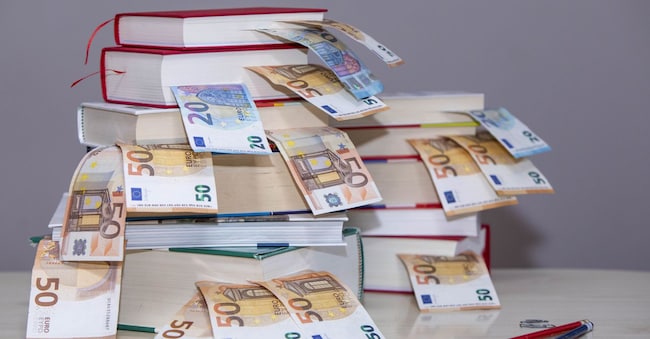
 (Imagoeconomica)

4' min read

Translated by AI
Versione italiana

4' min read

Translated by AI
Versione italiana

Few publishers on the market and therefore little competition; teachers who decide how much families should spend without anyone monitoring their actions; new editions that are far too easy; and digital licences that stifle the second-hand and loan markets, books that have essentially remained (heavy) paperweights, placing a burden on pupils’ backs and families’ wallets. These are some of the critical issues identified by the Italian Competition and Market Authority at the conclusion of its fact-finding investigation, which began in 2024 and concluded in December 2025, analysed by the Skuola.net portal and summarised in 10 key points, to answer a question that is currently causing families great concern: why are school textbooks becoming increasingly expensive?

There’s nothing dodgy about it. The Competition Authority’s investigation also extends to Mim

There is nothing amiss – it is worth making this clear – and so no one is to be found guilty, but there are many factors which, when taken together, work to the detriment of families: which is why the Competition Authority “has issued a formal notice to a number of institutional bodies, including the Ministry of Education, containing specific recommendations for action and supervision”.
Because whilst it is true that in primary school textbooks are free because they are provided by the State – or rather by local authorities – in lower and upper secondary schools the cost falls on families: the cost of school textbooks (up to €1,200 for a full course of upper secondary education) has not risen by more than the rate of inflation.

Loading...

Wages on hold and the second-hand market hampered

But with wages stagnating and the second-hand market severely hampered by certain practices that hit those on lower incomes hardest, September is a month to mark in red on the calendar – especially this year, as new national guidelines come into force for Year 1 and secondary school, justifying the mass production of new editions. But why is it so difficult for families to spend less?

The top 10 issues highlighted by the Competition Authority

The Skuola.net portal has also highlighted the 10 main reasons that emerged from the Competition Authority’s investigation.

1. Families support the educational publishing sector: the market for new schoolbooks is worth around 800 million euros (to which must be added the 150 million generated by the second-hand market): an industry that therefore creates many jobs, but which, as things stand, is kept afloat largely by families. The authority itself makes this point, stating emphatically: “It seems inappropriate that the burden of supporting the sector should fall on families, when alternative forms of public support exist, such as tax credits or direct incentives, which are already used in other areas of publishing”. In fact, a large part of publishers’ revenue comes precisely from secondary school textbooks, with figures showing an average expenditure of 580.75 euros to complete lower secondary school and as much as 1,250.43 euros to complete the entire upper secondary cycle.

2. Little competition and no incentive to save: the sector reform introduced in 2013 led publishers to invest in digital, so the market has become polarised and today 80 per cent is controlled by just four giants. Furthermore, those who decide what to buy – teachers – do not pay for it themselves: this is why spending increases year on year, whilst remaining in line with inflation.

3 The second-hand market is hampered: on average, 10 per cent of publishers’ catalogues feature new editions every year, and no independent body checks whether the changes in content are sufficient to justify them: there is only a self-regulatory code issued by the Publishers’ Association. This is certainly one of the main factors holding back the second-hand market, but it is not the only one: new adoptions by teachers, the inclusion of exercises and theory in the same text (rather than in separate volumes), and digital supplements that cannot be transferred from one user to another are the other likely culprits.

4. Digital technology that hasn’t led to savings: The frequent introduction of new digital resources is the result of a 2013 reform, which aimed to encourage the adoption of a new generation of digital tests. Consequently, a rule introduced a few years earlier – designed to suspend the adoption of textbooks by teachers in schools for a period of 5–6 years – was abolished.

5. Digital resources that cost money (but aren’t used): the end result? 95 per cent of the textbooks adopted are in a hybrid format, i.e. both print and digital. This type of textbook entails the cost of both the print books and the development of digital platforms and content. The irony? According to AIE data, in 2023/24 only 16 per cent of licences were activated, with an average of 11 logins per year in secondary schools and 4 in primary schools.

6. Laws to protect bookshops: to curb competition from online giants and large retail chains, the maximum discount on new school textbooks is set at 15 per cent of the cover price.

Loading...

7. Too many books: you have to buy a book for every subject, even if you’ll use it very little or not at all: it’s the total cost that really takes it out of you.

8. Too much paper: Italian school textbooks have a higher average page count than those in the rest of Europe. This problem could be resolved by separating the exercises from the theory, or by limiting the printed content to the most frequently covered topics and making the less frequently covered ones available digitally, with the option to print them at home. Needless to say, neither of these solutions is currently practised or even made possible.

9. Exorbitant costs: the spending caps, set out in specific ministerial decrees to limit the financial impact of school textbooks, have proved ineffective, according to the Competition Authority. If these were adhered to, we would have to spend much less on textbooks – namely, a maximum of 300 euros in the first year of lower secondary school and 395 euros in upper secondary school.

10. Self-published books? No, thank you: schools could help families save money by adopting self-published books, but in reality there are no concrete incentives for producing them. The only exception is the network of schools that have set up the ‘Book in Progress’ project: there, for an average of 100 euros a year, pupils can buy printed books with a digital supplement.

Scuola, tutti gli approfondimenti

La newsletter di Scuola+

Professionisti, dirigenti, docenti e non docenti, amministratori pubblici, operatori ma anche studenti e le loro famiglie possono informarsi attraverso Scuola+, la newsletter settimanale de Il Sole 24 Ore che mette al centro del sistema d'istruzione i suoi reali fruitori. La ricevi, ogni lunedì nel tuo inbox. Ecco come abbonarsi

Le guide e i data base

Come scegliere l’Università e i master? Ecco le guide a disposizione degli abbonati a Scuola+ o a 24+. Qui la guida all’università con le lauree del futuro e il database con tutti i corsi di laura

Lo speciale ITS

Il viaggio del Sole 24 Ore negli Its per scoprire come intrecciare al meglio la formazione con le opportunità di lavoro nei distretti produttivi delle eccellenze del made in Italy. Tutti i servizi

Copyright reserved ©
Loading...

Brand connect

Loading...

Newsletter Scuola+

La newsletter premium dedicata al mondo della scuola con approfondimenti normativi, analisi e guide operative

Abbonati