
Liverani: stronger Ania contract, first important result of the new governance
The united employer front thus secures the sector's ability to operate. The priority now is to implement the Association's three-year plan

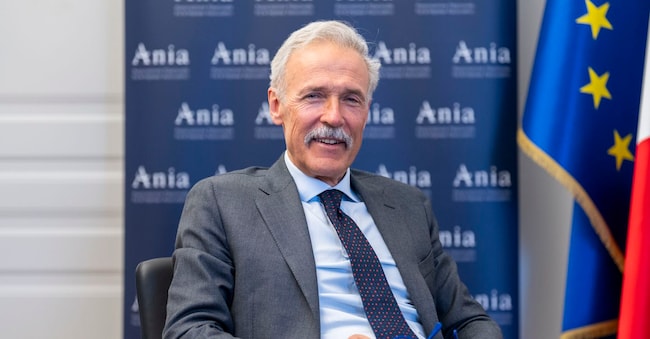
"The renewal of the labour contract is a great result achieved thanks to the unity of the association front, which is also the result of the new governance of Ania. A sector that has contractual stability meets the needs of its employees and puts companies in a position to have planning certainty in the medium to long term'. Ania chairman Giovanni Liverani, in the hours following the signing, returns to the complex months that preceded it and that in some ways strengthen the contract in a sector where 97.5% of people have permanent jobs.
What has been your priority in recent months?
In my first year as president we worked hard to recompose the employers' front where there were diversified positions, and thanks to this work in a short time we managed to close a contract of some importance (the first under Liverani's presidency, ed.), which secures the companies' ability to operate, thanks to the agreement, on delicate, complex issues, not only on wages, which had seen us on opposing sides with the unions. We have a stronger contract also thanks to the compactness with which we arrived at the signature, which secures the entire sector, where we know that workers are our most important strength. It is a contract that benefits people, companies, their customers and the entire country, where insurance is the most powerful lever to pave the way for solutions to gigantic problems that affect not only company employees, but all citizens.
Signed the contract, what will you focus on?
The three-year strategic plan focuses on several activities. For example, public-private collaboration in areas such as pensions and healthcare is one of them. Supplementary pensions should be encouraged, we only have 38 per cent of employees enrolled in a pension fund. In healthcare, Italia has EUR 45 billion of out-of-pocket expenditure and if we could intermediate more through supplementary healthcare, we would enable the National Health Service to recover important resources. With the ageing of the population, the great issue of the self-sufficiency of the elderly is also advancing. In Europe there are already many solutions; our country, on the other hand, is at a standstill on this front and the insurance contract represents a reference for what it has already defined on long-term care. We cannot then overlook the need to protect businesses and families from natural disasters: Italia is a country where 40% of the territory is exposed to seismic risk, 90% to hydrogeological risk. For all these reasons, our sector is like a bulldozer that we should allow to work by supporting and pushing it.
What prospects do you see for AI in the medium term?
The issue is very important for the sector and we want to explore it together with the trade unions, especially since there is no experience. For companies, one of the fundamental factors is the interpersonal relationship with workers, families, customers and in general all those who take out insurance. Our aim is not to replace our people, but to provide them with more and more powerful tools in carrying out the protection activities that are our mission.
Do you think your supply chain needs a single contract?
In the insurance chain there are different roles, as in all other and many types of work, company employees, agents and their collaborators, financial advisors, appraisers and so on, each with their own specific professionalism: this requires specific types of contract. We, as Ania, are responsible for the main part of the chain where there are company employees.

