Living inside a green labyrinth: at the home of artist Arne Quinze
Painting from the point of view of a bee or a butterfly. An atelier engulfed by creepers and surrounded by a garden with 150,000 species of flowers and wild herbs.

5' min read
5' min read
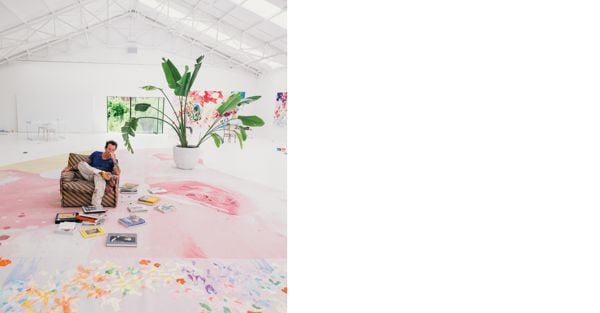
When, twelve years ago, the Belgian artist Arne Quinze bought an old stable in the small town of Sint-Martens-Latem, near Ghent, Belgium, one of the first things he did was to cut down the hedge hiding the entrance. Most of the residences here were, and still are, half-hidden by greenery. "It's as if they all live in boxes isolated from the rest of the world," Quinze explains. He is sitting on a platform behind the house, which was built next to some lime trees, and is wearing a T-shirt with the words 'Don't pet the bison'. At 52, restless and fit, known among other things for his installation in Nevada at the Burning Man festival, Arne Quinze has just participated in a five-week classic car rally that took him from Beijing to Paris (next challenge, a marathon with his daughter Amber in the Arctic region).
The second change Quinze made to the property was to transform the well-kept lawn into an exuberant field of flowers with the help of a gardener. Purple sage, sky-blue sage, salmon-coloured oriental Helen Elizabeth poppies, orange butterfly grass, yellow and orange heleniums, various wild grasses: a landscape in which colours and blooms follow each other through the seasons like slow-motion fireworks. "Everything grows randomly," he says. "I have planted more than 150,000 species: I choose them and find a space for them, but at some point I stop controlling them. The garden is in a state of constant change, every day there is something that surprises me'. He looks down at a tree trunk that has been converted into a table and, as enthusiastic as a child, points to the small buds sprouting in the middle of it. "That's what I try to capture when I paint: this getting lost in the beauty of nature," he reveals. "You don't have to go to the Amazon to discover it, you just have to walk in a garden or a park, and keep your eyes open."
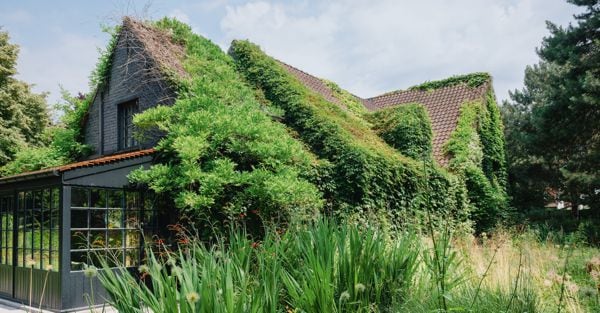
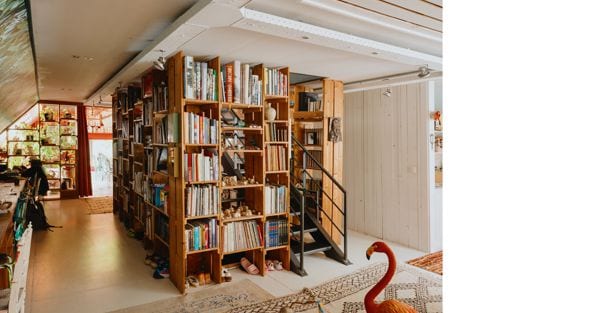
The house in which Quinze lives with his family - five children by two ex-wives - has taken on the same colourful and chaotic appearance as the garden. From the outside it looks small, but inside it is a labyrinth spanning three floors and 1,500 square metres: each surface is covered with different works of art and fantasies. In what is perhaps the most radical attempt to merge the house with nature, Quinze has allowed it to be almost completely engulfed by creepers. He calls it an extremely beneficial collaboration. "In summer the windows disappear and the heat stays out. In autumn, the windows open up, the light comes in and warms the rooms again'. At the end of June, on one of the entrance doors - there are three - a fragrant jasmine grows to such a size that visitors taller than six feet have to stoop to enter.
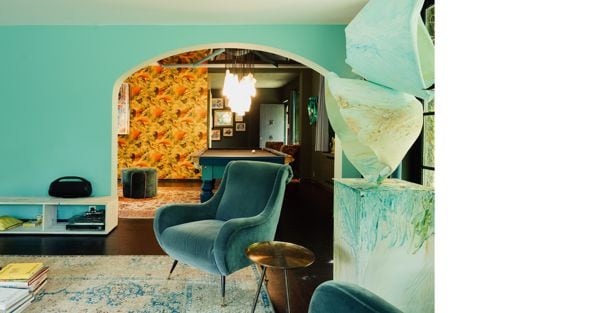
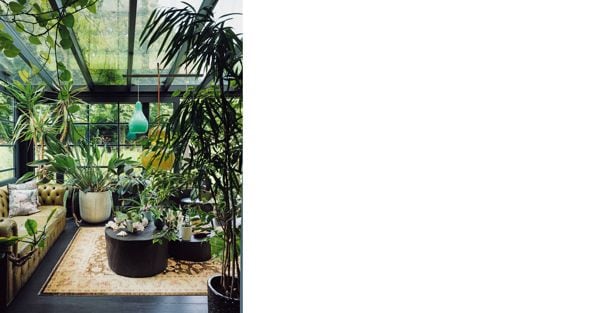
The artist's aim has always been 'to make a home that makes us feel perpetually on holiday'. He passes a pool table and heads towards the room, which is also a cinema space, a large room dotted with huge rectangular ottomans of various sizes, covered in different fabrics and covered with multi-coloured velvet cushions. He points to a small table by the window, on either side of which are two large upholstered chairs covered in a paisley-patterned fabric. "That's the backgammon table," he explains, "we play there almost every day." In his view, the most important rooms are the large halls where the children and their friends can get together to talk, play games or watch a movie. "This house is like a base camp, a huge tent, and this is where we gather. The door is always open, when I come home I never know who I will find there," he laughs. The 21-year-old twin sons, Aratt and Ragner, study design. Aratt recounts the stunned reactions of friends who come to visit them for the first time. "But no one is envious, because they know they are free to come and stay here if they want to," Ragner adds.
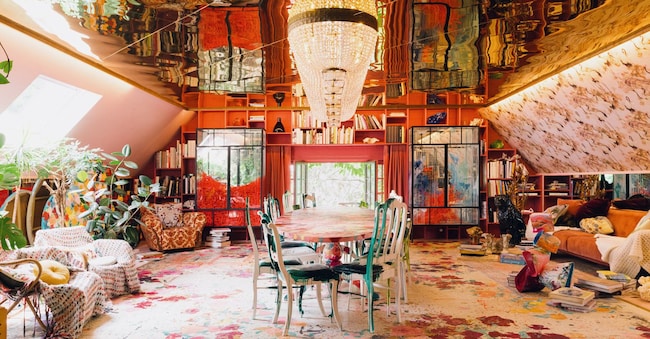
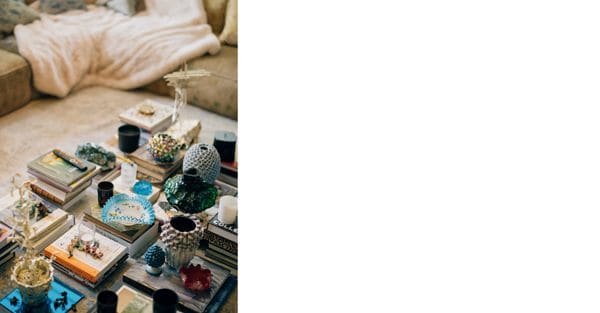
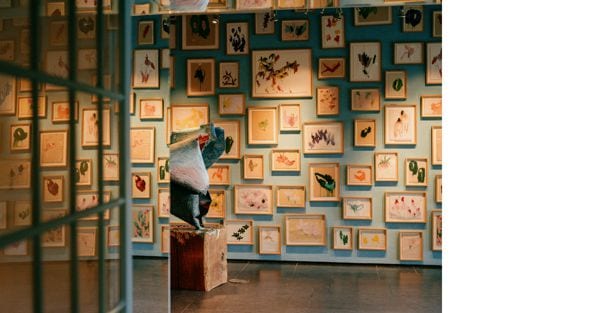
Quinze continues into a huge, loft-like space, at the centre of which is a staircase leading to the two upper floors. This ground-floor area was once his studio, and is still filled with models of public art sculptures, some hanging from the ceiling - his installations made of wooden planks and aluminium wildflower sculptures have been exhibited everywhere from Paris to London to Riyadh. On one wall, there are some framed sketches and dozens of photographs. The dining room, on the second floor, is a riot of colours and patterns. The floor is covered with splashes of paint and floral decorations, as is the long oval table. A huge crystal chandelier hangs from the ceiling covered with distorting mirror tiles. Quinze points to the neat stacks of books in the corners. 'I have so many volumes in the house that I have started to use them as side tables'. Soon, he says, he will knock down a wall to make space for a wellness area.