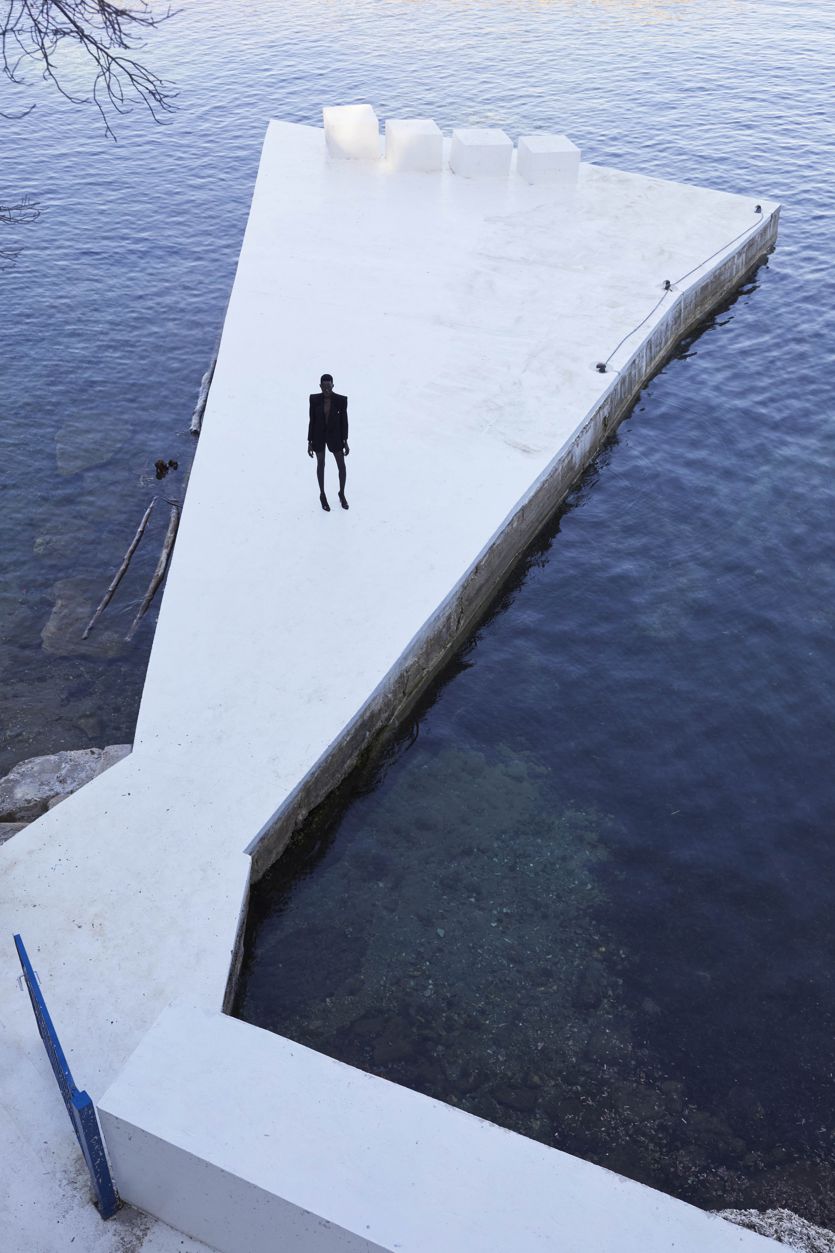
Living without veils (from 0 to 50 and beyond): Jurgen Teller in Milan
Anti-poetic, crude, sincere to the point of desecration. The artist, on show until 1 April at the Triennale, has a message for Italy: 'Everything is possible with you'.
8' min read
8' min read
Cap on his head and sporty sweatshirt, Juergen Teller appears on the Zoom screen seated at a table in an elegant minimalist hotel room. He connects from France during the major exhibition at the Grand Palais Éphémère, which moved to the Triennale in Milan on 27 January. In those very days, the famous German photographer celebrated his 60th birthday. At his side, in Paris as in Milan, is Dovile Drizyte, his new, inseparable partner, with whom he had a baby girl last year, Iggy.
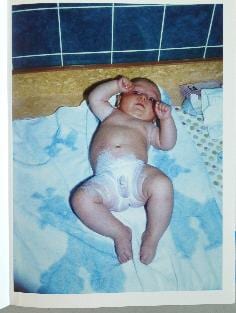
His life is at the heart of a profoundly autobiographical exhibition, not surprisingly titled I Need to Live. "In the main room there is a photograph of me as a newborn," he says. "It was taken by my father, but it could be my own work. It is direct and powerful. At the same time, I look like one of my children as a child'. In the same room, there is a photograph of a newspaper clipping: it is an article about his father's suicide in 1988. A third image is a self-portrait of the photographer, naked on his father's grave and with a beer in his hand and a football. Desecrating, like all his work. A desecration for his father who hated football (he, on the other hand, is an avid fan), but at the same time a way of reconciliation, a sort of upside-down memorial. "This is the beginning of the exhibition," explains Teller, who has dedicated two and a half years to this exhibition. "Then it goes through my work for the fashion and advertising worlds, the portraits, the various series, and ends with the birth of my third daughter" (Teller had a daughter with his first wife, photographer Venetia Scott, and a son by his second wife, London gallerist Sadie Coles). This is precisely the meaning of the title: I need to live. "Unlike my father, I chose life, positivity, curiosity, my children'.
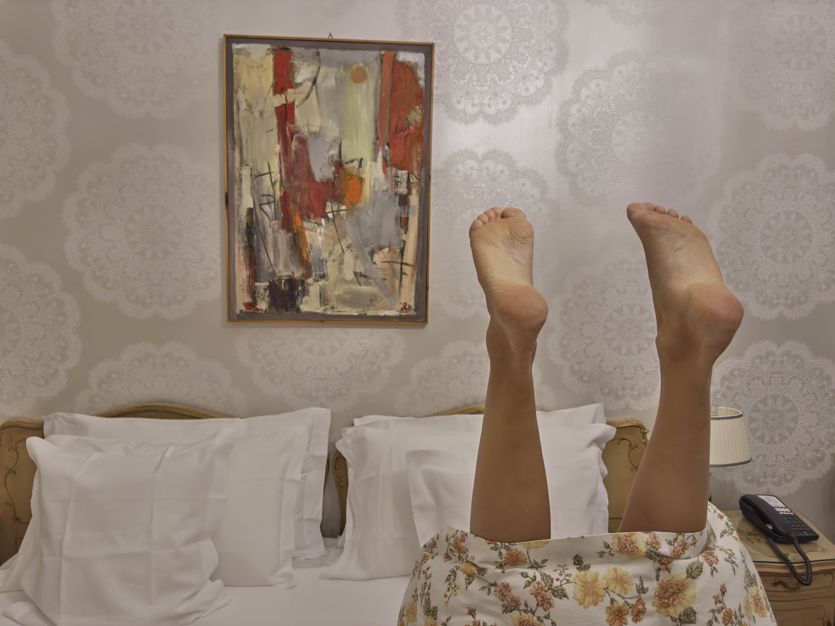
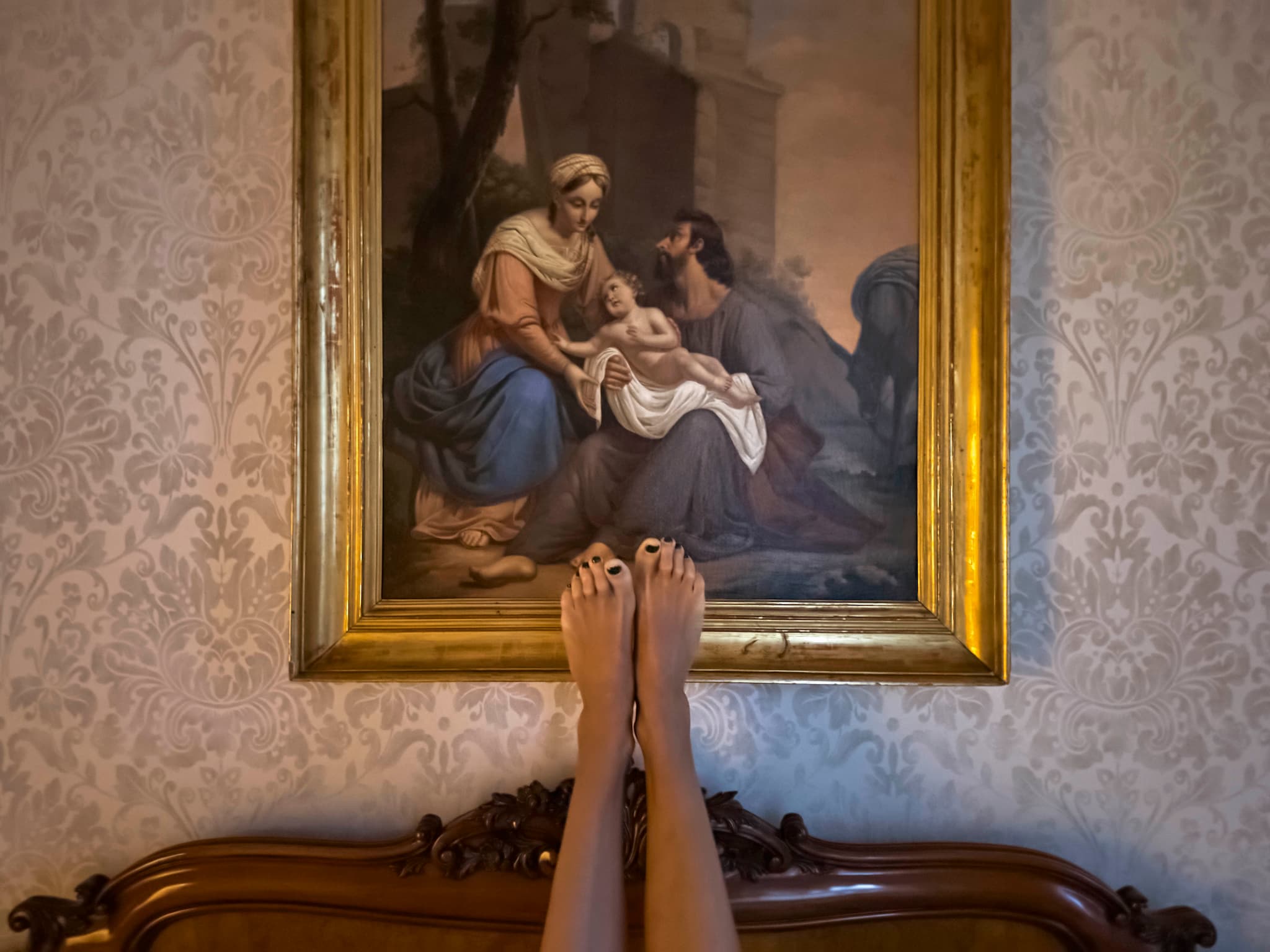
Among the most recent works is the project The Myth, linked to the time when they were trying to have a baby with Dovile. "In 2018 we stayed at the Grand Hotel Villa Serbelloni on Lake Como for a job for Saint Laurent," he says. "It's a hotel with the atmosphere of yesteryear, I remember the garden and the light on the lake and the mountains, the kindness of the people, the good wine and good food: in short, there was all the charm of Italy. The popular vulgate says that, to promote pregnancy, one should keep one's legs elevated after every intercourse. Thus the shot was born, which we then repeated in all the hotel rooms, thanks to the complicity of the hotel manager. It is the most romantic project I have ever done'.
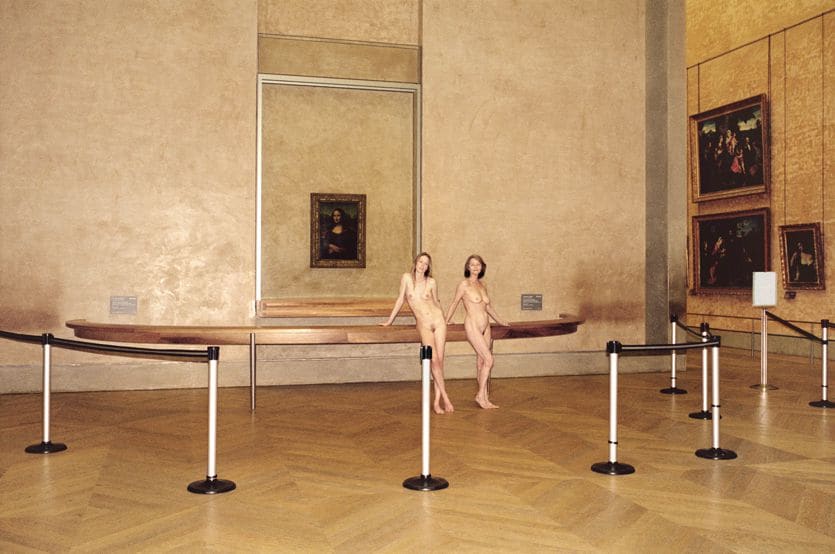
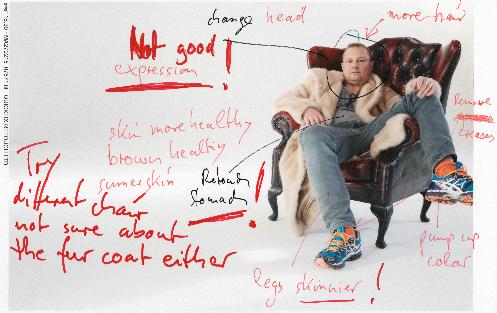
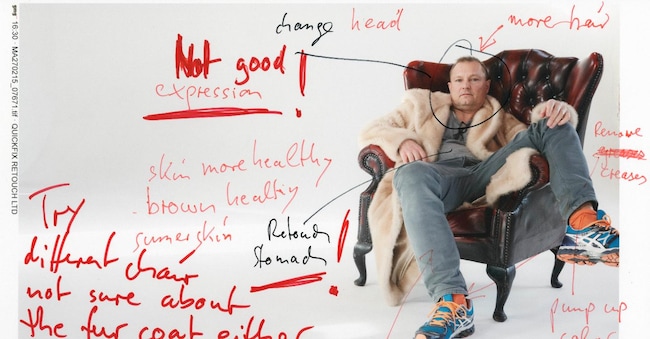
The deep connection between personal and professional is not new in Juergen Teller's work. Ever since he began his career as a fashion photographer in the late 1980s and early 1990s, he physically entered his photographs to create an intimate relationship with the subject, a connection to the scene. This can already be seen in the Go-Sees series of 1998-99, in which Teller documented more than 450 young aspiring models who rang the door of his studio. It is a reflection on the relationship between the photographer and the desires of the person in front of him, as well as on the world of fashion in general. A system that underwent profound changes in that decade: from exhibited, elitist, self-celebrating luxury to minimalism, deconstructivism, and the personal interpretation of style. Teller was among the first to reinterpret the new course through his aesthetics, bringing crude realism, anti-poetic, into glamour and giving dignity to the everyday, to imperfections, to fragility. A hymn to unconventional beauty.
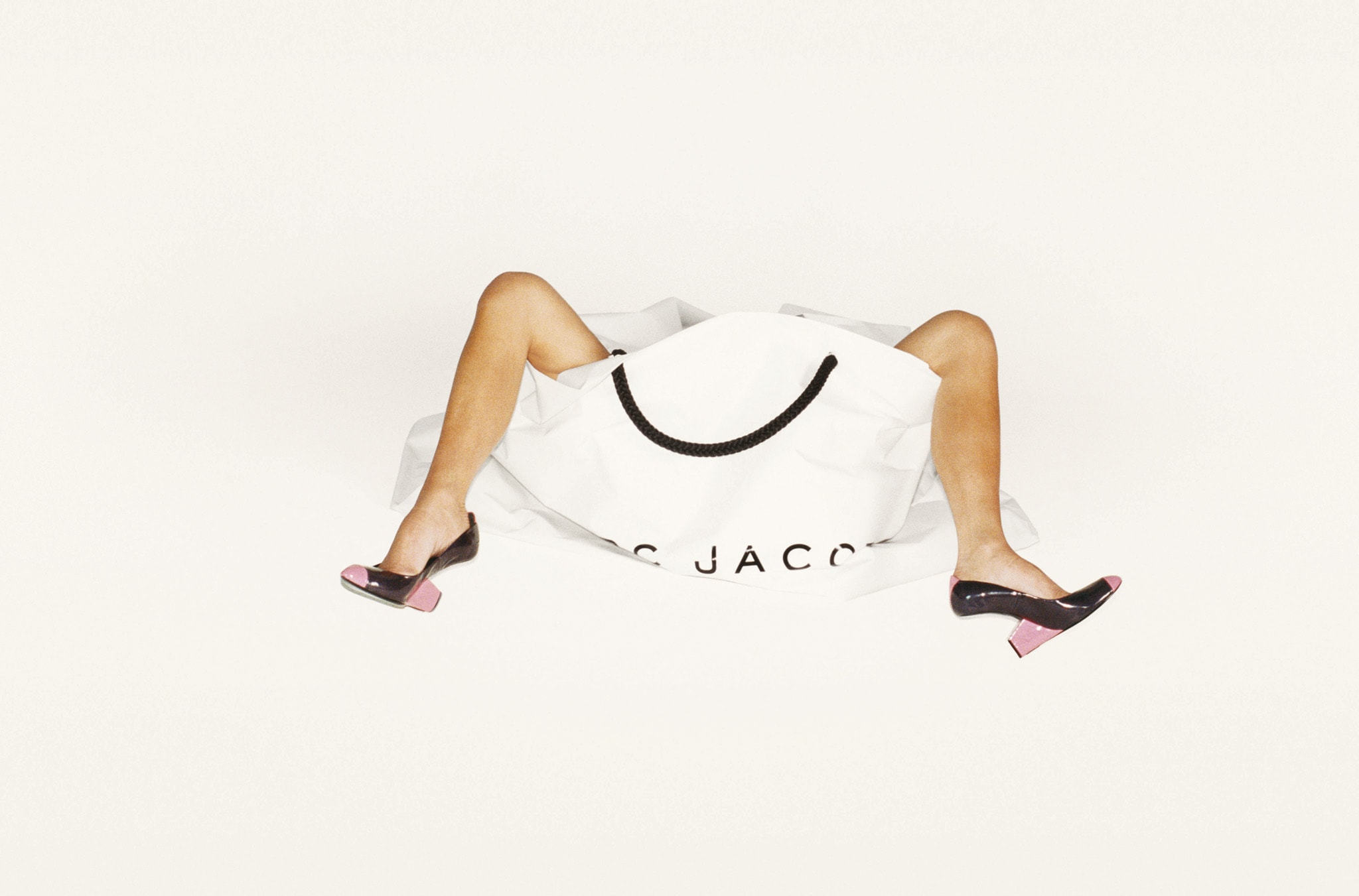
We ask him for an adjective to describe his work, but he doesn't mince his words: 'It's on the wall,' he says, 'for others to say. But above all, it is excitement. For him what counts is the excitement, the curiosity, the candour with which he portrays any subject, be it 'a forest, a cookbook, my wife's thighs or a fashion campaign. It is never an effort, although nothing is improvised, but a point of view on life. From the nineties to today, the quintessence of my work has not changed, but the experience of life and the speed with which I can get to what I want to achieve has changed'. In this enthusiasm lies the ability to interpenetrate life and work. "I am not a photographer who has a routine from Monday to Friday, from 9am to 5pm, and then at the weekend he goes on holiday," he points out. "I have never seen photography in the service of commercial products as something negative, but rather as a source of great inspiration, capable of opening important doors".