
LNG: ‘The shipping sector will drive growth until 2028’
The automotive sector is slowing down, whilst the industrial sector is on the rise. The Italian market stands at around 231,000 tonnes of consumption

Key points
It is the shipping sector that offers the greatest growth potential for the LNG market, driven by ongoing infrastructure development and new bunkering guidelines: the first ship-to-ship refuelling operations began in 2025. By contrast, the transport sector is experiencing a slowdown, whilst the industrial sector is growing steadily but with an impact on the total liquefied natural gas market that ‘remains insignificant’. This is highlighted in the 2025 report on the sector, produced by BIP (Business Integration Partners) on behalf of Assogasliquidi-Federchimica, which will be presented tomorrow in Rome.
Among other things, the study outlines various market development scenarios and confirms that, in the most optimistic scenario, marine LNG could become the main driver of demand, reaching around 190 kilotonnes per year by 2028; this would contribute significantly to bringing the growth in LNG consumption in Italia to a total of 460 kilotonnes per year, double the figure for 2025, again in the most optimistic scenario, that is, in the event that, as the association’s leaders argue, structural measures to support demand were adopted (such as incentives for the purchase of vehicles, tax credits on the consumption of LNG and Bio-LNG, and reductions in tolls and road tax). Even in the most bearish scenario, however, the report states that ‘the contraction in the road transport sector’ would be ‘offset by growth in the shipping sector (+31% over three years)’. In short, according to the association, ‘all the scenarios analysed point to strong growth in the LNG marine bunkering market, whilst the road transport sector presents greater elements of uncertainty’.
Cimenti: ‘Consumption appears to be stabilising’
“The Bip figures,” comments Matteo Cimenti, president of Assogasliquidi, “show that consumption has stabilised, although there has been significant growth in the industrial sector and excellent prospects in the shipping sector. The road transport sector, on the other hand, remains stable compared to last year’s consumption levels but with a slowing growth trend, despite the prospects for significant development.”
Overall, the study reports that the Italian LNG market stood at around 231,000 tonnes of total consumption in 2025, marking an 11% increase compared with 2024. The transport sector continues to play the leading role, accounting for around 75% of total consumption, but growth has slowed (+3%), linked to fleet renewal trends and the end of the life cycle of existing vehicles. During 2025, registrations of LNG-powered commercial vehicles reached 326 units, whilst 4,202 vehicles were registered in Italia (with a total fleet of 5,400). The number of fuel retail outlets rose to 180 (+3%).
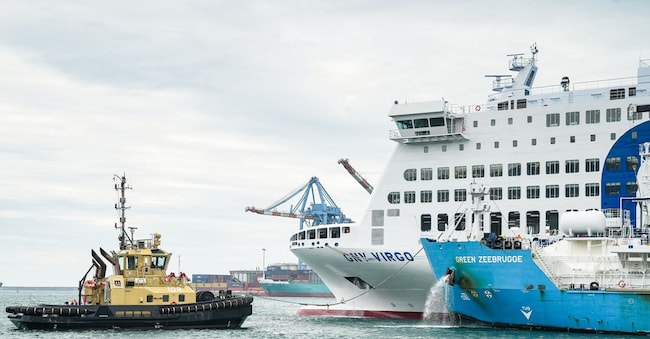
The industrial sector is continuing on an ‘expansionary trajectory’, with consumption of around 50 kilotonnes (+22%) and the number of LNG-fuelled plants set to rise by 16% in 2025 (from 67 to 78). In the maritime sector, by the end of 2025, three vessels were operating to supply LNG to other ships; a fourth became operational in 2026. Furthermore, the LNG fleet is growing in Italian waters (ferries, cruise ships and cargo vessels) and globally: there were 894 such vessels in 2025, with prospects of exceeding 1,600 by 2030.


