
Local authorities: Government behind schedule on funding: ‘July salaries at risk’
The advance payment from the solidarity fund – which usually arrives between May and June – is still on hold. 3.5 billion is at stake for 5,000 local authorities

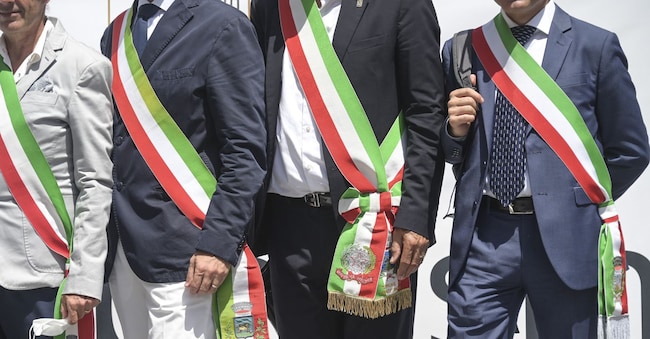
Another week has passed without the advance payment from the solidarity fund – the cornerstone of local authorities’ budgets (amounting to 7.19 billion this year) – reaching their accounts. “These are essential resources held up by an unbelievable chain of bureaucratic delays,” laments the ANCI in a statement, in which it refers to an “unsustainable situation” for local authorities, which “are also struggling to pay July’s salaries”.
The figures at stake
In fact, a glance at the figures is enough to gauge the seriousness of the issue. At stake for the first instalment is around €3.5 billion, expected by 5,000 large, medium and small municipalities spread across the ordinary-statute regions, Sicily and Sardinia. Generally, the advance payment arrives between the end of May and June, depending on the year. Historical data also show instances where payments were made even sooner, such as in 2020, when the funds arrived in March to support local authorities struggling due to the pandemic lockdown, or in 2021, when the payment was credited in April. The longest delay to date, however, was in 2023, when payments were made on 23 June.
Bureaucratic red tape
It is more difficult to pinpoint the reasons for such a protracted timetable. This is because the budget measures have not substantially altered the rules governing the allocation of resources. And the mere removal of Roma Capitale from the list of eligible bodies did not give rise to any particular technical difficulties: so much so that the agreement on the allocation criteria was signed at the Unified Conference on 21 January. But then the process stalled, and it was not until the State-City meeting on 18 June that the Government announced the signing of the measure. However, it is still with the Court of Auditors awaiting registration.
The consequences
The non-payment of cheques risks complicating matters not only for local authorities, but also for businesses. This is because, with cash flow problems, it becomes more difficult to pay commercial invoices to suppliers of goods and services: a small irony, given that local authorities have played a full part in thethe drive to speed up payment times, which enabled Italia to emerge unscathed from the European infringement procedure and fully meet the objectives of the National Recovery and Resilience Plan (PNRR), leading the public administration to settle invoices on average 16.1 days ahead of their legal due date.


