First yes

Bodycam and broader protections: the local police reform is coming. But there is the knot of coverage

The House gave the green light to the proxy. The text passes to the Senate but there is the knot of coverage

by Ivan Cimmarusti

 ANSA

5' min read

Translated by AI
Versione italiana

5' min read

Translated by AI
Versione italiana

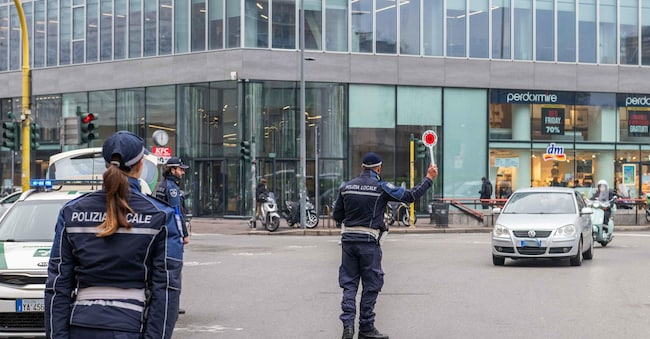
Local police reform comes after almost forty years. But it risks running out of petrol. The Chamber of Deputies has approved at first reading the enabling bill that rewrites the functions, organisation and protection of officers with 130 votes in favour, 31 against and 71 abstentions. Controversy broke out between opposition and majority.

This is the first organic intervention since the 1986 framework law. It is a step that has been awaited for decades and is destined to change the work of officers in Italian municipalities: more insurance guarantees, new cover in the event of accidents, legal aid when the use of arms or force ends up before a judge, bodycams among the equipment, access to the State Police Force databases.

Loading...

On paper, a breakthrough.

In the accounts, however, the reform is already off to a lame start. The only expenditure chapter provided for in the text - a fund of 20 million euro per year - is no longer there. It was emptied by the Meloni government's Security Decree. That money, created to accompany the reorganisation of the local police, has been diverted to other urban security measures. And to the municipalities, meanwhile, come new obligations, new expenses, new responsibilities. Without a euro of compensation. Added to this is the fact that there remains the staffing problem, in free fall since 2009.

The 20 million fund that is no more

The short-circuit goes back a long way. The Budget Law for 2021 had established a Fund for the reform of the local police at the Ministry of the Interior. Endowment: EUR 20 million per year from 2022. It was the financial reservoir designed for the moment when Parliament would finally get its hands on the reorganisation of the local police. That moment has arrived. But the reservoir, for the first useful year, is empty.

This is stated by the Budget Service of the Chamber of Deputies in the dossier on the measure: for 2026 the 20 million is no longer available. They were wiped out by Decree Law 23 of 2026, the so-called Security Decree passed in April amid much controversy. In particular, Article 6(7)(a) used those resources to cover other items of expenditure, related to the 'strengthening of urban security initiatives'.

The perimeter is similar. The substance is not

Urban security is one of the government's most beaten political grounds. Local police reform, on the other hand, is a structural intervention that has been awaited for almost forty years. It was supposed to bring order to a fragmented system, with different rules between territories, functions that have grown over time, and protections that are often not aligned to the real weight of the work performed by the agents.

Now the text goes ahead. But without the coverage foreseen for 2026. The fund will only become available again from 2027. It will serve to finance the only expenditure explicitly recognised by the bill: the new welfare, insurance and accident protection for local police officers. The provision is contained in Article 3. During the examination in the Constitutional Affairs Commission, the text was strengthened. More precise references to the assessment of occupational diseases, the reimbursement of hospital expenses, and fair compensation have been entered. The application of the regulations on victims of duty to local police officers and their families was also confirmed.

Hidden expenses passed on to municipalities

Then there is a second front. More silent, but perhaps even more sensitive for mayors. In the passage through the Commission, innovations were introduced that may produce direct costs on municipal budgets. Unquantified costs. Uncovered costs. Costs entrusted to the usual formula: it will be done with available resources.

The first issue is legal aid. The new text provides that, if a local police officer ends up on trial for acts committed in the course of duty and related to the use of arms or force, the costs of the lawyer will be borne by the municipality. This applies both when the officer chooses a lawyer he or she trusts and when he or she uses the authority's in-house lawyer, where one exists. For those who wear the uniform it is a strong protection. For the municipalities it is a new item of expenditure.

Then there is access to databases. The reform allows local police to connect to the Viminale's CED, the Interforce Data Processing Centre, where crucial information for investigation and control activities is passed on. Not only that: officers will also be able to access the systems of the Public Vehicle Register and the Motor Vehicle Registration Office.

The new commander, again. The Commission has rewritten the rules for the appointment of the local police chief. The selection will go through technical commissions, also composed of personnel with experience in the sector. To avoid new costs, the text is clear: the members will not be entitled to compensation, attendance fees, expense reimbursements or other emoluments. All at zero cost. Compared to the government's original text, the provision of exclusivity has also been eliminated: only fixed-term appointments remain. A not insignificant change, which mitigates the constraints of the original text.

Finally, competitions and staffing levels. Municipal regulations will have to set the minimum requirements to participate in recruitment competitions and determine the overall staffing of each corps. The criterion: to take into account inhabitants, seasonal flows, extension and morphology of the territory, socio-economic characteristics. But always with an insurmountable pole: in compliance with the parameters set by the Regions and within the limits of the resources and hiring powers available under the legislation in force. In other words: no derogation to the already existing expenditure constraints. If a municipality wants more agents, it must find the money itself.

No workforce intervention

No action has been planned for the decrease in staffing levels. The security decree has already provided for recruitment, but it is a mild measure for fixed-term contracts.

The problem is that between 2021 and 2024, the activities managed by the local police increased by 65%, while the number of agents actually on duty decreased by almost 20% compared to 2009. This is where the fracture opens: tasks are growing, the perimeter of interventions is widening, the pressure on urban security is increasing. But fewer and fewer men remain on the streets. And they are increasingly older.

In the regional capital municipalities, the average age of staff reached 49.1 years. But it is the geography of this number that makes the demographic issue an emergency. Venice stands at 38, an almost isolated exception. At the opposite extreme is Palermo, where the average age reaches 57 (as in Catania). In the middle stretches a long band of mature controls, often having already entered a critical threshold: 55 in Potenza, 53 in Cagliari, 52 in Aosta and Turin, 51 in Rome. Then there is a wide band that stops at 50: Bari, Bologna, l'Aquila and Perugia.

The picture, then, is stark: fewer and older officers on average, while the demand for security continues to rise.

Copyright reserved ©
  • Ivan Cimmarustigiornalista

    Luogo: Roma

    Lingue parlate: Italiano, inglese

    Argomenti: Sicurezza, giudiziaria, inchieste, giustizia tributaria

    Premi: Nel 2011 tra i vincitori del Premio Internazionale Antimafia Livatino-Saetta

Loading...

Brand connect

Loading...

Newsletter

Notizie e approfondimenti sugli avvenimenti politici, economici e finanziari.

Iscriviti