
Local public transport brings benefits worth 26.2 billion to the labour market and businesses
Agens study: the sector generates €4.6 billion in added value per year. Without public transport, private transport incurs collective costs of €9.6 billion

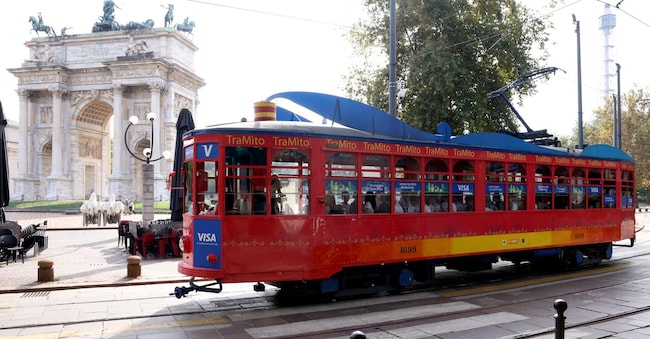
What would happen if buses, trams, the underground and trains were to disappear from our cities and suburbs? This question is not a post-apocalyptic fantasy, but a way of assessing the importance of local public transport, a sector that plays a vital role in the organisation of mobility.
The answer comes from a study by Agens (the Confederation of Transport and Services, a member of Confindustria) carried out by the Politecnico di Milano: without a comprehensive public transport network, the production system would suffer a severe collapse in terms of competitiveness and efficiency, as a result of the shrinking pool of workers and skills available to businesses. Put into figures: an average fall in national productivity of 1.2 per cent (up to -3.1 per cent in major urban areas) and an estimated economic loss of 26.2 billion euros per year.
However, the research to be presented today in Rome sets out a host of other figures with the aim of dispelling the perception that local public transport is a drain on the public purse. The more than 800 companies in the sector do not merely transport passengers (around 5 billion a year); they are an economic engine that generates wealth: the study calculates that of the 12.1 billion euros per year, 70 per cent (8.4 billion) comes from public funds and 29 per cent (3.5 billion) from ticket and season ticket sales. After deducting the 7.5 billion spent on goods and services necessary for operations (fuel, electricity and maintenance), the sector directly generates 4.6 billion euros of added value per year.
It doesn’t end there, because for a comprehensive assessment, we must take into account the knock-on effect on supplier companies: in order to keep buses, trams and trains running, vehicles, spare parts, fuel and technology must be purchased from other businesses. This generates indirect added value estimated at between 3.6 and 7.8 billion euros a year. The sum of these two figures – direct value and value created along the supply chain – shows that local public transport contributes between 8.2 and 12.4 billion euros a year to the economy, approximately 0.4%–0.6% of GDP. In other words, every euro of added value produced directly by public transport generates between 0.79 and 1.69 additional euros for other businesses in the country.
The Agens study goes a step further to consider the absence of public transport or a drastic reduction in services. The ‘Tpl-down’ scenario would reduce accessibility to workplaces by an average of 26 per cent nationwide, with drops of between 70 per cent and 80 per cent in high-density urban areas. A simulation of what might happen if public transport were virtually non-existent was carried out in the Milan metropolitan area, one of the driving forces behind the national economy: during the morning rush hour alone, around 54,000 journeys would be completely cancelled due to a lack of alternatives. Among these, 15,000 workers would be unable to reach their place of work.


