Assolombarda research

Lodi, exports and added value on course but low labour participation

Biffi: 'Competitive area but now we need a boost in innovation to bring out new entrepreneurship'

by Luca Orlando

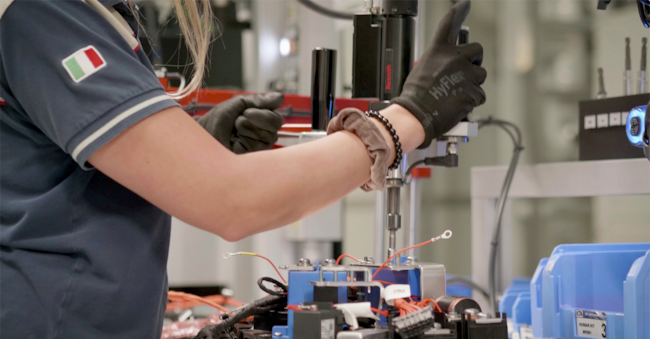
La produzione di Mta a Codogno (Lodi)

5' min read

5' min read

Low unemployment, above-average growth in added value, and exports in the running, with positive performance compared to benchmark territories. While Lodi is certainly not a province at the top of the Italian manufacturing territories, the Assolombarda analysis paints a picture of an area that is nonetheless growing and competitive, when compared to 10 similar provinces in terms of population, number of employees and local units. For Lodi, in particular, between 2015 and 2023, the growth in added value per capita was close to 35%, exceeding the Italian average.

These are some of the findings emerging from the second edition of 'Your Next Lodi 2030'. The research, carried out by the Study Centre, Territory and Environment Sector and the Industry, Energy and Innovation Area of Assolombarda, which this year analyses and compares Lodi with ten Italian provinces: Asti, Ascoli Piceno, Belluno, Biella, Grosseto, La Spezia, Rovigo, Sondrio, Terni and Trieste, highlighting Lodi's strengths and areas for improvement.

Loading...

Assolombarda's analysis underlines how Lodi is an area capable of exploiting the synergy between a robust manufacturing industry, made up of SMEs, innovative services and a marked propensity to export.

"Lodi," comments Assolombarda president Alvise Biffi, "represents a strategic piece within the 'quadrilateral' that includes Milan, Monza and Brianza and Pavia. The figures confirm a constant growth in the area, a sign of a solid, dynamic production fabric capable of competing in international markets. Looking to the future, however, Lodi will have to face important challenges between now and 2030 to consolidate and strengthen its competitiveness. The decisive lever will be innovation: to support it, it is essential to promote an integrated ecosystem that networks companies, start-ups, research centres and training courses. Only in such a collaborative context can ideas, technologies and solutions capable of generating real value be born. In this perspective, it will be crucial to intensify collaboration in the 'quadrilateral', so as to create synergies aimed at accelerating the area's development and attractiveness. If Lodi knows how to invest in this direction, it will be able to continue to bring out new entrepreneurial excellence with positive effects on the community and the entire local production system'.

The comparison

Lodi ranks first among the territories analysed for growth in added value per capita between 2015 and 2023 (+34.7%). The province is also a benchmark for labour productivity, reaching an added value per employee of more than 78 thousand euro in 2022, a result that places it in 11th place nationally and first among benchmarks. These successes are attributed to a robust manufacturing structure (accounting for 21.5% of total added value) and the presence of innovative services, particularly in the ICT sector.

International openness is among the hallmarks, and indeed Lodi leads the benchmark ranking with a 162.3% increase in exports between 2015 and 2024. Even in the post-pandemic period, Lodi exports showed a growth of 91.8%, three times the Italian variation. Key sectors such as electronics, food and chemicals were the main drivers of this expansion.

The Lodi labour market presents elements of solidity but also some fragilities. On the one hand, the province stands out for having the lowest unemployment rate among the benchmarks, at 2.5% in 2024 and sharply down from 7.2% in 2019. At the same time, Lodi is penalised by rather high levels of inactivity in comparison with peers.

Strategic Challenges and Areas of Focus

Assolombarda's research highlights some crucial challenges for the Lodi area. The employment rate (65.8%) is in the medium-low range compared to the benchmarks, and the inactivity rate (32.5%) is the highest among the compared territories, indicating a significant share of the population that does not actively participate in the labour market. Moreover, the percentage of young NEETs (13.4%) remains high compared to the average for Northern Italy.

These aspects represent areas of strategic intervention for Lodi. Further consolidating its role in the national economic landscape will require policies aimed at stimulating labour market participation and reducing inactivity, especially among young people. The proximity and fruitful synergy with Milan represent an additional potential for Lodi's future development. The positive results achieved in recent years are the result of a productive specialisation that is successfully withstanding the complexity of the external context. The challenges identified, relating to inactivity and youth participation in the labour market, represent an opportunity to further consolidate Lodi's position and strengthen its role in the regional economic landscape.

"Lodi," said Fulvio Pandini, President of the Lodi branch of Assolombarda, "confirms itself as an area of surprising dynamism, as Your Next Lodi research has highlighted this year, even when comparing it with 10 Italian provinces with similar characteristics in terms of population, employees, and local units The data speak for themselves: a growth in per capita added value and an explosion in exports that triples the Italian average in the post-pandemic period. These are extraordinary results that fill us with pride, but above all they are tangible proof of a winning synergy between our solid manufacturing, innovative services and an international vocation that sets us apart. Of course, there is no shortage of challenges, particularly on the front of inactivity and the full inclusion of young people in the labour market, but these represent precious stimuli for us to continue working and consolidate the role of the Lodigiano area as a pole of excellence in the regional economic panorama, increasingly in fruitful connection with nearby Milan'.

Infrastrutture

The Province of Lodi, thanks to its strategic position on the Milan-Bologna axis, has long been the protagonist of intense territorial transformation and significant infrastructural development. Despite the progress, the current critical issues related to mobility have made further ambitious interventions necessary, which are carefully monitored by Assolombarda for their impact on the territory.

The presence of a strategic infrastructure axis between Milan and Emilia has made the Lodi area particularly attractive for the settlement of logistics activities. This vocation has positioned the province among the most representative in Lombardy for logistics.

However, this significant settlement evolution underlines the urgency of integrated policies between infrastructural development and productive settlements. There is a need for territorial governance capable of guiding future development, promoting a sustainable balance between urban growth and accessibility throughout the province.

Connettività

Digital connectivity remains an important pillar for business competitiveness in the current era. Assolombarda conducted an in-depth survey in 2024, involving 95 member companies in the province of Lodi, to analyse the state of digital connectivity in the area.

The results show a generally positive picture: as many as 95% of companies say they are satisfied with the service, recognising its strategic importance for their business. Optical fibre is the most popular technology, used by 43% of companies, followed by ADSL and wireless solutions (FWA, 4G, 5G).

As far as mobile coverage is concerned, the situation is considered good in most of the territory, although the need to further improve 5G deployment in some areas has emerged. No significant inhomogeneities in connectivity between different municipalities were found. However, the survey suggests that targeted interventions in some 'disadvantaged' areas could be useful to ensure an even better service for business needs.

In this context, Assolombarda has strengthened its active role. The Association is an integral part of the 'Il Lodigiano Connesso' table, an initiative promoted by the Lombardy Region as part of the Territorial Development Framework Agreement recently signed in Lodi. This commitment underlines Assolombarda's willingness to actively contribute to the continuous improvement of digital connectivity, thus supporting the development and competitiveness of Lodi companies.

Copyright reserved ©
Loading...

Brand connect

Loading...

Newsletter

Notizie e approfondimenti sugli avvenimenti politici, economici e finanziari.

Iscriviti