
Lombardy, 2025 growth for manufacturing
Industrial production rose by 1.2 % year-on-year and turnover grew by 2.5 % year-on-year. The figures for the craft sector were also positive

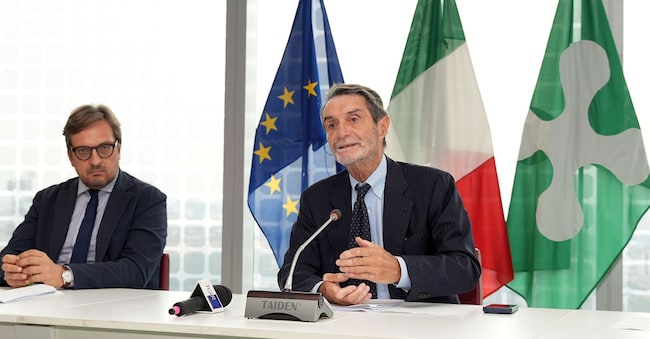
2025 was still a year of growth for manufacturing in Lombardy. Industrial production rose by 1.2% compared to 2024, turnover was up +2.5%, domestic orders increased by 1.1% and orders by +3.1%. The figures for the craft sector were also positive: production at +1%, with an improvement in foreign orders (+2.5%), turnover (+1.3%) and domestic orders (+0.2%). This is what emerges from the figures presented at Palazzo Lombardia, according to which, in the last quarter of the year, compared to the previous three months, production increased by 0.6%, in line with turnover (+0.6%) and foreign demand (+0.6%). The trend in the craft sector was more favourable: production +0.7%, domestic orders +0.4%, foreign orders +0.9% and turnover +0.6%.
Fontana: "Lombardy engine of Italia and Europe"
"Lombardy continues to be the economic engine of Italia and Europe thanks to a dynamic, innovative and strongly international market-oriented entrepreneurial fabric. It is no coincidence that manufacturing in Lombardy is recording a positive quarter for the fifth consecutive time," said the president of the Lombardy Region, Attilio Fontana. "The growth recorded by the sector in 2025, in contrast to the national average, confirms the structural strength of our production system and the ability of companies to face a complex economic phase with determination. The Lombardy Region confirms its support for businesses with support tools and medium- to long-term strategies shared with trade associations, with the aim of strengthening competitiveness and achieving common goals," added Mr. Fontana.
Guidesi: 'Data confirm the solidity of the Lombardy system'
"The data confirm the solidity of the Lombardy manufacturing system and its complete supply chains, which continue to grow even in a complex phase for the national and European economy. The strong international vocation of our lead companies remains a decisive strength. At the same time, there is a need to accompany the smaller companies more and more in the path of opening up to foreign markets, where there are still ample margins for growth,' continued Lombardy Region's Economic Development Councillor Guido Guidesi, emphasising that, 'as a region, we are working precisely in this direction, with the aim of consolidating these results by also systemising the business services connected to them, trying to push further in opening up to innovation and further strengthen Lombardy's manufacturing supremacy. The challenge of the Innovation and Development Zones is the change today so that Lombardy will continue to be the locomotive in 20 years' time.
A transversal growth
The international vocation is confirmed as a pillar of the regional production system. In 2025, the share of foreign turnover in industry remained high at 38.9 per cent. In the craft sector, on the other hand, despite the greater difficulties of small enterprises in seizing opportunities across borders, the share achieved on international markets reached 6.5 per cent. Growth was widespread in most sectors: only 3 out of 13 ended the year with a drop - textiles (-2.0%), rubber-plastics (-0.5%) and transport equipment (-0.3%). Among the most dynamic sectors are miscellaneous industries (+6.0%), food (+3.3%), leather-footwear (+2.8%) and non-metallic minerals (+2.6%).
Employment in manufacturing remains substantially stable considering the slightly positive employment balance in handicrafts (+0.2%) and the slight drop recorded in industry (-0.6%). Again with regard to industry, the share of companies resorting to the Cig (redundancy fund) remains stable (10.9%), while in the craft sector it remains at very low levels (0.5% of the quarterly total of hours). According to the results of Unioncamere Lombardia's periodic focus, in 2025 the propensity to invest appears to be stable overall compared to previous years. Industry remains the most active sector in this field with 64% of companies having invested during the year. The main investments, the survey also shows, are tangible (plants, machinery, vehicles) and are aimed at renewing plants and increasing production capacity. Attention to energy saving is also growing, particularly among craftsmen.


