
Pedemontana Lombarda: the development project shaping Brianza’s future
Fifty years after the Icmesa accident in Seveso, Pedemontana Lombarda is continuing with the remediation work on some of the affected areas: a crucial phase not only for the continuation of the infrastructure project, but also for the environmental restoration of an area with a complex and significant history

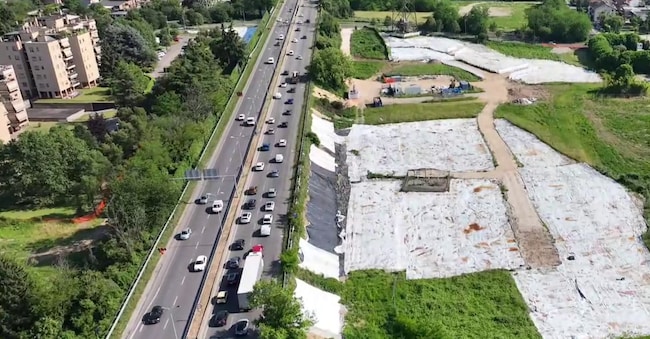
(Il Sole 24 Ore Radiocor) – Autostrada Pedemontana Lombarda has been commissioned to develop a road network that will pass through one of the most urbanised areas in the country: the Province of Monza-Brianza. As a key element in the realisation of what will be an infrastructure project designed to improve mobility in the region, the company has implemented a comprehensive programme of environmental remediation of the affected areas. This work is essential to ensure the safety of the construction sites, the protection of public health and the preservation of the environment.
The Icmesa incident
The need to carry out this remediation work stems from the fact that some of the areas affected by the construction of the new infrastructure – those in the municipalities of Barlassina, Meda, Seveso, Cesano Maderno, Desio and Bovisio Masciago – were affected fifty years ago (in 1976) by an event that literally changed the daily lives of many people: the industrial accident at the ICMESA plant in Meda, which caused the release and dispersion into the atmosphere of a cloud of dioxin (2,3,7,8-TCDD tetrachloro-dibenzodioxin), a toxic man-made substance that contaminated a vast area of land in the neighbouring municipalities of the lower Brianza region. A wound that the country has still not managed to heal, as demonstrated by the visit of the President of the Republic, Sergio Mattarella, on 10 July to Seveso, to mark the fiftieth anniversary of the disaster. The Head of State visited the “Bosco delle Querce” Regional Park, the nature reserve established on land that has been fully decontaminated of dioxin, and on that occasion recalled how “the Icmesa tragedy became a tragic example of what must not be done, inspiring the launch of a European initiative that led to the introduction of stringent regulations – including in Italia – such as Environmental Impact Assessments and Integrated Environmental Authorisations, to protect citizens. In particular, to protect against the risks posed by industries involving potentially harmful processes. This is a path that must be pursued with determination at all times’.
It is no coincidence that the accident itself led to the establishment of two supervisory bodies. In 1986, the “Lombardy Foundation for the Environment” was established, a non-profit scientific organisation set up to build on the experience and technical expertise gained following the 1976 ICMESA accident in Seveso. In 2010, meanwhile, the Environmental Observatory was founded, a scientific body with the aim of ensuring that the public receives accurate and comprehensive information regarding environmental protection and its implications for public health. The accident also provided the impetus for the drafting of specific environmental legislation – the “Seveso Directive” – aimed at preventing major industrial accidents, reducing their impact on people and the environment, and ensuring public information and transparency. The site remediation initiative undertaken by Autostrada Pedemontana Lombarda is not an isolated event, but rather forms part of a series of remediation measures implemented in the years following 1976 and coordinated by the Lombardy Region. The first activities began in mid-1977 and continued until 1986. To carry them out, the area was divided into three distinct zones – A, B and R – based on the level of contamination detected.
Land reclamation along the route of the new Pedemontana Lombarda motorway
Autostrada Pedemontana Lombarda is currently constructing two new sections of the A36 motorway, from Lentate sul Seveso to Vimercate. To do so, it is widening the old route of the SP35 Milan–Meda state road, passing through and running alongside the municipalities affected by the accident. The project involves environmental remediation in certain areas where, following specific investigative work, residual levels of dioxin have been found to exceed the thresholds set by environmental legislation, which has since been updated. This approach was set out by the Lombardy Region during a series of Services Conferences, which involved carrying out assessments of the areas and then remediating some of them before setting up the construction sites for the infrastructure works. The engineers have carefully studied and planned the remediation programme to be undertaken, dividing the territory into eight functional lots within the area between the municipalities of Seveso, Cesano Maderno and Meda. Furthermore, Autostrada Pedemontana Lombarda, in collaboration with the mayors of the municipalities through which its sections pass, regularly participates in a forum for discussion and dialogue with local environmental organisations. The aim of these meetings is to establish a ‘permanent consultative body’ comprising all stakeholders – from companies, to institutions and associations – with the aim of creating a system for monitoring and communicating remediation activities, which conveys and explains technical and scientific information in a timely manner and keeps the public informed. In addition to this, a series of environmental surveys have been carried out in the areas falling within the future motorway routes, to check for the possible presence and concentration of residual dioxin in the land affected by the 1976 accident.
The ongoing remediation plan
Building on the site clearance work carried out in the past, Autostrada Pedemontana Lombarda has planned meticulous preliminary work aimed at minimising any risk factors arising from the construction site. The remediation works cover a total area of approximately 120,000 m² and were finalised during a collaborative authorisation process that took into account the interests of the various institutions and stakeholders involved, including: the Lombardy Region, the Province of Monza-Brianza, the municipalities (Barlassina, Bovisio Masciago, Cesano Maderno, Desio, Meda, Seveso), ATS Brianza, ARPA, and the Bosco delle Querce Park Authority. The remediation is being carried out by specialist companies working alongside the General Contractor, Pedelombarda Nuova (WeBuild) – the contractor for the works – and which possess specific expertise in this sector.


