
Lombardy, record for plants treating wet and undifferentiated waste
In Lombardy there are 116 treatment centres out of a national total of 656. Veneto has 77, Piedmont 49, Emilia-Romagna 43

3' min read
3' min read
Lombardy is home to the largest number of municipal waste treatment plants in Italy: these are poles for the biological treatment of the organic fraction from separate collection, mechanical or mechanical and biological treatment (where mainly undifferentiated waste goes), incineration and co-incineration, and landfills. The focus is therefore on organic fraction, undifferentiated waste and waste not otherwise recyclable, excluding other materials from separate waste collection (glass, paper, plastic, aluminium, wood, etc.). A supremacy built around the highest quantity of waste produced in the country, but not only. According to the latest Ispra snapshot, in Lombardy in 2023 4,725,211.9 tonnes of urban waste were produced (of which 3,492,148 went to separate waste collection: 73.9%): this is the highest quantity in Italy (Lazio at 2,864,948.9 tonnes followed by Emilia-Romagna at 2,847,724.9) out of 29,262,475. In Lombardy there are 116 plants out of a national total of 656. Veneto has 77, Piedmont 49, Emilia-Romagna 43. Overall, 349 are in the North, 115 in the Centre and 192 in the South.
Lombardy is a leader in the management of organic waste (40% of the municipal solid waste collected): in 2023 it treated 23.1% of the national total (against 17% in Veneto, and 11.8% in Emilia-Romagna). For this fraction, 79 plants are operational in the region, of which 58 are dedicated to composting, 10 to integrated anaerobic and aerobic treatment, and 11 to anaerobic digestion alone, 'for a total treatment capacity of around 3 million tonnes', writes Ispra in its latest annual report on waste in Italy, relating to 2023.
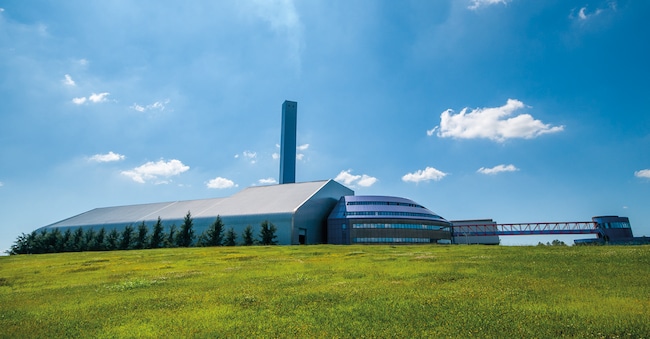
Lombardy also holds the record for incineration, also with energy recovery. Out of 36 national plants, 12 are in Lombardy, 7 in Emilia-Romagna. The other regions with more than one plant are Veneto (3) and Tuscany (4), which contributes to the 5 plants in the Centre, while in the South there are 6. Lombardy incinerates 35.3% of the national total of urban waste, followed by Emilia-Romagna (17.1%), Campania (13.9%) and Piedmont (10.4%). The region is also the one with the highest absolute increase in treatment in the two-year period 2022-2023: 99 thousand tonnes (+5.3%), compared to 75 thousand tonnes (+8.3%) in Emilia-Romagna and 42 thousand tonnes (+95.5%) in Calabria.
A2A is the largest operator in this field in Lombardy (and in Italy), with waste-to-energy plants in Milan, Brescia, Bergamo, Cremona, Como, Parona (Pavia), Corteolona (Pavia), and Trezzo d'Adda (Milan), while in Filago (Bergamo) it has a plant dedicated to industrial waste. In Milan, Brescia, Bergamo, Cremona and Como it is able to recover heat produced by processes to supply local district heating networks. The Brescia plant, the largest, with a treatment capacity of 750 thousand tonnes of waste per year, distributed 696 thermal GWh and 446 electrical GWh in 2024. A2A's plants for the treatment of the wet fraction are instead Giussago (Pavia), Lacchiarella (Milan) and Castellone (Cremona). The Lacchiarella plant is the most recent in Lombardy: with a capacity of 100 thousand tonnes per year it also produces 8 million cubic metres of biomethane and 20 thousand tonnes of compost.
"Without plants for the treatment of the organic fraction and without waste-to-energy plants,' explains Lorenzo Perra, vice-president of Utilitalia with responsibility for the circular economy, 'it is not possible to properly close the waste cycle. The data show that separate collection for recycling and plants are not two opposing elements, on the contrary: the territories that record the highest percentages of separate collection are precisely those in which there is the greatest number of plants, both for recycling and energy recovery. At the national level, in recent months we have been pleased to see the opening of new plants for the treatment of the organic fraction, and many projects are being developed, also thanks to the NRP. On the contrary, much remains to be done with regard to the energy recovery of non-recyclable waste'.


