
Lombard manufacturing grows: positive production figures
In the second quarter of 2025, according to data from Unioncamere Lombardy, growth trend also for turnover and employment

4' min read
4' min read
(Il Sole 24 Ore Radiocor) - In the second quarter of 2025 industrial production in Lombardy grew by 0.4%, despite a global economic context that is still uncertain and marked by geopolitical tensions. There was also a plus sign for handicrafts, which showed an increase of 0.2 per cent. The expansion was sustained mainly by the recovery of domestic demand (+0.5 per cent), flanked by foreign demand, which increased compared to the already positive performance of the previous quarter. In addition, the renewed ease of access to credit, particularly for more structured companies, helped boost investment and strengthen the market. This is what emerges from the latest economic data from the Unioncamere Lombardy Economic Observatory relating to the manufacturing sector, according to which the increase in production was also accompanied by an increase in turnover of +0.5 per cent. Companies indicated the reduction in raw material costs and the gradual recovery of domestic consumption as the main growth drivers for the coming months.
Guidesi: 'Important to consolidate recovery'
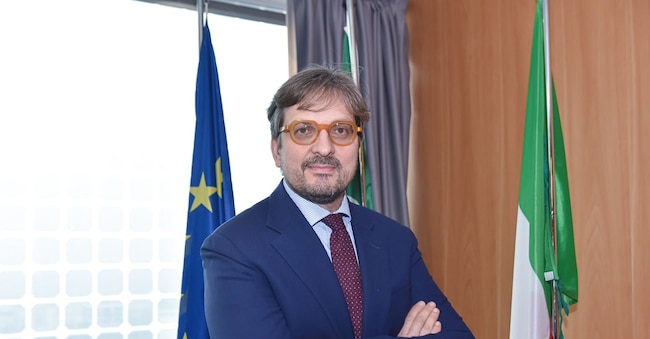
Compared to the previous year, growth was 0.6 per cent, while turnover increased by 1.4 per cent. On the employment front, there was a positive balance between entries and exits of +0.3 per cent. There was a further reduction in the use of redundancy funds, particularly in those sectors that had shown the most difficulty in previous quarters. "The Lombard manufacturing data are good. They represent a positive signal, indeed a very positive one. Now it is important to consolidate the recovery, hoping that the international geopolitical situation will improve, thus restoring a climate of confidence in the future,' commented Lombardy Region Economic Development Councillor Guido Guidesi.
Sector trends
.Looking at the sectors, among the most dynamic are non-metallic minerals (glass, refractory products, ceramics, cement, lime, gypsum) with an annual growth in production of 7%, still driven by the good performance of the construction sector, followed by clothing and leather-footwear, recovering after a prolonged phase of contraction. In contrast, the sector in the greatest difficulty remains textiles, with declines on all indicators. Rubber-plastics, paper-printing and means of transport also show negative performances, the latter especially in relation to foreign orders. At the size level, the largest enterprises show the best results (+1.6% production), driven by domestic demand. Medium-sized enterprises grew by 0.7%, while micro enterprises remained essentially stable.
Positive signals also came from the handicraft sector: +0.2% in production and stable turnover with the tendential data showing a positive annual variation in production of 0.3%. Foreign orders grew by 3.8%, an encouraging sign for a sector that, although it is looking carefully at international markets, is still unable to fully exploit them, with foreign turnover as a share of the total standing at 6.8%. The steel and food sectors are growing, while rubber-plastics, paper-pressing and textiles are still struggling.
Unioncamere Lombardy: "Solid entrepreneurial fabric"
."Manufacturing in Lombardy today is called upon to respond to the many critical issues of the moment: an unstable geopolitical framework, the slowdown of key strategic partners, and the coming into force of tariffs are all elements that weigh heavily on production. In spite of this, the data show us that the entrepreneurial fabric is solid and only small improvements are needed to give new impetus to growth. Much has already been done on this front thanks to the Lombardy Region, but further efforts are needed to improve access to new foreign markets, train specialised personnel, and optimise supply chains," specified Gian Domenico Auricchio, president of Unioncamere Lombardia.


