
Lombardy Region launches 'Innovation and Development Zones
The objective is to strengthen Lombardy's competitiveness on an international level by enhancing the economic specificities of the individual territories

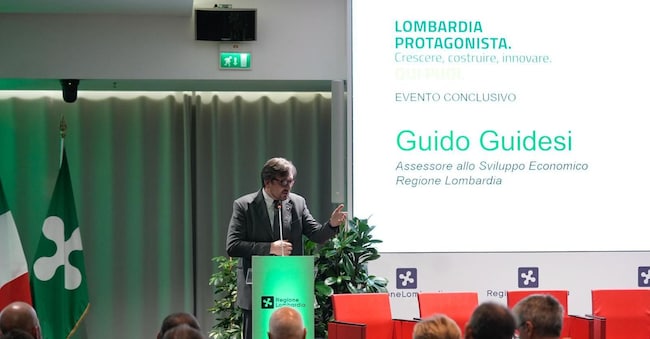
(Il Sole 24 Ore Radiocor) - Strengthening the competitiveness of Lombardy at an international level by enhancing the economic specificities of individual territories. With this objective in mind, the Region is launching the Zones for Innovation and Development (Zis), a new intervention model that aims to facilitate collaborations between companies, universities, public bodies, training organisations and social realities, so as to strengthen local "ecosystems" and make them unique and recognisable at a national and international level. The protagonists of the SEZs will be the territories, with the Region playing the role of director and 'connector' between various public and private entities, so as to create the conditions for the growth of enterprises, the birth of innovative start-ups, the exchange of knowledge between companies and research centres, the creation of qualified jobs and new skills, and the attraction of investment and talent. The new regional strategy, promoted by Governor Attilio Fontana and Economic Development Councillor Guido Guidesi, was presented today at Palazzo Lombardia as part of the final event of 'Lombardia Protagonista - Qui puoi', the institutional tour that stopped off in all the provinces, intensifying dialogue with stakeholders and laying the foundations for new territorial synergies.
Fontana: 'Zis a virtuous example of industrial policy'
"Through the Zis we want to enhance the productive and technological specialisations of each territory. Each individual area excels in certain economic sectors: as a Region we intend to give further impetus to the 'Lombardy system' and its ability to network," said Lombardy Region President Attilio Fontana. "The Innovation and Development Zones may represent a virtuous example of industrial policy that we will make available to the country. Lombardy is the leading manufacturing region in Europe: let's field every useful tool to maintain and implement this peculiarity of ours,' Fontana added. "We change in order to innovate. The Zis will be the connector of the added values we already have and which we will put into a system, sector ecosystems that innovate as a team between companies, research, training, institutions and credit. We look to the future by defending our production system with the aim of delivering opportunities to young people,' specified Councillor Guidesi.
The steps for creating Zis
The path for the creation of Zis is divided into two phases. The first concerns the Expression of Interest, to be published in the next few weeks, through which public and private subjects in a given area can jointly present a preliminary project, called a Masterplan. The document will have to contain the territorial specialisation on which to focus; the participants and governance organisation; the spaces, workshops and services existing or to be developed; and indications on the long-term sustainability of the project. Proposals that get the green light will enter the second phase, which concerns the negotiation and elaboration of the final Strategic Plan. With the support of the Region, the concrete actions to be implemented will be identified, with a multi-year vision up to 2050. Specifically, the work will focus on the creation or implementation of equipped spaces, digital infrastructures and training courses, while building a system of monitoring indicators to measure the results and impact of the activities on the territory in terms of innovation, employment and competitiveness.
To whom the initiative is addressed
Mixed public-private groups made up of companies and start-ups (in the role of lead partner); public bodies (municipalities, provinces, chambers of commerce); universities and research centres; training bodies; foundations, associations or third sector organisations may submit a candidature. Each application must include a letter of 'endorsement' from the competent Province. A maximum of two SEZs per province may be established, while there are no predefined limits for inter-provincial applications. The financial endowment made available by the Region for the first phase will be EUR 1 million: projects admitted to Phase 1 will be able to receive a regional contribution to cover 50% of the consultancy expenses for the drafting of the documents to be presented in the Phase 2 application file, up to a limit of EUR 100,000. Other regional resources will subsequently be put in place to support the implementation of Phase 2. In order to accompany and support the territories that wish to take up the challenge, the Region has set up a dedicated structure within the General Directorate for Economic Development, which will be the reference point for guiding, assisting and enhancing Zis projects.
Positive reception for the project
"We applaud the Lombardy Region's initiative because through the Zis the work in favour of companies and territories is intensified. We appreciate the capacity for vision and the willingness to focus on young people: Lombardy is the engine of Italy, embodies excellence in many sectors, and continues to gain international recognition, as demonstrated by its export performance. The Zis go in the direction of continuing along this path, helping the territories to grow," said the president of Confindustria Lombardia and Feralpi Group, Giuseppe Pasini. "It is positive to work on a development perspective based on ecosystems, enhancing the diversified vocations of Lombardy's territories. As Fondazione Cariplo, we collaborate fruitfully with the Lombardy Region on several fronts, starting with support for 'emblematic projects'. An alliance with the Region that we can also implement by looking at the Zis strategy," added Claudia Sorlini, vice-chairman of Fondazione Cariplo. "The Zis are an excellent initiative that will be able to yield important results by intervening on the theme of directing and 'systemising' the excellences and strengths that characterise Lombardy. In this context, Lombardy's universities play and will play an increasingly fundamental role,' concluded the Rector of the University of Milan Bicocca, Marco Emilio Orlandi, representing the Regional Coordination Committee of Lombardy's universities.


