
Data centres: Lombardy’s legislation focuses on incentives and urban regeneration
The aim is to encourage development on brownfield sites. The charges for green space are increasing, but the planning costs for the industrial zones to which the facilities will be linked are lower

Key points
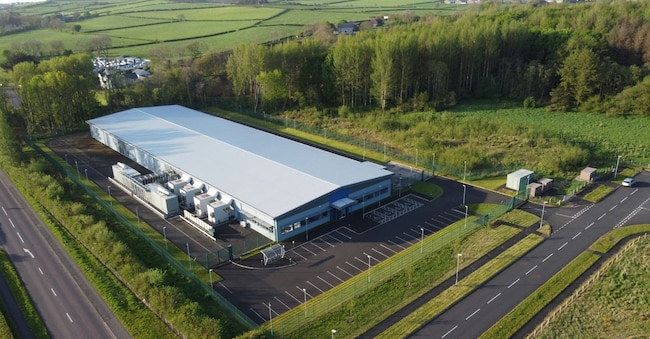
Lombardy is drafting its own legislation on data centres and is the first region in Italia to do so. The aim of the new regional law, approved on 26 May, is to steer data centres towards derelict sites zoned for industrial use. However, it does not rule out the possibility of such facilities being established in green or agricultural areas, subject to the payment of higher charges.
One of the main changes is that the law transfers responsibility for single authorisations to the Region. This is a new development, given that ‘until now, for projects below the 300 MW thermal threshold, responsibility for the Environmental Impact Assessment (EIA) – and therefore for the single authorisation – remained at provincial level’, explains Silvia Gnocco, partner and co-founder of the law firm SI-Inzaghi. Projects with a capacity exceeding 10 MW will be classified as being of supra-municipal significance and will require the conclusion of a specific territorial agreement; where the capacity exceeds 50 MW, however, responsibility for the consultation conference will lie with the Region.
Intended use in production
At the same time, strict technical standards are being imposed: every project must include an energy report focusing on renewables and waste heat recovery, whilst the use of drinking water for cooling is prohibited in favour of recycled and high-efficiency systems. The legislation also introduces a regional helpdesk for data centres and a permanent steering committee with the aim of monitoring the sector’s development and its energy implications. In the measure, Lombardy classifies data centres exceeding 5 MW as industrial facilities. ‘This is the first time at national level that an explicit land-use designation has been introduced; until now, some developments had fallen under the “office” land-use category.’ This classification has implications in terms of planning charges: the “industrial” designation entails significantly lower costs than the “office” designation. In Milan, for example, the charges for industrial use are around 368 euros per square metre, compared with around 751 euros for office use. The latter category also involves an additional contribution linked to construction costs, amounting to approximately 10 per cent of the estimated bill of quantities, which does not apply to industrial developments.
Incentives or higher costs
Whilst the charges in this regard are lower, those incurred in the case of greenfield developments will, in contrast, increase. The law provides for a 100 per cent surcharge on charges for developments on agricultural land and a 200 per cent surcharge for nature parks or nature reserves. Specific incentives are also provided for projects in brownfield sites, such as a 50 per cent reduction in the area allocated to on-site car parks (which local authorities may increase to up to 75 per cent), as well as priority and fast-track procedures for the allocation of regional funds. From the date the law comes into force, local authorities will have 365 days to survey and map their derelict and degraded areas. Compliance with this requirement will be a criterion for the allocation of resources, but companies will still be able to submit applications for projects in those areas.
A regulation to support the transition
The real relief for operators lies in the transitional provision: ‘The initial version of the text provided for a freeze – until the approval of future regional guidelines – on authorisation procedures submitted within the 60 days prior to the law coming into force,’ explains Gnocco. ‘ This was no small obstacle, which, without amendments, would have created a massive bottleneck, bringing a great many operations to a standstill for at least six months’. However, an amendment has been incorporated into the text of the provision that mitigates the bottleneck and supports the transition phase: applications already in progress (whether relating to environmental assessment procedures, implementation planning or building permits) may proceed under the current rules, whilst those submitted after the publication of the implementing guidelines in the regional gazette will follow the new regulatory framework.
Brand connect


Newsletter RealEstate+
La newsletter premium dedicata al mondo del mercato immobiliare con inchieste esclusive, notizie, analisi ed approfondimenti
Abbonati