London beyond the mega-gallery crisis
At London Gallery Weekend, between established artists, young galleries and new market strategies, the British capital confirms its central role in the international contemporary art ecosystem

The sixth edition of the London Gallery Weekend (5 to 7 June), with over 120 participating galleries, had to reckon with news on the eve of the event that cast a different light on the health of the system. Pace, one of the most powerful galleries with eight venues worldwide, announced a drastic reduction in its structure, cutting around 50 artists from the roster and 50 employees, in what CEO Marc Glimcher called "a necessary return to a more sustainable model". The decision has a symbolic value that goes far beyond the specific case. For more than a decade, the model of international mega-galleries, particularly American ones, - built on geographical expansion, monumental venues and an increasing concentration of artists and services - has been the horizon to which the global market has looked.
Today, however, even one of its protagonists recognises the limitations of that strategy. It is in this context that the sixth edition of London Gallery Weekend opens, an event that offers a significant snapshot of the state of contemporary art in the British capital. If the exhibitions testify to the vitality of the London scene, the Pace case reminds us that the market is going through a phase of profound transformation, characterised by an increased focus on economic sustainability, more selective collectors and new international balances. To interpret this affair as yet another proof of London's decline would, however, be reductive. The reality appears more complex.
London's centrality in a changing market
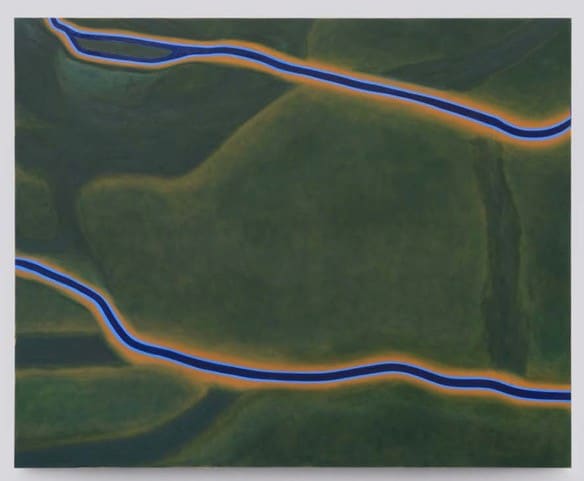
Thaddeus Ropac, among the guests of the panel discussion: "How is London's contemporary commercial gallery scene thriving in times of flux?" recalled that "over the last ten years the city has had to deal with a long sequence of negative news, from Brexit to the market slowdown and rising operating costs that have put pressure on many in the sector. Yet London continues to be one of the world's leading hubs for contemporary art. It is the city that concentrates living artists, has some of the best art schools and can count on a cultural ecosystem that is difficult to replicate'. In the London space, the Parisian gallerist exhibited paintings by Oliver Beer and a site-specific exhibition by Mandy El-Sayegh.
While Paris has become considerably stronger, attracting new international galleries, collectors and institutions, London has not lost its centrality. Today, the two cities increasingly appear as the main European poles for the production, circulation and presentation of contemporary art. Indeed, London retains a significant advantage thanks to its cultural infrastructure, the presence of internationally important museums, the density of professionals in the sector and its ability to attract new projects, despite the difficulties of recent years. It is precisely this tension between the fragility and the resilience of the system that emerged strongly from the London Gallery Weekend: on the one hand a market that is downsizing some of the expansive ambitions that characterised the last cycle; on the other hand a city that continues to be one of the fundamental places where contemporary art is produced, exhibited and discussed.
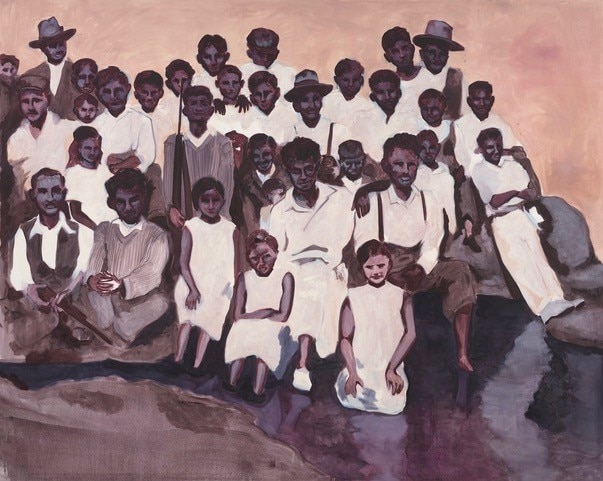
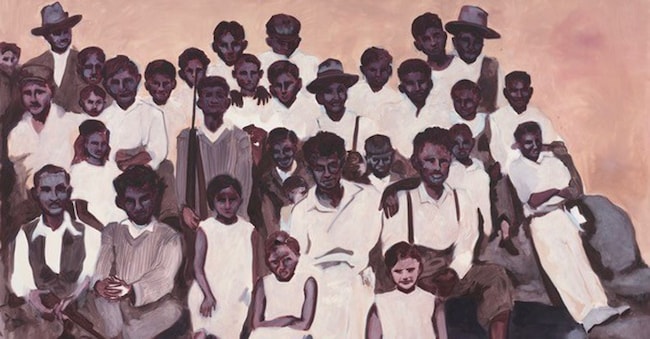
Even according to Pilar Corrias, founder of the eponymous London gallery, the tale of a London in decline does not convey the complexity of the present moment. While acknowledging the growing competition from Paris, Hong Kong, and the new marketplaces of the Middle East, now put in the balance by the war, Corrias points out that the British capital continues to possess characteristics that are difficult to replicate elsewhere. "London is not only a major market centre, the second largest in the world after the United States, with world-class institutions, galleries and art schools, but it is above all a city where people choose to live, work and create," observed the gallerist presenting the new works by Hayv Kahraman, a leading figure in contemporary figurative painting, whose painting practice interweaves experiences of migration and cultural identity with a reflection on the female body and representation (range between 20 and 200,000). For Corrias, one of the city's main strengths lies in its ability to attract international talent and to constantly renew itself. "London is a diverse, international and constantly evolving city. On the market front, the gallery owner sees signs of recovery after a complex phase for the sector with a return of confidence on the part of collectors. ForJo Stella-Sawicka, senior director of Goodman Gallery, which turns sixty this year, "London is a crucial market for the gallery and opening here in 2019 was a key step, because it allowed us to put our programme in the heart of Mayfair and St James's and bring the work of artists from El Anatsui to Shirin Neshat, to a global audience. It is a truly international city, where clients and colleagues come from all over the world several times a year, and where the local market remains very active, as evidenced by the success of our 'Ravelle Pillay' exhibition, almost entirely sold to British collectors and with a work acquired by the Government Art Collection" (prices from £15,000 to £50,000).