
London under bombardment: an exhibition
The ‘Beauty and Destruction’ exhibition at the Imperial War Museum takes us back to the capital as it was bombed by the Nazis during the Second World War

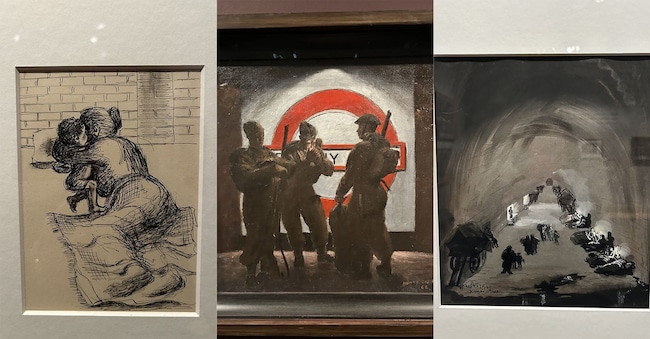
Beauty can be found even in the midst of war, and it can be created even when everything around us is in ruins. The exhibition ‘Beauty and Destruction’ at the Imperial War Museum transports us to a London that was relentlessly bombed by the Nazis during the Second World War, and allows us to see it through the eyes and accounts of the artists.
Some had instinctively picked up a pencil or a paintbrush to record what they saw, whilst others were working on commission, commissioned by the War Artists’ Advisory Committee, led by Kenneth Clark. According to the director of the National Gallery and the eminent art historian, “the damage caused by the bombs is picturesque”.
The Committee’s official aim was to document the effects of the war and promote a positive image of Britain. Clark also had another objective: mindful of how many artists had died in the trenches of the First World War, he wanted to protect as many artists as possible by offering them a role as non-combatants.
The artists roamed the devastated city, each with their own mission. Some, such as the conscientious objector John Minton, highlighted the destruction caused by the bombs and the suffering of the city’s inhabitants. Others, such as Leonard Rosoman, who worked as a firefighter, focused on the city’s landmarks, such as the Houses of Parliament in Westminster ablaze following a bombing raid in 1941, or St Paul’s Cathedral, which, as Winston Churchill ordered, was to be saved at all costs.
Graham Sutherland
Graham Sutherland, one of the most famous artists of the time, would wander around the City taking photographs of the destroyed buildings and then, back in his studio, recreate the images on canvas. Drawing in the streets “arouses strong resentment” amongst people trying to survive, he wrote. Impromptu and now-unknown artists depict life in schools, offices and churches that had become shelters for the inhabitants of the million homes damaged or razed to the ground across the city.

