Start up

Nurturing presents the quantum brain that helps decide in uncertainty

The presentation at CES in Las Vegas: the project supports traditional AI algorithms, effective when operating in stable and repetitive contexts

by Barbara Ganz

(Adobe Stock)

3' min read

Translated by AI
Versione italiana

3' min read

Translated by AI
Versione italiana

A state-of-the-art decision support system, capable of comparing possible futures, alternative scenarios and suggesting optimal choices in unstable environments. A true 'quantum brain', at the service of businesses and consumers in an increasingly complicated scenario, 'when everything is fragile, non-linear and unpredictable', explains Abramo Vincenzi, CEO and Co-founder of Accudire, an innovative digital start-up from Verona.
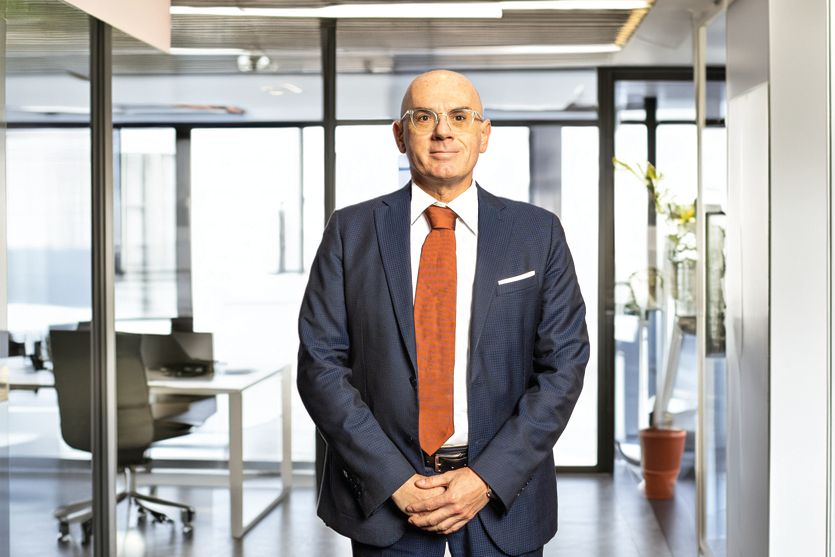
Abramo Vincenzi, ceo e Co-fondatore di Accudire.

The debut

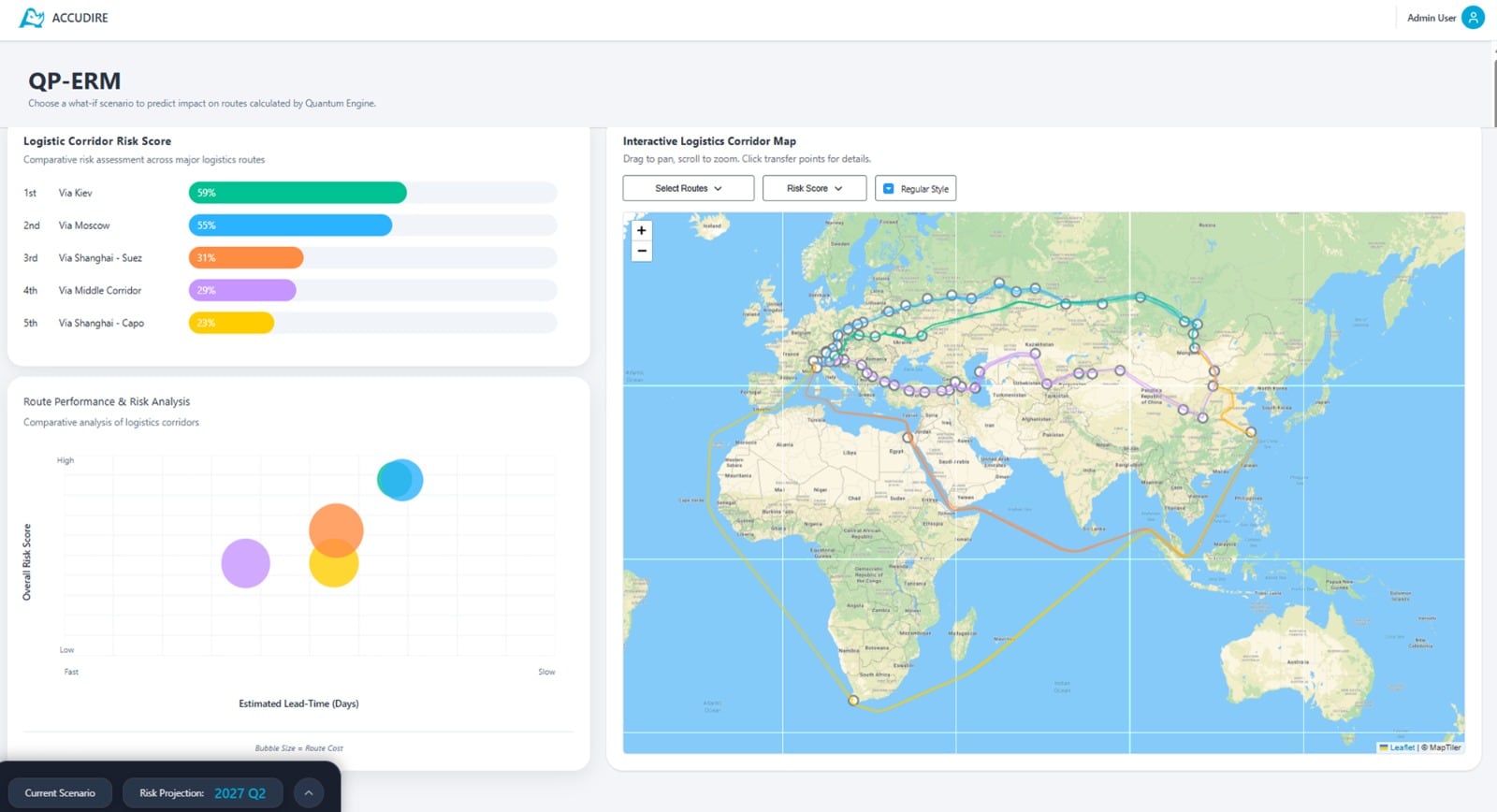
Accudire will present the project during its participation in CES 2026, the trade fair scheduled to take place from 6 to 9 January 2026 in Las Vegas (Nevada) within the Eureka Park at the Venetian Expo, the area dedicated to Italian start-ups selected by ITA - Italian Trade Agency. Here it will unveil QP-ERM (Quantum-Proof Enterprise Risk Management), its latest technological innovation dedicated to advanced risk management in hyper-complex and highly uncertain contexts involving international trade, goods transport and people movement.

Loading...

The development of QP-ERM began as a three-year project, conceived by the company's team whose founding partners are the current CEO Abramo Vincenzi and Ormesani srl, and whose investor partners are the Zucchetti Group and Circle Group, to which other national industrial concerns will be added very shortly. The University of Verona is also collaborating on the project, under the leadership of Professor Alessandra Di Pierro of the Department of Computer Science and one of the leading international experts in Quantum Machine Learning. The academic collaboration represents a strategic pillar of Accudire's innovation and aims to consolidate, validate and evolve the quantum architecture of the platform over time, strengthening the link between advanced scientific research and immediate industrial applications.

The objective is to provide organisations and end consumers with concrete tools to operate and make decisions in a world characterised by systemic shocks, climate change, geopolitical uncertainty and non-linear risk propagation, turning uncertainty management into a competitive advantage.
How it works

QP-ERM was created to enhance traditional AI algorithms, overcoming their current limitations, which are often linked to computational models that only look at historical data and their linearity, to offer a predictive and adaptive view of possible futures.

The innovation introduced by Accudire with QP-ERM also generates direct and tangible benefits for end consumers. In an increasingly unstable global context, the ability to anticipate and manage risk along the supply chain translates first and foremost into greater product availability (think, for example, of medicines), even during geopolitical, climatic or logistical crises, reducing sudden shortages and empty shelves.

QP-ERM also helps to ensure fresher, safer and higher quality products by predictively monitoring transport conditions and reducing critical disruptions such as cold chain breaks in food and pharma. This means less waste, improved food and health safety and a better shopping experience.

Transparency and Trust

The platform enables a new level of transparency and trust: through verifiable data on the origin, route and environmental and ethical impact of products, consumers can make more informed choices aligned with their values, distinguishing between truly sustainable supply chains and mere marketing claims.

Finally, more efficient risk management along the supply chain contributes to more stable prices, limiting hidden costs related to logistical emergencies and inefficiency. In this way, uncertainty upstream does not automatically translate into penalties for the buyer, but is absorbed and governed before it reaches the consumer.

"Imagine choosing between two mango fruits: one has a full audit trail on climate, origin, route, CO₂ and human labour conditions; the other does not. QP ERM ensures trust right at the shelf,' the team exemplifies. AI alone - in essence, as the researchers explain - is not enough. QP-ERM combines Quantum Machine Learning and advanced AI to model uncertainty even when scenarios change rapidly, while blockchain makes every piece of data and every choice traceable and verifiable. The result is less risk, faster decisions and operational confidence, even in chaos: "Traditional AI algorithms are effective when operating in stable and repetitive contexts, because they learn from historical data and recognise the future path from already observed scenarios. However, when the context changes rapidly - as happens with sudden and changing geopolitical shocks, extreme weather events or systemic crises - these models tend to lose accuracy, because the future no longer resembles the past. The quantum approach to forecasting was born precisely to overcome this limitation'.

In support of the current AI approach, which works mainly by retrospective extrapolation, quantum models allow for the simultaneous exploration of alternative possible futures, even in the absence of direct historical precedents. In other words, they do not merely 'learn from what has already happened', but help to model what might happen.

Copyright reserved ©
Loading...

Brand connect

Loading...

Newsletter

Notizie e approfondimenti sugli avvenimenti politici, economici e finanziari.

Iscriviti