
Looking for black sheep on the island of the apocalypse
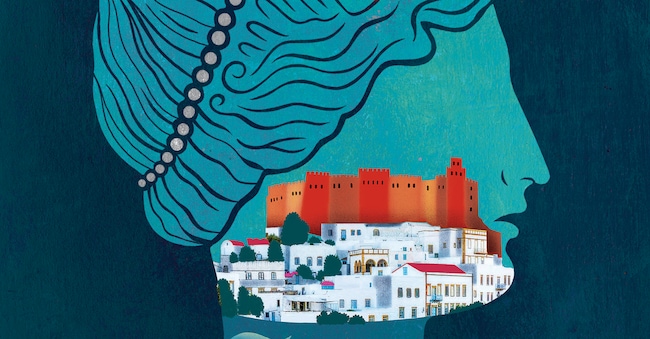
Patmos. Skala, the commercial and tourist part, and the Hora, the oldest area with white lime streets between centuries-old houses interlocked with each other and everywhere many small white chapels: those who built them were entitled to a substantial reduction in taxes

4' min read
4' min read
Greece has a number of initiation ceremonies that only the casual eye could mistake for mere nuisances. The first and most important is that of coincidences. Those with a goal should know that the word coincidence in Greece means nothing, it is just a hieroglyphic. On the surface, it would be possible to get to Patmos in a day. In reality, not only I, who have been trying for ten years, but everyone else has experienced that it is almost impossible. Not on paper, of course, but in life. Gauche spirits attribute the hoteliers and taxi drivers of two intermediate stops, Kos and Samos, with the intention of racking up a few hundred extra customers. Instead, it is something deeper, a departure, certainly painful, given the hotels on the two islands, from western rationality. A renunciation, but also a liberation, an abdication of the will into the imaginative hands of fate, which, as Robespierre said, is the king of the world.
The second test, the one of dexterity, awaits the traveller at the ferry embarkation, when a host of Greeks immensely superior to the aesthetics of anorexia engage in a whirlwind brawl to gain entry. In the melee everything is valid, from kicks to broadsides of immense, biblical suitcases. This is not mere warlike spirit. In fact, the next rehearsal awaits at the reception. Those who arrive late may find that the berth purchased from Italy has mysteriously already been assigned. A misunderstanding? No, but a higher offer in a market that often remains free until the last moment. The same battle ensues on arrival, but the pathos is undoubtedly less.
When the turreted, marvellous Patmos finally pops up, it is better to be accompanied by someone who can speak the local language, or else resign oneself to paying three times the fare owed to the taxi driver. In fact, the inhabitants experience the passage of tourists like hunters experience that of ducks. Only a few elderly people remember a few words of Italian, the language of the good-natured occupants, who have planted tamarisk trees everywhere to shade the beaches and built the barracks in a delightful 20th-century style.
Like any territorial unit, Patmos too has a high and a low: Skala, the commercial and tourist part, and the Hora, the oldest part, protected by Unesco, a maze of whitewashed streets between centuries-old houses admirably wedged into each other at the top of the island. Needless to say, the elegant people, those who have always come here, inhabit the Hora, where in theory mopeds, indispensable for touring the island's fjords, cannot enter. In the evenings, the Stoa, familiarly renamed the little square by the Italians, fills up with people having an aperitif or dining bravely at Vaghelis. Here, as in any Greek restaurant, the food arrives instantly. But since you cannot expect everything, speed rarely coincides with quality. On the other hand, it is never necessary to consult the menu: it is identical everywhere. A noble passion for frying would drive the local cooks to fry even air, if they could sell it. Those who try to avoid this by asking for barbecued dishes see them arrive dripping with oil.
But cruise ships besiege the oasis of the snobs, and immense coaches dump herds of tourists in front of the cave where John saw the Apocalypse. By now a shapeless church has swallowed up that extraordinary vantage point. In return, a caravan leaning against bricks offers all sorts of souvenirs, from the Byzantine imperial eagle, curiously resembling a chicken, to hairy black Orthodox rosaries and the ubiquitous lucky eye.

