
In search of the 'right mistake': how to turn failure into opportunity
Despite a society founded on success, error is an essential element of our lives (including our professional lives) and one with which we need to establish a healthy coexistence
by Gianni Rusconi
 Aggiungi Il Sole 24 Ore
ai preferiti su Google
4' min read
4' min read
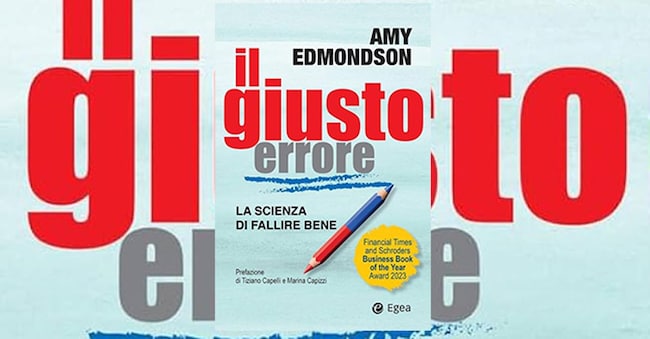
Can a passion for vulnerability, curiosity and personal growth replace the shame and guilt associated with failure? Amy Edmondson, Novartis Professor of Leadership and Management at Harvard Business School, a renowned expert on organisational behaviour and a pioneer of research on the concept of psychological safety, is convinced of this. In her latest essay published by Egea, "The Right Mistake - The Science of Failing Well" (winner of the Financial Times and Schroders Business Book of the Year Award 2023), she addresses the theme of failure and our relationship with this state of incapacity.
In a society founded on success and the cult of the result, says the note that introduces the book, few ideas are as frightening as that of error, which instead represents an essential element of our lives (including professional life) and with which we should establish a healthy coexistence. The risk we often run, as the author explains, is to forget that not all errors are equal and to consequently miss an important opportunity, that of failing well.
To do this, to outline virtuous practices that can handle error and draw lessons from it, the tools are not lacking. Condensing a quarter of a century of academic research in the field of social psychology, stories of people from different backgrounds and walks of life, and data collected from organisations of various kinds (companies, government agencies, start-ups, schools and hospitals), Edmondson's narrative guides us to read situations according to their 'potential for failure' while inviting us to reflect on our role within the many systems of which we are a part. Aiming to answer (as an ultimate goal) one big question: how to be OK as fallible human beings.
Let us start with the concept of fallibility, and try to explain why we should not be afraid of it...
We are all fallible. The question is whether and how to use this fact to live a fulfilling life of continuous learning, because learning to be comfortable with who we are gives us a good dose of freedom. But improving as fallible human beings also means learning to fail well. How? By anticipating elementary failures as often as possible, by anticipating complex ones so as to prevent or mitigate them, and by cultivating the desire for intelligent failures, i.e. those indispensable for progress, more frequently. We can learn to live our fallibility with joy: although it may seem illogical, failure can be a gift. And the clarity that failure can bring about the capacities we need to develop is a gift, as is making us understand our true passions.

