
Lotus announces hybrid powertrains and revises electric road map
The British brand, owned by China's Geely, has revised its goal to produce only electric models and is testing Luayo Super Hybrid technology.

2' min read
2' min read
The list of brands moving away from the date when they should have become full-electric only is getting longer, as Lotus is among them. In fact, the legendary British brand, since 2017 owned by China's Geely, has taken a decisive step away from the roadmap that would have led it to produce only electric cars in 2028, and has embarked on a roadmap that revalues Ice engines to be integrated into hybrid systems. The announcement was made by Lotus CEO Feng Quinfeng at the Guangzhou motor show in China. The main reason for this choice is the now well known fact that the electric car is not taking off and, according to Quinfeng, not even in China where, as in Italy, interest in plug-in hybrid and extended range models is growing.
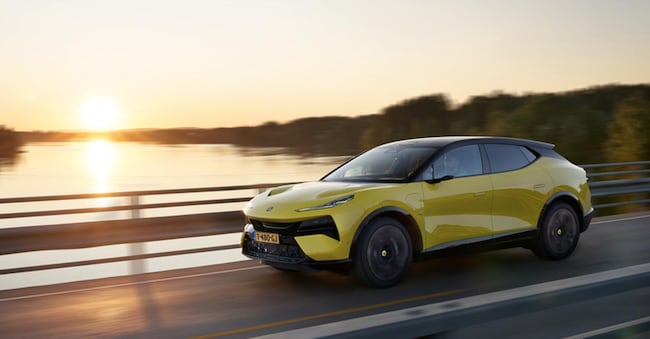
For these reasons, Lotus is also following in the footsteps of other brands in the Geely galaxy, from Mercedes to Zeekr, which recently announced that it will start offering cars with hybrid powertrains on tap, driven by the attraction of sports cars with piston engines, albeit electrified under the bonnet. The decision is supported by the ability of Chinese manufacturers to rapidly realise advanced technologies that reduce the development time and cost of their cars and, of course, also by the fact that the electric Lotus cars arriving in Europe from China, the Eletra SUV and Emeya sedan, are subject to the duties imposed by the EU.
Lotus, a new 900 V architecture and a Super Hybrid
.The move towards the all-in electric destination, according to Quinfeng, will soon bring on stage Luayo Super Hybrid technology together with a new 900 V architecture, which promises an electric range of 200 kilometres and an overall range of more than 1,100 kilometres, and a dual fast recharging system for both static recharging from ultra-fast systems and dynamic recharging. That is, automatic recharging on the move due both to the efficiency of the thermic engine - it could be a turbocharged unit signed Mercedes AMG like that of the Emira or Horse and thus born of the partnership between Geely and Renault - and to an advanced management of energy flows that, from what has been leaked, would ensure recharging phases five times greater than those of discharge.
The Chinese manager also hinted that the system will not be of the range extender type because this solution is greatly affected by the state of charge of the battery and, consequently, when it is low, it reflects negatively on performance. An argument that Lotus simply cannot gloss over.

