
Holland turns right: government agreement after six months
Announcement by anti-Islam leader Wilders, who will not, however, be prime minister. Tightening of immigration expected

2' min read
2' min read
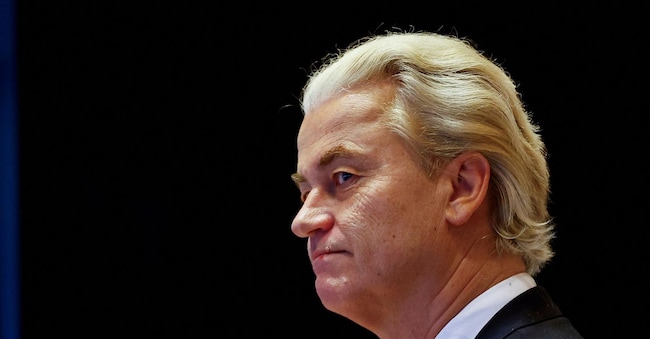
White smoke for a Dutch government after almost six months of negotiations. Breaking the news was Geert Wilders, the controversial anti-Islam leader of the far-right PvP party, who emerged as the clear winner in the 22 November elections, but who will not be prime minister. "We have an agreement between the negotiators," said Wilders, "but the parties will still discuss it, so there might be adjustments and changes.""
The new executive, already considered the most right-wing in decades of Dutch history, will include, in addition to the PVV, three formations: the Vvd liberal-conservative party of the outgoing Prime Minister Mark Rutte, now led by Dylan Yesilgözw, the New Social Contract (NSC), a new-born centrist movement founded by Pieter Omtzigt, and the BBB, the Citizens' Farmers' Movement of Caroline van der Plas, which made headlines months before the tractor protests spread across half of Europe.
The four parties will be able to count on a solid majority, 88 seats out of the 150 in the Dutch lower house, but the tightness of the coalition will have to be verified, given the differences that have already emerged during the negotiations and the mistrust towards a party like the GOP, which, except for an experience of external support to the first Rutte government, has always been kept on the margins of political power.
Almost certain will be a further swerve to the right from the policies of the last Rutte government, especially with regard to migrants and asylum seekers, although the details of the programme are not yet known. A source told broadcaster RTL that the parties have decided to halve the number of workers admitted to the Netherlands, although it is unclear how this would fit in with the freedom of movement guaranteed within the European Union.
Staying with the programme, in the election campaign Wilders had focused heavily on the cost of living and healthcare, promising spending increases and a lowering of the retirement age. But budgetary constraints make it unlikely that the other parties will support these plans.


