
Lubec 2025: cultural impact assessment site
Going beyond tickets and revenues to include democracy, economy and inclusion. The MiC prepares the States-General of Digital Culture and presents digital projects
Key points
The impact of culture on the environment and society has been a much-debated topic in recent years, especially since the realisation that a museum, a festival or an art exhibition can affect the democratic and participatory processes of citizens, as well as play an important role in the activation of virtuous economic processes and the creation of inclusive systems: think of welfare and democratic participation. The interest is linked not only to the urgency of justifying public investments, which are increasingly scarce due to the chronic reduction of resources, but also to the increasingly widespread desire to understand how the individual, an organisation and a community can be transformed by a cultural project and how this change can be translated into a number or an index.
Culture Assessment
The 2025 edition of LuBeC, Lucca cultural heritage, was an opportunity to reflect on the important topic of multidimensional assessment of the impacts of cultural projects in the context of sustainable development; during the conference 'Assessing the impact of cultural projects: reference frameworks, methodologies and tools' several insights emerged regarding the increasingly common view that culture cannot only be assessed by the number of admissions, ticket sales, bookshop, bar and restaurant turnover, but that there are other ways.
A new method in Brescia
Stefano Karadjov, direttore della Fondazione Brescia Musei, ha presentato una nuova metodologia di analisi dell’impatto di tipo qualitativo, sviluppata in collaborazione con il consorzio AASTER, che vede il museo come un’autonomia funzionale della cultura. Sono state fatte delle interviste e dei focus group a circa settanta stakeholder del territorio, quali rappresentanti di enti locali, politici, direttori e presidenti di istituzioni museali, ai rappresentanti delle principali aziende e agli organi di Confindustria, Camere di Commercio e rappresentanti delle università, ecc. Le interviste sono state raggruppate in tre cluster, mondo dell’impresa, associazionismo e istituzioni e, per ciascuno, sono stati individuati i driver su cui si sono articolate le domande. Nel primo cluster, ad esempio, i temi riguardano: i fattori che rafforzano la propensione delle imprese a investire nel sistema culturale e nel patrimonio, il ritorno per l
The Experience of the Capital of Culture in Parma
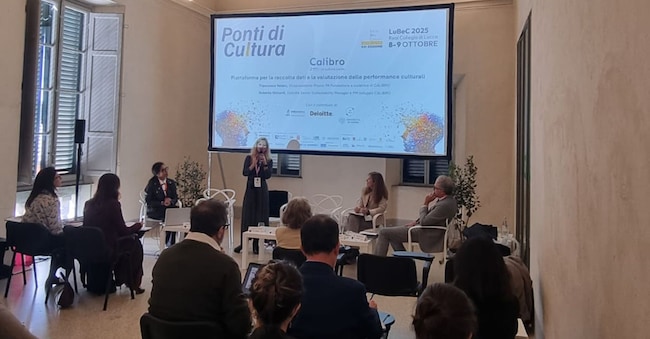
Francesca Velani di Promo PA, organizzatrice dell’evento, in collaborazione con Roberta Ghilardi di Deloitte, Isabella Mozzoni dell’Università degli Studi di Parma hanno presentato Calibro, una piattaforma per la valutazione degli impatti generati dalle progettualità culturali in relazione agli obiettivi di sviluppo sostenibile. La piattaforma, finanziata con fondi PNRR, Toc Transizione digitale, è pensata per supportare le organizzazioni culturali pubbliche e private nella valutazione di progetti e programmi culturali e nasce dell’esperienza sulla misurazione degli impatti di Parma Capitale Italiana della Cultura 2020+21. In quella esperienza sono state analizzate attività culturali eterogenee e valutati progetti di diversa natura, sia tipologica, sia per ambito: dalle arti visive a quelle performative, per arrivare al video-gaming e al mondo dell’audiovisivo. La piattaforma si basa su principali framework internazionali esistenti in materia, su tutti l’UNESCO Culture 2030

