Lufthansa turns 100 between wars and mass tourism
German Group blows out 100 candles and looks to the future with new integrations: this year development with Ita Airways
by Mara Monti
Key points
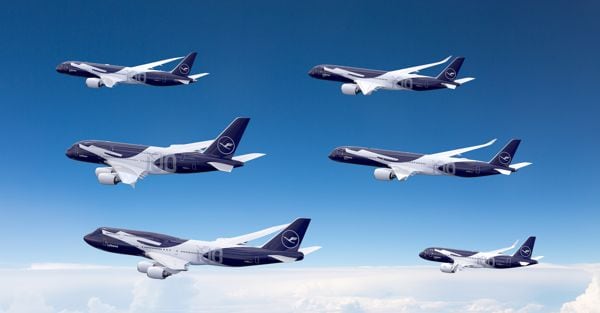
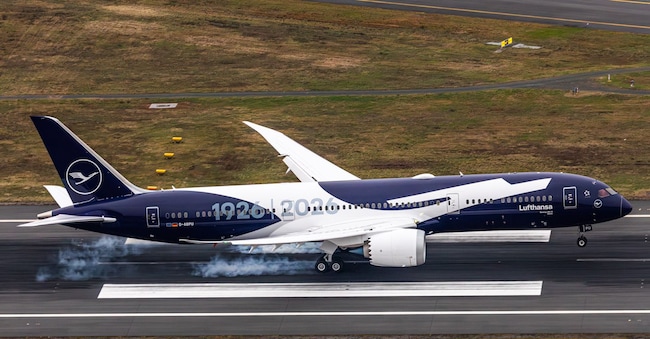
The German airline Lufthansa will be 100 years old on 6 January 2026, a centenary that marks a history made up of interruptions, revivals, and relaunches to become one of the world's largest airlines capable of transporting over 150 million passengers a year, with a fleet of over 300 aircraft and as a group it can count on a widespread network of European airlines from SWISS, Austrian Airlines, Discover Airlines, Eurowings, ITA Airways and Brussels Airlines. Today the new expansion also passes through Italy after the agreement with the Italian carrier Ita AIrways and with the Germans' decision to focus on Fiumicino as a hub for growth towards America, Africa and Asia.
The birth of the German company...
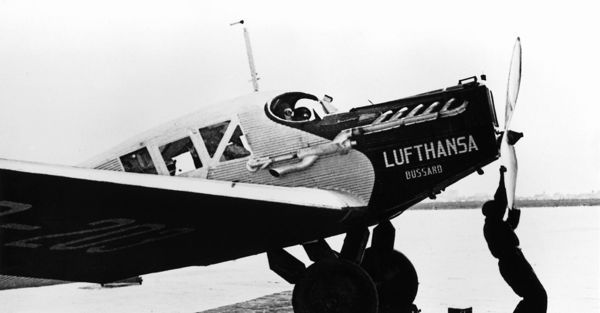
The company's history is marked by dark periods as it defines them: 'the darkest chapter in Lufthansa's history was during the Nazi era, when the airline became part of the regime and played an active role within it,' the carrier writes in a note. But let us go in order. On 6 January 1926, an airline called Deutsche Luft Hansa was founded in Berlin following the merger of Junkers Luftverkehr and Deutsche Aero Lloyd with the task of connecting German Lander and opening new routes to the Continent. A pioneer of German aviation during the two wars, with the political changes in Germany in the 1930s and 1940s, it soon became an active part of the Nazi regime, playing a not insignificant role within it.
... and the Second World War
During the Second World War, it was in charge of pilot training and aircraft maintenance and repair for the Luftwaffe, the German Air Force, an integral part of the Wehrmacht during the Second World War. Forced labour was also used to carry out these activities and most of the work was carried out at Berlin's famous Tempelhof Airport, where what would become Lufthansa was based, an area now converted into a park.
The Recovery and the Fall of the Berlin Wall
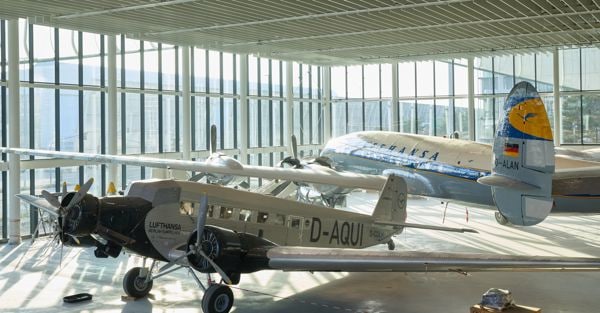
With the end of the war in 1945 and the subsequent occupation of Germany by the Allied forces, all of the company's remaining aircraft were grounded and on 1 January 1951 Deutsche Luft Hansa was closed down, with all remaining activities being liquidated. Recovery was slow, but eventually Germany regained control of its airspace and decided to create a new national airline. The company, initially named Aktiengesellschaft für Luftverkehrsbedarf (Luftag), was founded in Cologne in 1953. The following year, the new company acquired the rights to use the name of the former pre-war national airline and in 1955 officially resumed flights under the Deutsche Lufthansa AG brand. Initially it operated only domestic flights and then rapidly expanded internationally in Europe and beyond. The airline's initial network connected Hamburg, Düsseldorf, Frankfurt, Cologne and Munich. International flights began with connections from Germany to Paris, London and Madrid and in June 1955 flights to New York began.
With the advent of jets in the 1960s, a new era began, culminating in the mass tourism of the 1990s: Lufthansa became a model company based on the principles of safety, technological innovation and service quality. A milestone in its history was reached in 1989, when, for the first time since 1945 and as a sign of Germany's newfound unity, a Lufthansa plane landed in Berlin.