
Luigi Spina portrays the life, places and words of St Francis

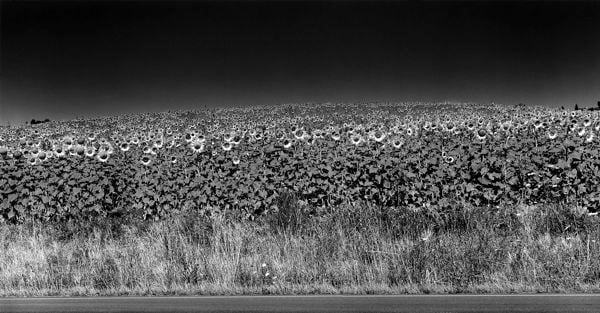
There is a crowd of sunflowers, tall along the Strada Fratticiola Selvatica leading to Monteverde. They seem to be waiting for someone, perhaps the camera of Luigi Spina, who has travelled in the footsteps of Francis, among woods and hermitages, churches and paths. The Umbria of Saint Francis is a diary of waits and words - those of the photographer with his notes -, of silences and images. All in black and white, to let the charisma of these lands have the space to unfold in our eyes. The light floods the olive trees and becomes so material that, as Costantino D'Orazio writes in the presentation, "the images acquire an almost three-dimensional depth from which a profound feeling springs forth".
For just over twenty years, Francis, whose story has come down to us through the First Life of Thomas of Celano, is a continuous going, step by step, wandering and hungry for people. It does not stay in enclosed places, measuring Umbria, Marche and Lazio with its apostolate: Francis' space becomes, in the words of Jacques Le Goff, 'a network of cities and roads that unite them'. Along those paths of life and faith, Luigi Spina also gets lost, a little like Fulvio Roiter did with Ombrie, terre de San François (1955), but choosing - as Giuseppe Frangi points out in the preface - "not to include human presences. It is an extremely incisive choice because it restores full citizenship to that constitutive sentiment of the figure of Francis, his feeling with nature; or, lato sensu, with creation".
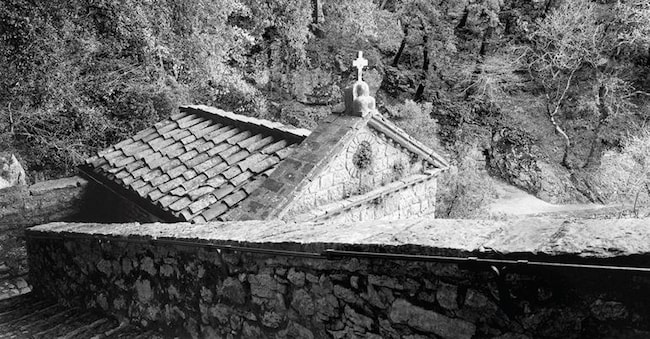
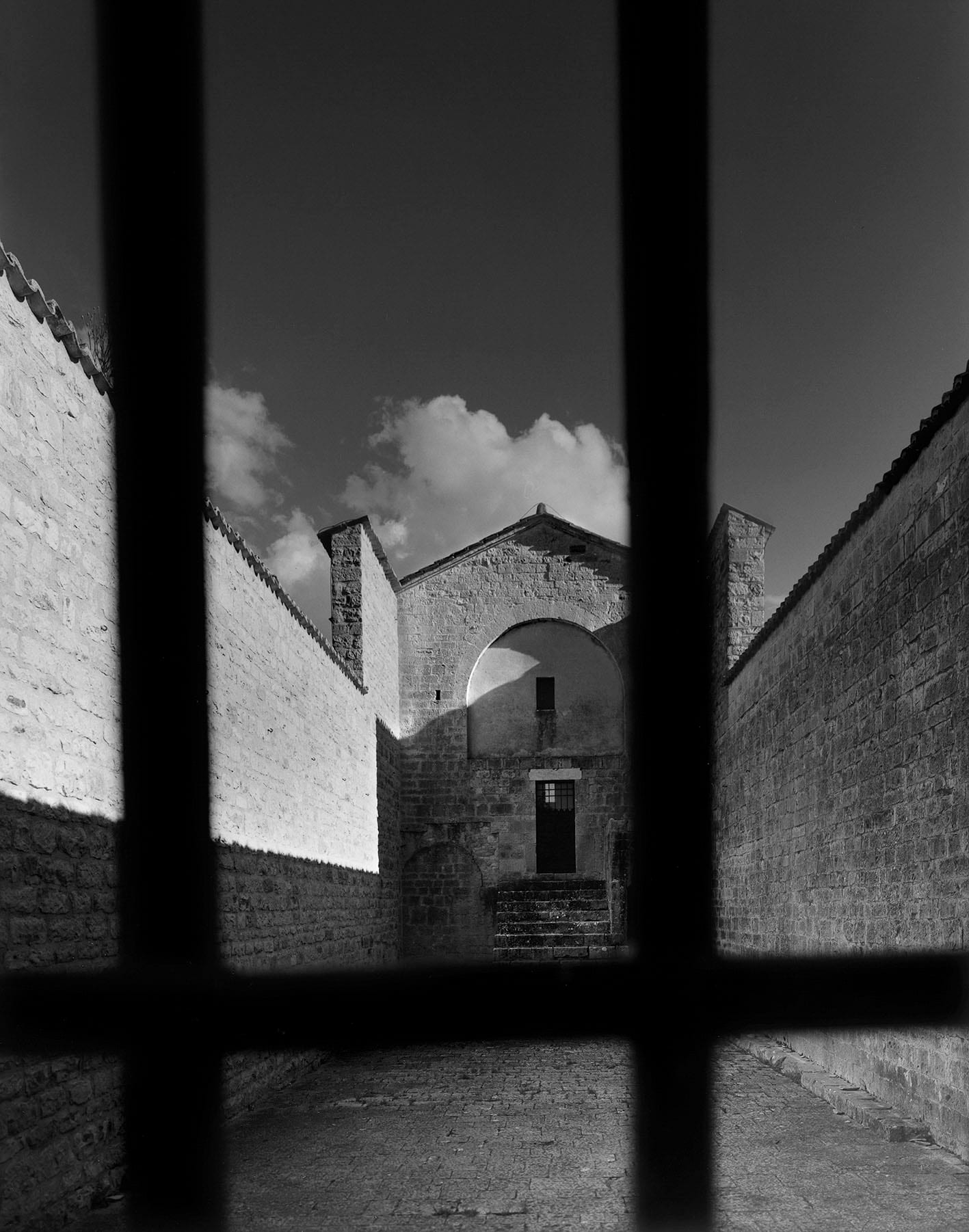
Spina wanders along lanes that become woods to climb up to the Eremo delle Carceri, on Mount Subasio, amidst centuries-old holm oaks in an unspoilt world, and this is what the pictures are: time that has stood still for 800 years, silence that makes space and welcomes those who listen and then enter the Chapel of Santa Maria Maddalena. The black and white, the absence of figures make the images sculptural, as is also the 13th century fresco of the Lamentation over the Dead Christ, attributed to the school of Cimabue in the Church of Santa Maria Assunta in Valfabbrica, which lies on the route of the Franciscan Path, followed by Francis in 1207 to reach Gubbio, after abandoning the wealth of his father Bernardone. In the Benedictine abbey, the deposed Christ seems to illuminate the empty, lined-up chairs that speak of pilgrims and faithful who, by the thousands over the centuries, have knelt in faith, raising their eyes.
The hills rise and fall, like living, welcoming the work and labours of man. The vegetation hides the houses, a few small castles emerge from the morning mists as outposts of hope: 'the light changes, mutable, like the hours of the day. And everything goes out or comes back to life. I photographed fragile balances and tangible signs of a past, at times, violent'. Or eternal, like that in the cloistered monasteries: San Benedetto al Subasio is one of those spaces far from men and a step away from God. A still time opens the doors of the heart: "One perceives that it is a space closed to the outside world, capable of generating profound communication. That of the human soul that dialogues with the Cosmos. Here are energetic shadows that, in the contemplation of a life, have consumed their existences. And I, in corruptibility, am willing to believe. And we with his photographs can believe in the tradition of the candles of Sant'Ubaldo in Gubbio and the transcendence that breathes at the Hermitage of Santa Maria, outside Rocca Sant'Angelo.
In this land of saints, hermits and mystics, from Francis to Clare, from Benedict to Rita, from Valentine to Scholastica, it will not seem blasphemous if we omit Saint and Saint. Here, amidst bends and climbs, shadows and candles, we are all so human, lost in the secular sacredness of Creation and the places where the Poverello met, spoke, prayed, loved. Spina finds very personal cuts of the Castello di Piscina or the monastery of Sant'Angelo in Panzo, of the church of Santa Maria della Vittorina, in Gubbio, where Francis tamed a wolf.


