
Lung nodules: diagnosis, risks and treatments – from benign to cancerous
The presence of a lung nodule requires further clinical investigation to determine its nature and the appropriate course of treatment, using minimally invasive surgical techniques that improve recovery.

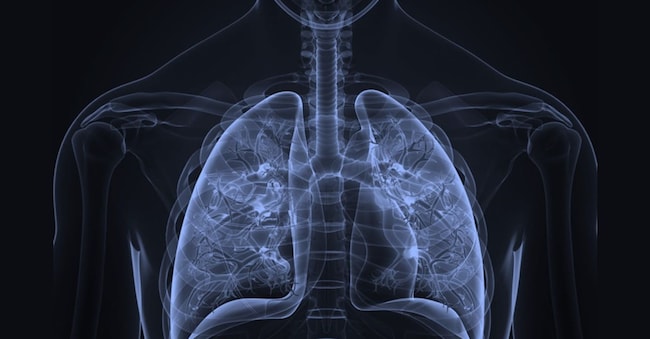
‘The presence of a lung nodule requires careful medical assessment, but it should not automatically be associated with a malignant condition and, on its own, does not allow a diagnosis of cancer to be made. Without clinical information, it is not possible to determine the nature of a specific lesion, which may have different causes and require different courses of treatment.’ Summing up the situation, following the announcement by Pope Leo XIV, is Federico Venuta, Professor of Thoracic Surgery at La Sapienza University and Director of the Thoracic Surgery Unit at the Policlinico Umberto I in Rome.
What is
A pulmonary nodule is an isolated opacity, round in shape and resembling a small coin with a diameter of less than 3 centimetres, which appears denser than the surrounding tissue on radiological images. ‘It is relatively common to detect such a nodule, and this often happens incidentally during examinations carried out for other reasons. There can be various causes: alongside tumour lesions,’ explains Venuta, ‘there are benign conditions, such as scarring from old infections, small inflammatory granulomas or autoimmune changes. Depending on the circumstances in which the nodule is detected and its characteristics, as well as the patient’s characteristics (such as smoking habits), the doctor may request a computed tomography (CT) scan of the chest to determine its size, shape and structure.”
Diagnostic pathways
‘Very small lumps carry a lower risk of being malignant: in fact, for those under 6 millimetres, it may be sufficient to refer the patient for a radiological scan a few months later to ensure that it does not grow. If the lump is larger or has irregular edges, the diagnostic process may include a PET scan. The next step is a biopsy, to take a sample of cells or tissue for analysis, or to remove the nodule surgically if a biopsy is not feasible.”
Treatments
‘If the histological examination shows the lesion to be benign, no treatment is required. If a primary lung tumour is identified at an early stage, surgical removal is generally sufficient. However, when further risk factors emerge – the expert continues – pharmacological or radiotherapy-based cancer treatments are considered.” A well-known precedent is that of King Juan Carlos of Spain, who, in 2019 at the age of 72, underwent lung surgery for a nodule that turned out to be benign. ‘A case that serves as a reminder that the detection of a lung lesion does not necessarily equate to a diagnosis of malignant cancer.’
Lengths of stay
Of course, every clinical situation is different, and it is not possible to draw parallels with Pope Leo’s case in the absence of specific medical information. What is certain is that the Pope is due to undergo surgery next week, but Professor Venuta reassures us: ‘In recent years, thoracic surgery has made significant progress thanks to minimally invasive techniques, which allow procedures to be carried out with smaller incisions and facilitate a rapid recovery. Hospital stays are generally 5–7 days.’

