
Luxury, return to growth expected in 2026
Ubs analysts estimate organic growth in the sector at around 5%, but the return to buying will be gradual

Key points
The luxury sector has greeted the year 2025 with the hope that the worst is behind us and that the year that has just begun will usher in a recovery in consumption, although expectations are not for a sudden development but rather for gradual growth that will take the sector away from the flat trend of the last two years. There are several reports pointing in this direction, such as the latest one published by analysts at Ubs, according to which 2026 should bring organic growth of around 5% for the sector, with estimates in line with the market consensus. A final test is represented by the fourth quarter of last year, whose data will be released starting next week when Brunello Cucinelli (12 January) and Richemont (15 January) will open the dances.
The fourth quarter
The recovery is certainly still in an early stage, although some warnings already arrived in the second half of last year. For the fourth quarter, Ubs analysts expect "an underlying acceleration in sales growth for most companies in the sector, despite a more challenging comparison basis". In detail, the Ubs forecast for the final quarter of 2025 is 4% growth (+3% without counting Hermès), against a consensus of a +3% (+2% without Hermès) and a +5% recorded in the third quarter.
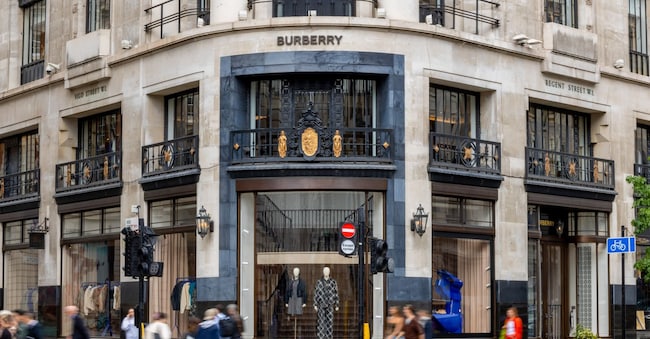
Looking at individual companies, Ubs estimates a solid start to the quarterly round with Brunello Cucinelli (revenues up 7%) and Richemont (revenues up 10%) "expected to show further momentum of double-digit percentage sales growth" and Burberry (revenues up 5%) with estimates above consensus. The fact remains that the real catalyst for the fourth quarter of 2025 will be Lvmh, for which, however, expectations point to revenues in line with last year, while despite a sequential improvement for Kering Ubs believes that it is "not likely to stimulate investor interest in the short term, pending a strategic update from the new CEO" and in the fourth quarter could see a 4% drop in sales. While taking a more cautious stance on Hermès, which was assigned a neutral rating last year, "continued solid growth - with some signs of recovery in APAC and other categories - coupled with rather unfavourable investor positioning could be a reason for short-term upside," the report said. For the French group, which has surfed the industry's sales declines in recent years, Ubs' estimates are for revenue growth of 9 per cent in the final quarter of 2025. Neutral rating also for Moncler, for which 'the key issue remains the extent of any positive surprise on fourth-quarter sales, with the buy-side bar already above the sell-side consensus'. Ubs' estimates are for a 4% increase, against a +2% expected by the market. To conclude the panorama of Italian companies for Salvatore Ferragamo, expectations are for revenues to grow by 1% in the quarter, for Ermenegildo Zegna by 3% and for Prada by 4%.
The industry's high multiples
The sector (excluding Hermès) trades at a premium of around 79% to the Msci Europe, above the average of the last five years (around 75%) and the average of the last fifteen years (around 57%). "While we are now structurally more positive ahead of 2026," the report says, "we would point out that the sector's recovery is still in an embryonic stage and that any indications of weakening demand could be met with a significant negative reaction from the market."


